The Korean Actor Who Kept 150 Million Won in His Wallet
Lee Chang-hoon Opens Up About His 1990s Peak — Supercars, Upfront Payments, and a House for His Mother
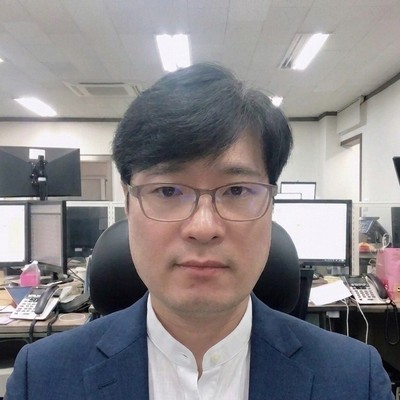 By Seung Jung
When veteran South Korean actor Lee Chang-hoon appeared on MBN’s variety program Your Sick Side on July 26, he dropped a piece of personal history that left the entire panel speechless: at the height of his career in the 1990s, he routinely carried checks worth 150 million won — roughly $110,000 USD — inside his wallet. Not in a bank. Not in a safe. In his wallet.
“I was simply too busy to go to the bank,” Lee explained with characteristic candor. The reason, he added, was that advertising productions paid their top-tier talent on the spot with checks — and the figures involved were staggering. “The biggest check I can remember was 78 million won,” he said, referring to a single ad shoot payment from approximately 30 years ago. “Back then, that was the number.”
The Man Who Ruled Gangnam With a Supercar
During his peak years in the mid-to-late 1990s, Lee Chang-hoon was not just a household name in Korean drama — he was a symbol of success. Known across the industry as the “Gangnam big spender” (강남 큰손), he was one of only two Korean celebrities at the time who drove supercars. The other, he noted on the program, was comedian Yoon Jung-soo — who happened to be sitting right next to him as a host on the very same show. The moment drew laughter and nostalgia from the studio audience.
“Back then, whenever a sports car passed by in Gangnam, people would say it was either Yoon Jung-soo or me,” Lee recalled with a smile. The image painted was of a golden era in Korean entertainment — when top actors were compensated like royalty, payment arrived in physical checks handed over on set, and Gangnam was just beginning its decades-long ascent as a symbol of South Korean affluence.
Lee Chang-hoon debuted through MBC’s public talent audition in 1989 and steadily built a reputation as one of Korea’s premier melodrama actors. He shared screens with stars including Kim Hee-sun, Lee Young-ae, Ko So-young, and Song Hye-kyo during their own early careers, earning him the affectionate nickname “melodrama master” (멜로 장인) among fans and industry peers alike.
The Contract That Changed Everything: 100 Episodes, Paid Upfront
The source of Lee’s extraordinary wealth during that period came down to a single, landmark deal. When he transitioned to become an exclusive KBS actor, he negotiated an 11-year contract covering 100 drama episodes — and secured the right to receive the full appearance fee in advance, before a single episode had aired.
“They paid me all 100 episodes’ worth of fees upfront,” Lee revealed to a visibly stunned panel. The practice, he explained, was a competitive arrangement reserved for the biggest names of the era: networks fought fiercely for top talent, and lump-sum advance payments were one of the primary tools used to lock in exclusive deals.
In an era before electronic bank transfers became standard in South Korea’s entertainment industry, every transaction happened in person. Checks were issued on set and handed over immediately after filming wrapped. This meant that on any given week during his peak years, Lee might receive a single check for tens of millions of won and simply slip it into his wallet alongside the others already sitting there. “I was shooting so constantly that I never had a spare moment to deposit anything,” he explained. The result was a wallet carrying, at any given time, approximately 150 million won in checks.
The Thing He Did With the Money That Moved Everyone
Amid the stories of supercars and packed wallets, it was a quieter moment that resonated most with viewers. Lee Chang-hoon revealed that despite carrying extraordinary sums of cash, the most meaningful use of his peak-era earnings was buying his mother a house.
The disclosure landed differently than the flashier details. In Korean culture, purchasing a home for one’s parents remains one of the highest expressions of filial devotion — a concrete, permanent act of gratitude that transcends any luxury purchase. For fans who grew up watching Lee in family melodramas, the image of a then-young superstar quietly securing his mother’s future added a layer of depth to a story that might otherwise have been pure spectacle.
The panel on Your Sick Side — including Yoon Jung-soo himself — responded with visible emotion. “Even the biggest spenders don’t usually carry that kind of cash in their wallets,” Yoon Jung-soo remarked, underscoring just how unusual Lee’s situation was even by the standards of the entertainment industry’s elite.
A Glimpse Into Korean Entertainment’s Lost Golden Age
What makes Lee Chang-hoon’s revelations particularly compelling is what they expose about the Korean entertainment landscape of the 1990s — a period that remains somewhat mythologized in the industry but is rarely discussed in concrete financial detail.
The 1990s represented the first golden age of Korean television. Broadcasters KBS, MBC, and SBS competed intensely for audiences and talent. Dramas regularly drew viewership ratings that would be considered extraordinary today, and the actors who starred in them commanded compensation to match. Networks signed exclusive contracts with top names and paid unprecedented advance sums to keep rivals from poaching their biggest draws.
In that environment, Lee Chang-hoon was among the highest-paid performers in the country. The fact that he received 100 episodes worth of fees in a single payment — and then continued accumulating checks from advertising work faster than he could deposit them — speaks to a compensation model that no longer exists in quite the same form. Today, South Korea’s entertainment industry is globally integrated, with streaming platforms, international co-productions, and digital payment systems that have transformed how talent is compensated.
But for viewers who grew up during that era, the stories Lee shared on Your Sick Side served as a vivid reminder of just how extravagant the world of Korean entertainment once was. The 1990s drama boom was not just a cultural phenomenon — it was an economic one, and Lee Chang-hoon sat at its very center.
Still Active, Still Telling Stories
Now in his late 50s, Lee Chang-hoon remains active in Korean entertainment, appearing in both dramatic productions and variety programming. His willingness to share the behind-the-scenes details of his peak years — the checks, the supercars, the wallet heavier than most monthly salaries — reflects a comfort with his own legacy that only comes with time and continued relevance.
The appearance on Your Sick Side reminded viewers that some of Korea’s most enduring entertainment stories belong not to the newest generation of idol-actors, but to the veterans who built the industry’s foundations one blockbuster drama at a time. For Lee Chang-hoon, the wallet full of 150 million won was never really about the money. It was a byproduct of a life spent working so hard there was simply no time left to spend it — until it was time to give some of it back to the person who mattered most.
How do you feel about this article?
저작권자 © KEnterHub 무단전재 및 재배포 금지
Senior Entertainment Correspondent · KEnterHub
Senior entertainment correspondent with a wide-angle view of Korean show business. Seung Jung covers celebrity news, variety television and award season, and writes the interviews and features that connect individual stories to the larger currents of Korean entertainment.
Comments
Please log in to comment