The Moment Insooni Broke Down About Her Father Changed Everything
 By Park Chulwon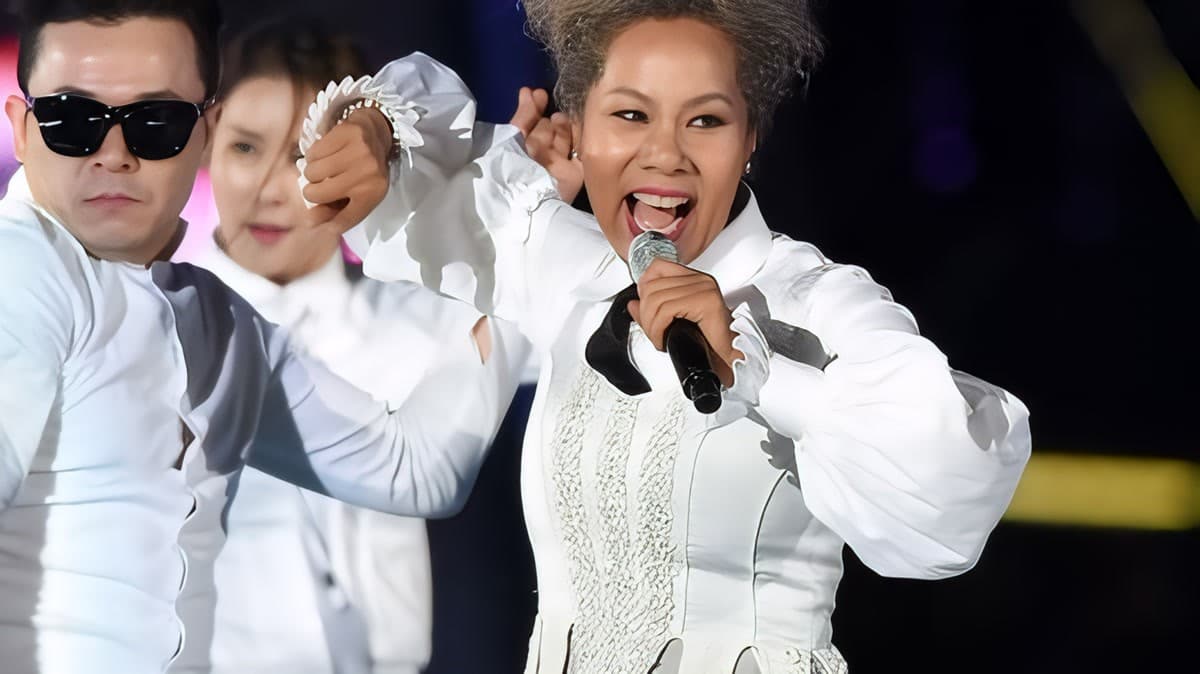
For nearly five decades, Insooni has been a towering figure in Korean music, her powerful voice transcending racial barriers and cultural boundaries. But on the March 16 broadcast of TV Chosun's Joseon's Love Man, the 68-year-old singer delivered what many are calling the most emotionally raw television moment of the year. Between laughter about her golf-obsessed husband and tears about her American father, Insooni pulled back the curtain on a life that has been as extraordinary offstage as it has been on it.
The episode marked the first time Insooni has ever introduced her husband, Park Gyeong-bae, on television. A golf instructor and university lecturer who is four years her junior, Park appeared visibly nervous at the outset but quickly charmed viewers with his gentle wit. When panelist Hwang Bo-ra gasped at his youthful appearance, viewers across social media echoed the sentiment: how had this couple remained invisible to the public eye for 32 years?
A Seongsu-dong Love Story, 32 Years in the Making
The cameras followed the couple through their daily routine in a sleek high-rise apartment in Seongsu-dong, one of Seoul's most sought-after neighborhoods. Floor-to-ceiling windows framed a sweeping city panorama, and Insooni admitted the view still takes her breath away. Living here with just the two of us feels surreal sometimes, she reflected, curled up on a sofa beside her husband.
Their marriage, which began in 1994, came after a period of deliberate cohabitation. At 37, Insooni decided to plan her pregnancy with the same precision she brought to her career. We were both independent people living alone, she explained. So we moved in together first, made sure we were ready, and then welcomed our daughter Sein into the world. Sein has since graduated from a prestigious university in the United States, a detail both parents shared with quiet but unmistakable pride.
What truly stunned the studio audience was the couple's revelation that they have never had a fight in over three decades. The secret, Insooni disclosed, is deceptively simple: mutual formal language. Even after 32 years, they address each other with the polite speech patterns typically reserved for acquaintances or professional relationships in Korea. It sounds old-fashioned, but it forces us to pause before we speak, she said. Respect becomes a habit, not an effort.
The Weekend Widow and the Blanket Incident
Lest viewers mistake the Park household for an impossibly serene paradise, Insooni was quick to inject doses of reality. She declared herself a weekend widow, lamenting that Park disappears to the golf course every Saturday, Sunday, and any holiday in between. He lectures about golf all week and then goes out to play it all weekend, she said, throwing her hands up. My friends call me the golf widow, and I have accepted my fate.
Even more memorably, she explained why the couple sleeps in separate bedrooms despite their close bond. There are certain activities that take place under a blanket that I simply cannot coexist with, she announced to roaring studio laughter, casting a pointed glance at her sheepish husband. After 32 years, I have learned that love and separate sleeping quarters are not mutually exclusive.
Park, for his part, offered his own domestic grievance. Our wedding anniversary approaches every year, and every year I prepare something small, he said. In 32 years, she has never reciprocated. Not once. Not a card, not a flower, nothing. The confession triggered a wave of sympathetic groans from the panel, while Insooni simply shrugged and smiled.
A Question That Haunted for Decades
The atmosphere shifted dramatically when the conversation turned to Insooni's childhood. Born in 1957 to a Korean mother and an African-American serviceman stationed at a U.S. military base in South Korea, Insooni grew up in an era when biracial children faced open hostility. Korea in the late 1950s and 1960s was deeply homogeneous, and children who looked different bore the weight of a society unprepared for diversity.
There was a time when I confronted my parents, she said, her composure cracking visibly. I asked them, why did you bring me into this world looking like this? Why did you make me different from everyone around me? The studio fell silent. Panelists wiped tears. It was a confession that had clearly taken decades to articulate publicly.
But Insooni did not leave the story in that painful place. Having my daughter changed everything, she continued, steadying her voice. When I held Sein for the first time, I finally understood what my parents must have felt. The love they had for me was never conditional. I was the one who needed to grow enough to see it. It was a moment of generational healing, broadcast to millions, that captured the full arc of Insooni's journey from ostracized child to national treasure.
From PyeongChang to the Living Room
Park, eager to redirect the emotional current, proudly recounted his wife's role as promotional ambassador for the 2018 PyeongChang Winter Olympics, where she performed the Games' official theme song on the world stage. During the Olympics, she even met the U.S. First Lady at a diplomatic reception, he noted with visible pride. That is my wife up there, representing our country.
The juxtaposition was striking: the same woman who commanded international stages and met heads of state was now on a variety show, bickering affectionately about golf schedules and blanket etiquette. It is precisely this duality that has made Insooni an enduring figure in Korean culture. She debuted in 1978, making her one of the longest-active performers in the industry, yet her relatability on Joseon's Love Man suggested that fame has done little to erode her fundamental warmth.
Joseon's Love Man airs every Monday at 10 PM on TV Chosun, and the Insooni episodes are expected to continue generating significant viewer interest. But beyond ratings and social media buzz, the March 16 broadcast accomplished something rarer: it gave audiences permission to see a legendary performer as fully human, complete with a golf-widow complex, a husband who has never received an anniversary gift, and a childhood wound that took a lifetime to heal.
How do you feel about this article?
저작권자 © KEnterHub 무단전재 및 재배포 금지
Entertainment Journalist · KEnterHub
Entertainment journalist focused on Korean music, film, and the global K-Wave. Reports on industry trends, celebrity profiles, and the intersection of Korean pop culture and international audiences.
Comments
Please log in to comment