The Real Story Behind Street Restaurant Fighter's 100 Million Views
 By Jang Hojin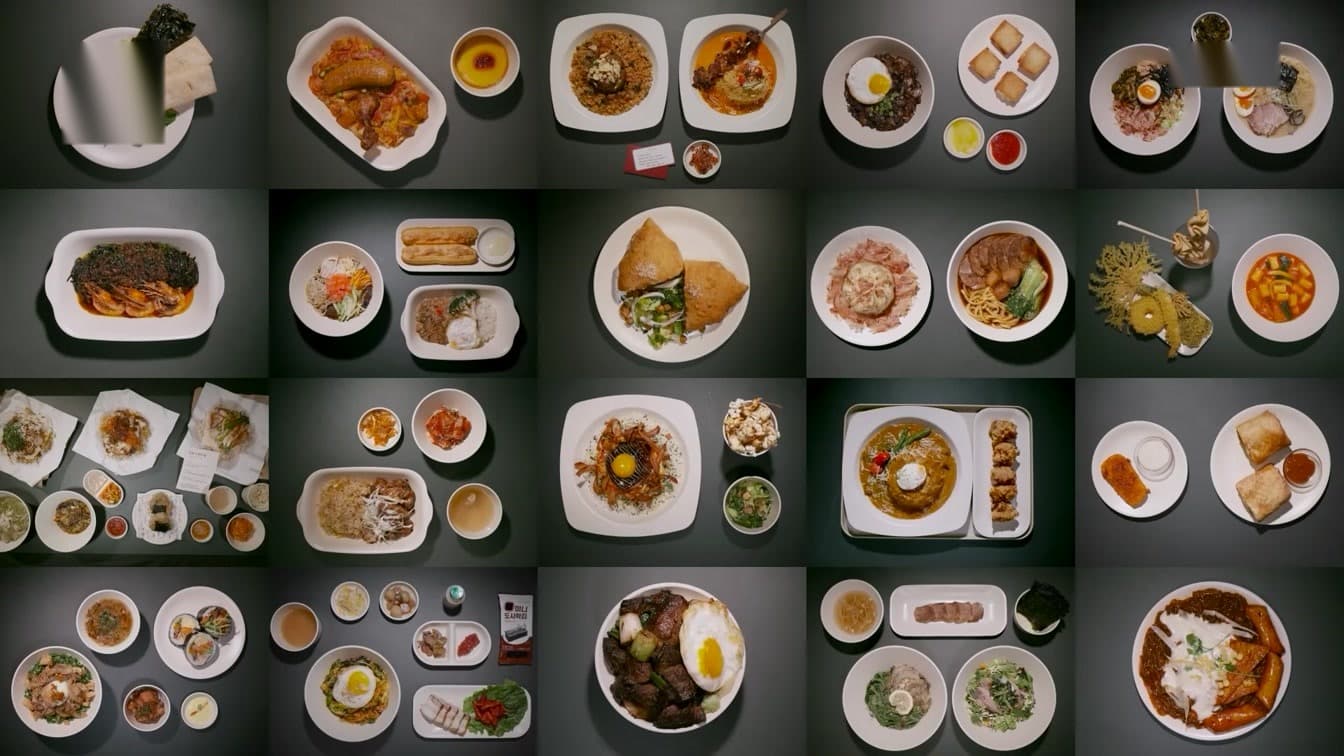
When tvN's Street Restaurant Fighter — known in Korean as 스트릿 레스토랑 파이터 — first brought together twenty of South Korea's most decorated restaurant veterans and set them loose in a competitive street-market format, the premise seemed like a calculated bet on authenticity. By July 19, that bet had paid off in a very specific way: the show crossed 100 million cumulative views across digital platforms, marking the kind of milestone that rarely comes to survival competition formats without a genuine hook behind the numbers.
The hook, it turns out, is not a celebrity lineup or a manufactured emotional storyline. It is the stark, uncomfortable reality of watching professionals who have spent their careers mastering their craft discover that mastery alone does not guarantee survival when the customer has the final say.
Twenty Veterans, 445 Years of Experience, and One Ruthless Format
Street Restaurant Fighter operates on a premise that sounds simple until the details fill in. Twenty restaurant operators — not aspiring cooks, but established industry figures — are stripped of their professional reputations and placed in an equal-footing competition where the only metric that matters is customer choice. Regulars, loyal followers, and industry recognition do not travel with them into the arena. Only their skill, their instincts, and their ability to read a crowd in real time are available.
The numbers behind the contestant lineup underline why the stakes feel real. The twenty participants collectively represent 445 years of restaurant experience, an average of roughly 23 years per person. These are not hobbyists who cooked their way through a few seasons of popularity. They are the kind of operators who have survived market changes, economic downturns, and the particular brutality of the Korean food service industry, where customer expectations run exceptionally high and negative word-of-mouth travels fast.
Across the first two rounds of competition, approximately 2,500 customers visited the booths — real members of the public making real purchasing decisions, not a studio audience guided by producers. The cumulative prize pool, which combines a base amount of 100 million won with the actual revenue earned by contestants during their competition rounds, has reached 161,183,156 won (roughly 116,000 USD). The prize structure means that contestants who sell more don't just survive longer — they contribute directly to the eventual winner's earnings, creating a feedback loop between performance and reward that the format uses to keep every booth's effort economically legible.
The Set That Proves This Show Is Serious
The production investment behind Street Restaurant Fighter makes it clear that tvN and the production team treated the format as more than a low-budget concept. The centerpiece of the first round was the Street Arena — a circular outdoor set with a diameter of 70 meters, covering approximately 1,200 pyeong (roughly 3,967 square meters). Twenty individual booths, each designed and built to reflect the specific cuisine, aesthetic, and personality of its operator, were arranged within this space to create a functioning outdoor food market environment.
The production timeline for the set alone is significant. Concept planning took more than one month. Design and interior work, carried out with input from each contestant to ensure their booth accurately reflected their restaurant identity, required an additional two weeks. Eight art directors were brought in to handle the exterior design, signage, and branding across all twenty booths. Each booth measured 3.1 meters wide, 6 meters deep, and 4 meters tall — a footprint that required separate cooking station configurations and equipment setups for each operator's menu type. The entire installation was assembled and then dismantled between filming sessions, a logistical undertaking that the production team describes as a recurring large-scale operation.
The decision to build the set to this specification rather than use an existing venue or simplified studio environment is what gives Street Restaurant Fighter its visual and experiential credibility. Customers are not walking through a TV stage. They are navigating a space that functions the way a real outdoor market does, with competing aromas, booth-to-booth foot traffic, and the ambient pressure of people making decisions in a context where everyone around them is also making decisions.
The Elimination That Changed Everything
Television survival formats need a moment — a scene or outcome that reframes what the viewer thought they understood about the rules and the stakes. For Street Restaurant Fighter, that moment arrived during the second round's Street Beer Festival segment, and it involved Kim Ho-yun's restaurant 'Gyeol.'
Gyeol entered the event posting the round's highest single sales figure at 3,465,000 won — a number that by any conventional standard would indicate dominance. In most competition formats, that result would guarantee survival and possibly advancement. In Street Restaurant Fighter, it did neither.
Customer complaints about a burnt taste in the food generated a significant drop in the star rating system that runs parallel to raw sales figures. Under the show's rules, a poor star rating triggers a deduction from the final sales count — a mechanism that explicitly values quality over volume. The deduction was substantial enough that Gyeol, despite posting the highest sales number of the round, was eliminated. The restaurant veteran who had outearned every other competitor was sent home.
The scene landed not as a gotcha moment but as a structural demonstration of what the format is actually measuring. It is not enough to attract customers. The experience those customers have determines whether the sale counts. That distinction — which maps closely to how restaurants actually live or die in the real world — is what separates this format from competition shows that use sales as a simple proxy for quality.
A Rivalry That Has Everyone Watching Round Three
If the Gyeol elimination provided the format's stakes-clarifying moment, the ongoing battle between veteran chef Lee Yeon-bok and franchise operator Kim Gwan-hun has provided its most watchable ongoing storyline.
Lee Yeon-bok, one of South Korea's most recognized Chinese cuisine specialists, entered the competition carrying significant name recognition. His booth 'Bokbok' built on that advantage early, with his menu drawing customers who came specifically to eat food prepared by one of Korea's best-known professional chefs. Kim Gwan-hun, who built a franchise of 450 tteokbokki (rice cake) restaurants across Korea, offered the format's most interesting counterpoint — not culinary prestige, but the kind of finely calibrated operations management that keeps 450 locations running consistently.
In their direct round two matchup — a same-price battle where both competitors sold at identical price points, eliminating price as a variable — Lee Yeon-bok dominated the first half. His booth ran at capacity. Kim Gwan-hun trailed significantly in revenue but maintained a high star rating, accumulating the quiet credibility that the format rewards alongside raw numbers.
Then Lee Yeon-bok ran out of ingredients and was forced to close his booth early. Kim Gwan-hun, operating at a pace designed for endurance rather than early spikes, overtook him in the second half. The reversal — from dominant lead to inventory-driven shutdown — created the kind of outcome that generates immediate post-episode conversation. Round three's resolution of this matchup is the most anticipated element of the show's current run.
Street Restaurant Fighter airs every Sunday at 7:35 PM KST on tvN, with exclusive behind-the-scenes clips and contestant introduction content available through Tiving. For a food and entertainment program that could have coasted on the production values of its format, the show has taken the harder route of letting its contestants be genuinely vulnerable — and the 100 million views confirm that viewers are paying attention.
How do you feel about this article?
저작권자 © KEnterHub 무단전재 및 재배포 금지
Entertainment Journalist · KEnterHub
Entertainment journalist specializing in K-Pop, K-Drama, and Korean celebrity news. Covers artist comebacks, drama premieres, award shows, and fan culture with in-depth reporting and analysis.
Comments
Please log in to comment