The Reason Park Ji-hoon's Managers Got Free Dental Care Is Going Viral
A dental clinic owner reveals how the 14-million-ticket actor quietly covered his entire staff team medical expenses
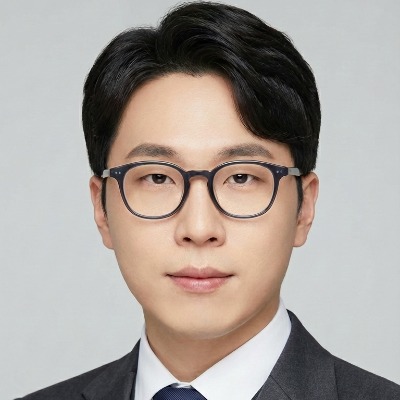 By Jang Hojin
In an industry where stories about celebrity-manager conflicts regularly make headlines, actor Park Ji-hoon just reminded the internet what genuine kindness looks like. A dental clinic owner's social media post about the actor's quiet generosity toward his management team has gone viral across Korean online communities, painting a portrait of celebrity character that stands in sharp contrast to recent industry controversies.
The story surfaced on March 17 when a dental clinic owner shared an account of an incident involving Park Ji-hoon and his managers. According to the post, which quickly spread across major Korean online platforms, the actor had been bringing his management staff to the clinic for treatment. When internal changes at the clinic caused treatment costs to rise significantly beyond initial estimates, the managers found themselves caught off guard by the unexpected expense.
What Actually Happened at the Dental Clinic
The clinic owner detailed the sequence of events with specificity that lent the story credibility. Several months prior to the post, a shift in the clinic's internal pricing had caused dental treatment costs to increase substantially. The managers, who had been receiving care at the facility, were visibly flustered by the new figures. What happened next is what turned an ordinary dental visit into a viral moment.
Park Ji-hoon, upon learning about the situation, stepped in and paid the full treatment costs for all of his managers — not as a public gesture, not in front of cameras, but as a matter-of-fact response to his team being placed in an uncomfortable position. The clinic owner described the scene with evident admiration, noting that the actor handled the situation without fanfare or expectation of recognition.
Furthermore, the clinic owner revealed that Park Ji-hoon continued to cover his managers' treatment costs even after the initial incident, establishing an ongoing arrangement that ensured his staff would not face financial burden for their dental care.
Why This Story Struck a Nerve
The viral response to this story is inseparable from its timing. Korean entertainment has been navigating a period of heightened public scrutiny regarding the treatment of industry staff, with several high-profile disputes between celebrities and their management personnel making national news in recent months. Against this backdrop, a story about a top actor voluntarily absorbing medical costs for his team carried an amplified emotional resonance.
The clinic owner explicitly acknowledged this context in the original post, writing that as someone who had been hearing about negative incidents between managers and celebrities, the experience with Park Ji-hoon felt genuinely warm and humane. The quote resonated widely because it articulated what many readers were already feeling — relief at encountering a positive story in a space that had recently been dominated by conflict narratives.
Online communities responded with an outpouring of praise. Commenters pointed to the story as evidence that Park Ji-hoon's on-screen warmth reflects his actual personality, while others noted that the act of covering staff medical expenses — without being asked and without publicizing it — demonstrated a level of thoughtfulness that went beyond standard celebrity benevolence.
The Man Behind the Viral Moment
For those unfamiliar with Park Ji-hoon's current standing in Korean cinema, context is essential. The actor has recently achieved one of the film industry's most coveted milestones: his movie The King's Warden is approaching 14 million tickets sold, placing him in the elite club of actors who have headlined a ten-million-plus viewer hit. In Korean film, this threshold carries enormous cultural weight — it means roughly one in four South Koreans has seen the movie in theaters.
The success of The King's Warden elevated Park Ji-hoon from a respected working actor to a genuine box office force. Yet the dental clinic story suggests that the astronomical numbers have not altered his fundamental approach to the people who work closest to him. In Korean entertainment culture, where hierarchy and status often dictate interpersonal dynamics, the decision to treat managers as people whose medical well-being is your personal responsibility is not the default behavior.
Park Ji-hoon's representatives at YY Entertainment have not issued a formal statement about the viral post, which is itself telling — the actor appears to have no interest in leveraging a private act of generosity for public relations purposes.
A Story That Speaks Louder Than Numbers
The Korean entertainment industry produces no shortage of impressive statistics: chart records, streaming milestones, box office figures. But the stories that embed themselves in public memory are often the ones that reveal something about character rather than commercial success. Park Ji-hoon's dental clinic moment belongs to this category.
It is a small story in the grand scheme of the industry. No press conferences were held. No official statements were released. A dental clinic owner simply told the internet about a famous actor who noticed his staff was worried about medical bills and decided, without being asked, to make the problem disappear. That this act of ordinary decency became extraordinary enough to go viral says something about the standards the public has come to expect from celebrities — and something about the man who exceeded them without trying.
For the fans who have supported Park Ji-hoon through his rise to 14-million-ticket stardom, the story confirmed what they believed all along: that the warmth he projects on screen is not a performance. For the broader public, it offered a reminder that the most meaningful measure of a person's character is often found not in their greatest achievements, but in how they treat the people who help them get there.
Super Junior and BIGBANG: Two Pillars of K-Pop History
To fully appreciate the weight of Donghae's story, it helps to understand just how consequential both Super Junior and BIGBANG became. Super Junior, debuting in November 2005, broke ground as one of the first K-pop acts to build a massive pan-Asian fanbase — particularly in China, where the group's popularity during the late 2000s helped define what K-pop expansion into new markets could look like. The group went on to release multiple successful albums and subunits, and members like Donghae have remained central figures in Korean entertainment for more than two decades.
BIGBANG, debuting in 2006 under YG Entertainment, took a different path — one that pushed K-pop further toward artistic individuality than any group before them. Led by G-Dragon, who became not just a pop star but a fashion and cultural icon across Asia, BIGBANG redefined what K-pop idols were allowed to be: songwriters, producers, and genre innovators. Taeyang brought soulful R&B to a genre that had leaned heavily on dance-pop, while Daesung carved out a reputation as a vocalist of unusual warmth and emotional depth.
Donghae nearly ended up in one world and instead defined another. His story from Jip Dae Seong is funny on the surface — the awkward trainee who could not say a word to G-Dragon and Taeyang at a PC bang — but it also quietly captures something real about how K-pop's greatest generation came together before the world was watching. Both groups shaped the industry in ways that still resonate today, and the thought of their rosters being even slightly different is enough to make K-pop fans do a double take.
For anyone who grew up listening to both Super Junior and BIGBANG, the mental image of Donghae sitting frozen in that PC bang while two future legends played video games beside him is almost too cinematic to process — and that is precisely what makes it such an irresistible piece of K-pop history.
How do you feel about this article?
저작권자 © KEnterHub 무단전재 및 재배포 금지
Entertainment Journalist · KEnterHub
Entertainment journalist specializing in K-Pop, K-Drama, and Korean celebrity news. Covers artist comebacks, drama premieres, award shows, and fan culture with in-depth reporting and analysis.
Comments
Please log in to comment