The Song That Broke YouTube: 'Gangnam Style' Reaches 6 Billion Views
PSY's 2012 masterpiece rewrote the rules for K-pop's global reach — and 14 years later, it's still adding views
 By Ricky Joo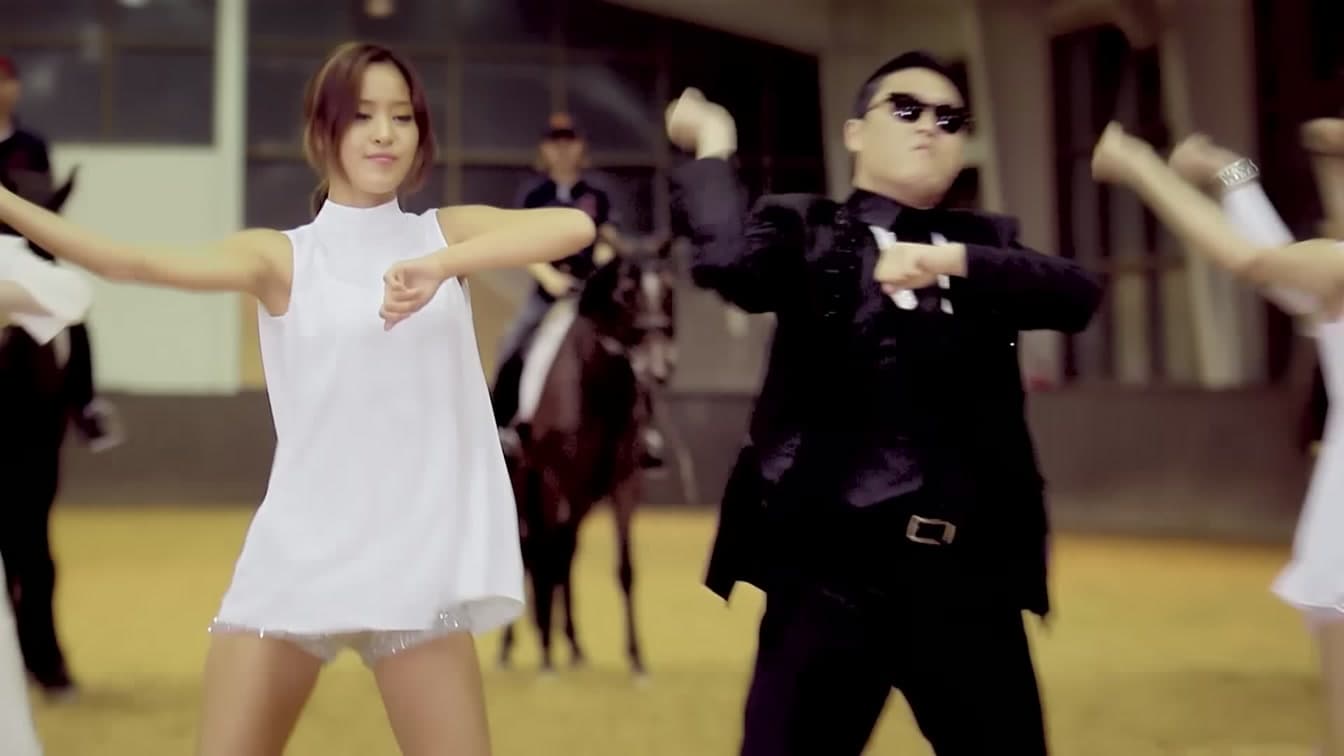
Fourteen years after it first appeared on YouTube, PSY's "Gangnam Style" has done it again. On July 17, 2026 — two days after the song's fourteenth anniversary — the music video crossed the 6 billion view mark, becoming the first K-pop video in history to reach that milestone. The number is extraordinary. But what makes it remarkable is not just that it happened; it's how it happened, and what it reveals about the enduring power of a song that rewrote the rules of global pop music before anyone knew there were rules to rewrite.
P Nation, PSY's management agency, confirmed the achievement on July 20, calling it "a landmark achievement in K-pop history." PSY himself was mid-tour at the time, performing in Gwacheon as part of his annual SUMMERSWAG summer festival series. He marked the occasion by stepping onstage in the iconic sky-blue jacket from the original music video — a deliberate callback to the moment that changed everything — and celebrated alongside tens of thousands of fans who had packed the venue.
The Song That Broke YouTube Before YouTube Knew It Could Break
To understand what 6 billion views actually means, it helps to remember what 1 billion meant in 2012. When "Gangnam Style" became the first YouTube video to surpass 1 billion views on December 21, 2012 — just five months and six days after its July 15 release — it exposed a structural flaw in the platform itself. YouTube's view counter had been designed with a maximum value of 2,147,483,647, the upper limit of a 32-bit integer. Engineers had never anticipated a single video reaching those numbers. They had to quietly update the counter to a 64-bit integer to accommodate the traffic.
That engineering scramble is a useful metaphor for what "Gangnam Style" did to the K-pop industry. It arrived at a scale the infrastructure wasn't built for, forced a redesign, and kept on growing. By the time it hit the Billboard Hot 100 chart in the United States, it had reached #2 — spending seven consecutive weeks in that position, blocked from the top only by Maroon 5's "One More Night." It was the first Korean-language song to crack the Hot 100 at all, let alone to sustain that position for nearly two months.
The Math Behind 6 Billion: What the Numbers Actually Reveal
Spread across the video's fourteen-year lifetime, 6 billion views works out to approximately 1.17 million plays every single day since July 2012. That figure alone is staggering — but the more telling data point is the rate at which the most recent billion arrived. "Gangnam Style" cleared 5 billion views on December 30, 2023. It added the next billion in roughly two years and seven months. That is not the pattern of a nostalgic curiosity coasting on residual algorithms. That is the behavior of content with active, ongoing cultural relevance.
For context, "Gangnam Style" is now the ninth music video to surpass the 6 billion view threshold, joining a club that includes Luis Fonsi's "Despacito" (9.06 billion), Wiz Khalifa's "See You Again" (7.01 billion), and Ed Sheeran's "Shape of You" (6.74 billion). Among K-pop videos, it remains in a tier entirely its own — no other Korean-language music video has come close to the same order of magnitude.
The video's longevity also points to something structural about how "Gangnam Style" entered global culture. Unlike many viral phenomena that spike and evaporate, PSY's song embedded itself into international media at a level where it gets rediscovered by new audiences continuously. Every reference in a television show, every birthday party where someone plays the horse dance, every retrospective on YouTube's history feeds the counter a little further. The song's trajectory is less a fading viral arc and more a perpetual cultural institution.
Why "Gangnam Style" Remains the Pioneer Every K-Pop Artist Still Follows
The song's significance in 2012 was not just that it was popular. It was that it was the first proof of concept for a specific model of K-pop global expansion: release a visually striking, rhythmically irresistible music video on YouTube, make the concept absurd enough to generate organic parody and imitation, and let the platform do the distribution work that traditional record labels could not have done for an unknown Korean artist. PSY himself described it this way in subsequent interviews, calling YouTube "the platform that completely changed the landscape of Hallyu" and calling "Gangnam Style" "the first successful example of using new media to break into the world stage."
That model has since been refined and replicated by virtually every major K-pop act. BTS' rise, BLACKPINK's crossover, and the current generation's global debut strategies all draw from the same basic architecture that "Gangnam Style" demonstrated was possible. PSY did not just have a hit — he ran an experiment, got the result, and left the data for everyone who followed.
The difference between PSY and what came after is that he achieved this without the full industrial machinery of the modern K-pop system. He was not a product of a trainee pipeline. "Gangnam Style" was built on irreverence and parody — a comedian's sensibility rather than an idol's polish — and its global resonance proved that the appetite for Korean content was not contingent on a specific aesthetic. Authenticity, rhythm, and a genuinely funny concept were enough to detonate something the industry had not anticipated.
A Milestone Celebrated on Stage
PSY's response to the milestone was characteristically unassuming. Rather than a formal press event, the celebration happened mid-concert — at his Gwacheon show on July 18, in front of tens of thousands of fans who had turned out for his SUMMERSWAG 2026 summer tour. He wore the sky-blue jacket from the original music video, a deliberate and knowing callback, and announced that footage from the night would be used in his official 6 billion view tribute video for YouTube.
According to P Nation, PSY told the crowd: "I want to share this historic moment by breathing the same air as today's audience." The statement captures something essential about the song's enduring appeal — it has always worked best as a shared experience, something happening with an audience rather than for one.
The Road Ahead for the Song That Has Nowhere Left to Go (Except Up)
The SUMMERSWAG 2026 tour continues through August, hitting nine cities across South Korea in fourteen performances — Uijeongbu, Daegu, Incheon, Gwacheon, Wonju, Suwon, Gwangju, Busan, and a finale in Daejeon on August 22 and 23. The tour's continued scale, more than fourteen years into PSY's career, is itself a data point about what "Gangnam Style" built.
Whether the video reaches 7 billion views depends on factors that are genuinely unpredictable — whether a new generation of creators references it, whether a cultural moment puts it back in the conversation, whether the algorithm surfaces it again. What is not in doubt is that "Gangnam Style" has already done the work that mattered. It proved that the global music audience had appetite for Korean pop culture at a moment when the evidence was limited and the skeptics were many. Everything that has followed in K-pop's global rise — every streaming record, every stadium sold out outside Korea, every crossover with Western pop — traces some part of its lineage back to a horse dance on a July afternoon in 2012.
Six billion views is not a destination. It's a reminder that some beginnings never really end.
How do you feel about this article?
저작권자 © KEnterHub 무단전재 및 재배포 금지
New Music & Comebacks Reporter · KEnterHub
New-music reporter covering K-pop comebacks as they drop. Ricky Joo tracks official channel premieres, music video releases and debut showcases, breaking down what each comeback signals about an artist's next chapter — often within hours of release.
Comments
Please log in to comment