The Stalker Fan Who Made Lee Hyun-woo Move Homes
Lee Hyun-woo, Kim Hyun-chul, and Yoon Sang reveal their wildest fan stories on KBS2's Rooftop Boys
 By Jang Hojin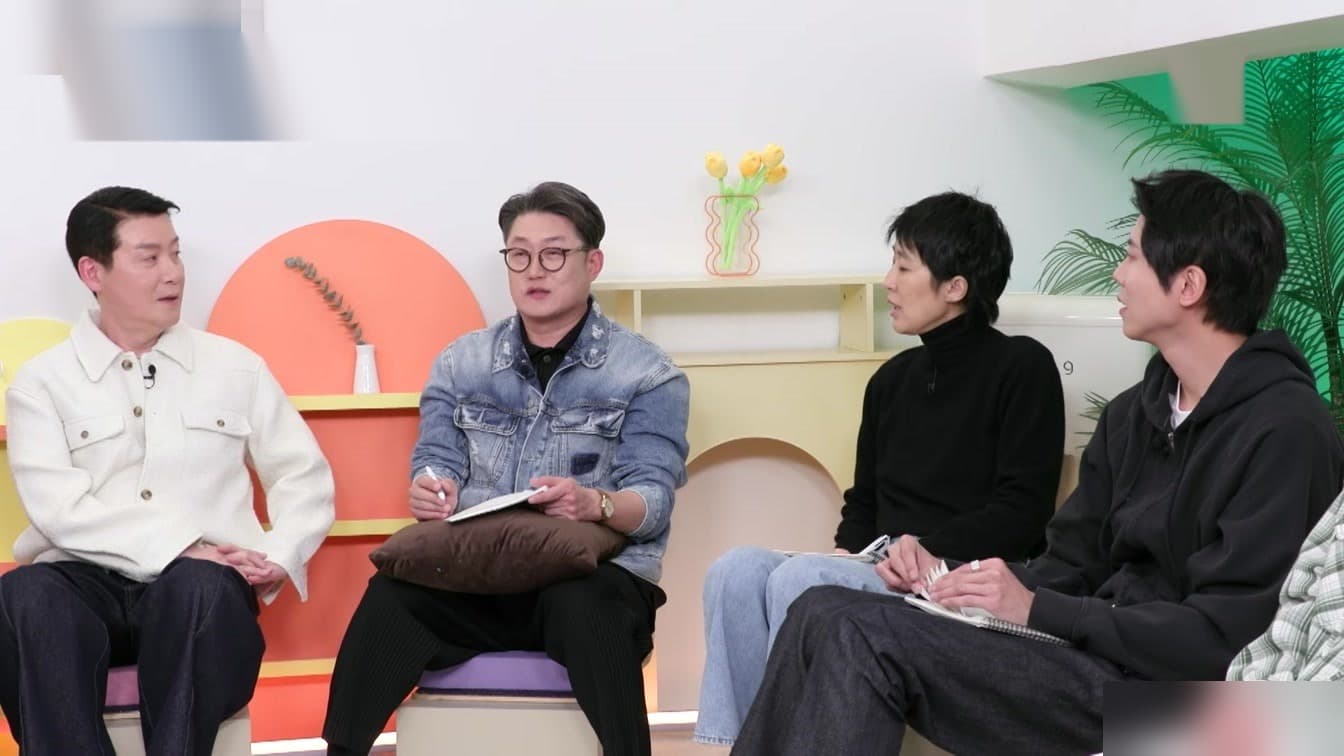
Lee Hyun-woo thought he had seen it all during his peak years as one of Korea's most beloved singers. Then a woman showed up at his elevator with a bag of mackerel at midnight — and that was just the beginning. On the May 7 episode of KBS2TV's Rooftop Boys (옥탑방의 문제아들), the 1990s icon sat down with fellow legends Kim Hyun-chul and Yoon Sang to revisit the era when their fan devotion crossed every imaginable line.
The three singers — often referred to collectively as the "Original Ear Boyfriend Trio" — were the defining voices of Korean pop in the 1990s. Their romantic ballads dominated the charts, their posters covered bedroom walls across the country, and their fan bases were, by today's standards, extraordinarily intense. Decades later, the stories they shared on the show confirmed what everyone suspected: the adoration was real, and sometimes alarming.
Lee Hyun-woo: The Fan Who Brought Midnight Mackerel
Lee Hyun-woo opened with what he called "the mackerel incident." Coming home one night between 11 p.m. and midnight, he stepped into his elevator to find a woman he didn't recognize holding a black plastic bag. When he asked what was inside, she pulled out a whole mackerel.
"I wanted to cook for you," she told him. "Why are you coming home so late?" The casual delivery — as if she had every right to be there — left him too stunned to respond. He described the moment on air with a mix of disbelief and reluctant amusement, noting that the fish was, at least, fresh.
That story, however, wasn't the one that changed his life. A different fan managed to infiltrate his world so thoroughly that his own mother was fooled. The woman became a familiar enough presence that when she appeared at his door, his mother opened it, mistaking her for a colleague or acquaintance. Lee Hyun-woo learned of it only afterward.
"I had to move because of it," he said on the broadcast. "More than once." The phrase landed quietly in the studio, but the weight of it was unmistakable. He had repeatedly uprooted his life to reclaim a basic sense of privacy — an extraordinary measure that underscores just how relentless the attention became.
Yoon Sang and Kim Hyun-chul: The Doorbell and the Airport
Yoon Sang, who later became one of South Korea's most celebrated music producers and is the father of RIIZE member Anton, recalled a fan who stood at his door ringing the doorbell without pause for five full hours.
Rather than call the police or simply wait it out, Yoon Sang eventually opened the door and asked the fan a question that has since taken on something of a philosophical aura: "Why do you like me?" He reflected on the moment with a kind of baffled self-awareness. "I was probably being a fool," he said — acknowledging that the question offered no practical resolution but spoke to the genuine confusion he felt about what was happening.
Kim Hyun-chul delivered what may be the most cinematic fan story of the three. Having received an invitation to appear at a radio station in the United Kingdom, he arrived at the airport to find a woman he had never met waiting with apparent conviction. She announced her intention to follow him to England. When staff indicated that was not possible, she proposed an alternative: the luggage compartment.
"She wasn't joking," Kim Hyun-chul said. The scene concluded with the woman crying in the terminal — not because she was physically stopped, but with an intensity that suggested the tears were simply part of how she experienced the moment. Kim Hyun-chul watched it all with a mixture of disbelief and something approaching helpless sympathy.
The Host Who Was Once a Stalker Fan
The most unexpected revelation of the episode came from host Hong Jin-kyung, the television personality and comedian who moderated the discussion. Before her debut as a model, she admitted, she had been an obsessive fan of Lee Hyun-woo himself — not a distant admirer, but the kind who showed up.
She visited his apartment complex three separate times. The first two visits, she turned back before doing anything significant. The third time, the same result. She never actually encountered him directly during those visits — but she kept returning, driven by a devotion she described as difficult to explain from the outside.
Lee Hyun-woo remembered her, though not in the way she might have expected. Because Hong Jin-kyung was significantly taller than most of the fans who gathered near his building, she stood out unmistakably. He had given her a nickname: "Olive" — a reference to the tall, spindly Olive Oyl character from the Popeye cartoons. He said this without any malice, as a simple fact of memory.
Hong Jin-kyung laughed. The woman who once stood outside a singer's apartment complex, unable to bring herself to ring the bell, is now a fixture of Korean broadcasting — a host who conducts the conversations that once seemed unreachable from the outside.
What These Stories Reveal About 1990s K-Pop Fandom
K-pop fandoms in 2026 are highly structured, with extensive infrastructure around artist interaction — fan sign events, online communities, and managed parasocial engagement. The behavior described on Rooftop Boys belongs to an earlier era, before the industry built systems to channel that intensity into something more organized.
What Lee Hyun-woo, Yoon Sang, and Kim Hyun-chul described is not unique to Korea. Extreme fan devotion has appeared in every music culture that produces celebrity at scale. But the specificity of their stories — and the lightness with which they retold them decades later — reflects a generational processing of experiences that were, at the time, genuinely disruptive and sometimes frightening.
Lee Hyun-woo moved homes repeatedly to escape a fan. Yoon Sang asked a philosophical question at his own door. Kim Hyun-chul watched a stranger propose traveling in a luggage compartment to cross an ocean. These are not small disruptions. That they can be retold now with laughter and nostalgia rather than anger says something real about how time reshapes even the most extreme memories.
For fans of 1990s Korean music, the episode offered something close to a reunion — not on stage, but in a bright studio where three men talked about fish, doorbells, and airports with the ease of people who have long since made peace with having been loved too much.
How do you feel about this article?
저작권자 © KEnterHub 무단전재 및 재배포 금지
Entertainment Journalist · KEnterHub
Entertainment journalist specializing in K-Pop, K-Drama, and Korean celebrity news. Covers artist comebacks, drama premieres, award shows, and fan culture with in-depth reporting and analysis.
Comments
Please log in to comment