The Surprise Finale That Made Dolsing N Mosol Click
Three couples, a ratings high, and a Season 2 question turned MBC Every1 and E Channel's dating experiment into a real variety-TV talking point.
 By Park Chulwon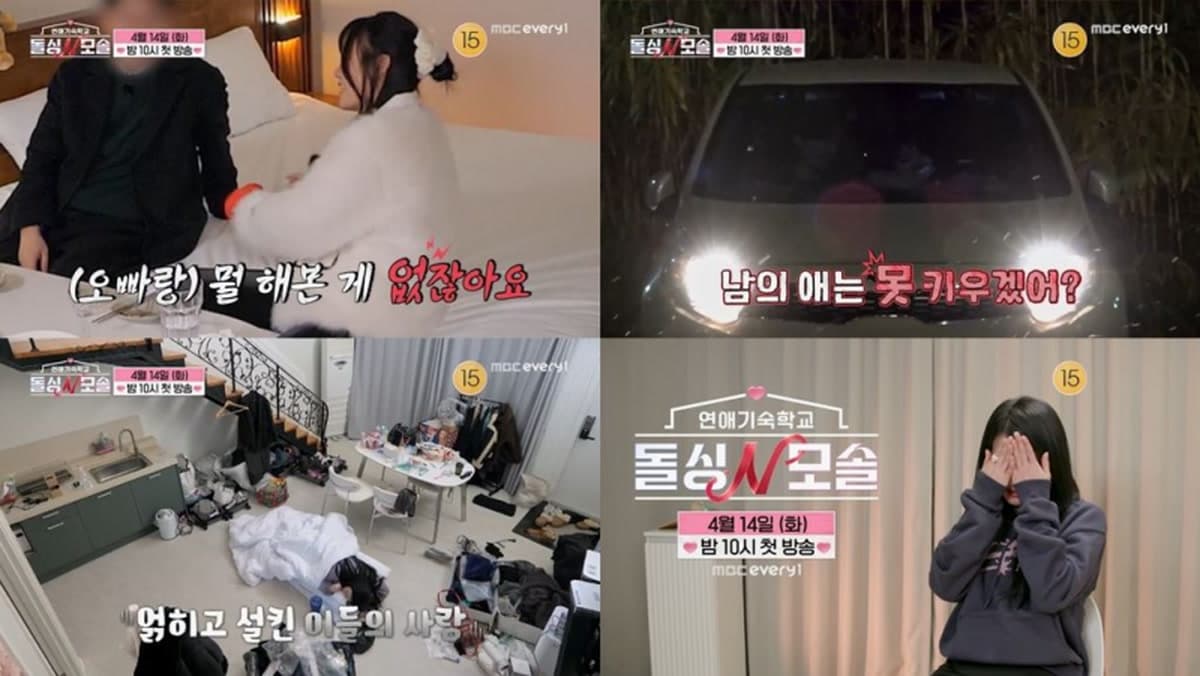
Dolsing N Mosol ended its first season with the kind of finale dating shows chase all season: real choices, visible growth, and three couples leaving the so-called dating boarding school together. The MBC Every1 and E Channel reality series mattered because it turned a risky premise, divorced women meeting men who had never dated, into one of Korea's most discussed relationship formats of the spring.
The final episode aired on June 2 and closed a five-night, six-day journey built around letters, graduation vows, and one last question for each contestant: did the connection feel strong enough to continue outside the cameras? By the end, Sugeumjihwa and Dujjonku, Bulnabang and Rookie, and Sunmu and George had all chosen each other. For a program that began with awkward silences and sharp differences in romantic experience, the result felt less like a simple matching score and more like a payoff to weeks of emotional trial and error.
The show's Korean title, Yeonae Gisuk Hakgyo: Dolsing N Mosol, roughly frames the format as a romance boarding school. The word dolsing is commonly used in Korean entertainment to refer to someone divorced and single again, while mosol is shorthand for a person who has never been in a romantic relationship. That contrast gave the series its hook, but the finale showed why viewers stayed: the cast members were not just choosing dates, they were learning how to speak honestly when their expectations did not match.
Three Couples Changed the Meaning of the Finale
Sugeumjihwa and Dujjonku became one of the finale's clearest emotional anchors. Their decision carried extra weight because their storyline had often centered on caution, pressure, and the fear that moving too fast could hurt both people later. Instead of presenting the match as a sudden fairy-tale turn, the finale emphasized the work behind it: hesitation, careful listening, and a willingness to keep learning together after the show.
Bulnabang and Rookie's pairing spoke to a different kind of challenge. Their story asked whether practical concerns could exist beside romantic curiosity, especially when one person wanted to be seen as a woman first and another had to consider family realities. Their final choice suggested that the show was most effective when it allowed cast members to name those concerns rather than pretending love could erase them.
The most surprising match for many viewers was Sunmu and George. George had spent part of the season looking like an outsider in the romantic race, and related coverage described his path as a growth drama from receiving no votes to becoming a final partner. Producer Kim Jae-hoon later said in an interview with Xportsnews that George's pairing with Sunmu surprised even the production team, a reaction that matched the way online viewers gradually warmed to him.
Not every thread ended in a couple, and that helped the finale avoid feeling overly manufactured. Seouljwi chose Maengkkongi, but Maengkkongi declined to make a final match after sorting through his feelings. Hyunmu picked Camellia, who did not write his name down but left room for a private meal away from the formal stage. Nakhwayusu expressed his feelings for Ping Pong, while she chose to leave their connection as a memory. Those non-matches gave the episode a more credible shape: a dating show can be hopeful without making every emotional arc tidy.
Ratings Turned a Niche Premise Into a Hit
The finale also gave Dolsing N Mosol a measurable win. According to Nielsen Korea figures cited by Korean entertainment outlets, the last episode recorded an average 1.4 percent and a peak 1.7 percent rating among women aged 25 to 49 in the Seoul metropolitan area, setting a new high for the program. Reports also placed the broadcast first in its time slot, including terrestrial channels, and noted strong performance among viewers in their 30s.
That growth was not sudden. Earlier in the season, Chosun English reported that Dolsing N Mosol had already outperformed Channel A's Heart Signal 5 among women in their 20s to 40s in the Seoul area, nearly doubling the rival show's figure in one key comparison. In a crowded Korean dating-show market, that early signal mattered. It showed that audiences were willing to try a format that looked less polished than the standard house-share romance formula but promised more friction and more adult stakes.
The concept first drew attention because it sounded provocative. Divorced women and never-dated men living together in a boarding-school-style environment could easily have become a gimmick. The stronger episodes, however, shifted the focus toward communication gaps: how someone with relationship scars reads silence, how someone with no dating history handles rejection, and how quickly affection can feel overwhelming when two people enter with different emotional timelines.
That is why the phrase growth story appeared so often in Korean coverage after the finale. The season did not rely only on who picked whom. It asked viewers to watch people revise their first impressions, apologize awkwardly, recover from embarrassment, and decide whether a connection was worth trying in real life. For international viewers used to the glossy pacing of Korean romance reality shows, Dolsing N Mosol offered a more uneven but unusually human rhythm.
The Production Team Is Already Looking Ahead
Kim Jae-hoon, the show's producer, gave more context in a two-part Xportsnews interview published after the finale. He said the project had been in planning for nearly a year and that the success of Season 1 quickly turned into pressure about Season 2. His comments are important because they make clear that the production team is not treating the finale as a one-off viral moment. The format is already being considered as a returning franchise.
The producer also addressed one of the season's most revealing behind-the-scenes moments: George had considered leaving during filming after struggling with the experience of not being chosen. According to Kim, the team explained the purpose of the program to him, and George gradually changed after taking time alone. That detail gives his final match with Sunmu more narrative weight. It was not simply a late twist; it was the result of a participant staying inside an uncomfortable process long enough to understand it.
MC Chae Jung-an also became part of the show's appeal. Follow-up coverage praised her warm, empathetic hosting style, and she said she wanted to embrace the cast members warmly after watching their emotional changes. In a format built around vulnerable non-celebrity participants, that tone mattered. The studio panel, which also included Kim Poong and Nucksal, helped translate awkward or painful moments into conversation without stripping away their sincerity.
Online reaction helped extend the show's reach beyond linear television. Korean reports pointed to active discussion in communities and social media, as viewers debated the final choices, reassessed contestants after each episode, and followed the cast's emotional development. The show also maintained visibility on OTT platforms, with related English-language coverage noting that it stayed in the upper ranks after expanding to streaming services. For a cable variety title, that kind of cross-platform attention is often what separates a brief ratings bump from a sustained fan conversation.
What Comes After the Graduation
The immediate next step is the behind-the-scenes content. MBC Every1 and E Channel are set to release additional stories from the first graduating class on their official channels on June 9. That follow-up should answer some of the questions viewers usually have after a dating finale: which connections still feel natural without the graduation stage, how the cast remembers the hardest moments, and whether the three couples are prepared for ordinary life after a high-pressure filming environment.
The bigger question is how Season 2 can keep the format fresh. Repeating the same contrast between divorced women and never-dated men will not be enough on its own now that viewers understand the premise. The next season will need casting that can create new emotional dynamics, editing that avoids turning vulnerability into spectacle, and enough patience to let conversations develop before pushing for dramatic payoffs.
Still, Season 1 leaves the producers with a strong foundation. Dolsing N Mosol worked because it found suspense in emotional literacy rather than only in jealousy. The finale's three couples gave viewers the satisfying headline, but the season's real achievement was showing that Korean dating reality still has room for formats about people learning how to love, not just people competing to be chosen.
How do you feel about this article?
저작권자 © KEnterHub 무단전재 및 재배포 금지
Entertainment Journalist · KEnterHub
Entertainment journalist focused on Korean music, film, and the global K-Wave. Reports on industry trends, celebrity profiles, and the intersection of Korean pop culture and international audiences.
Comments
Please log in to comment