The Tribe Returns With Bigger Dance And A Sharper Mask Metaphor
 By Noh Yechan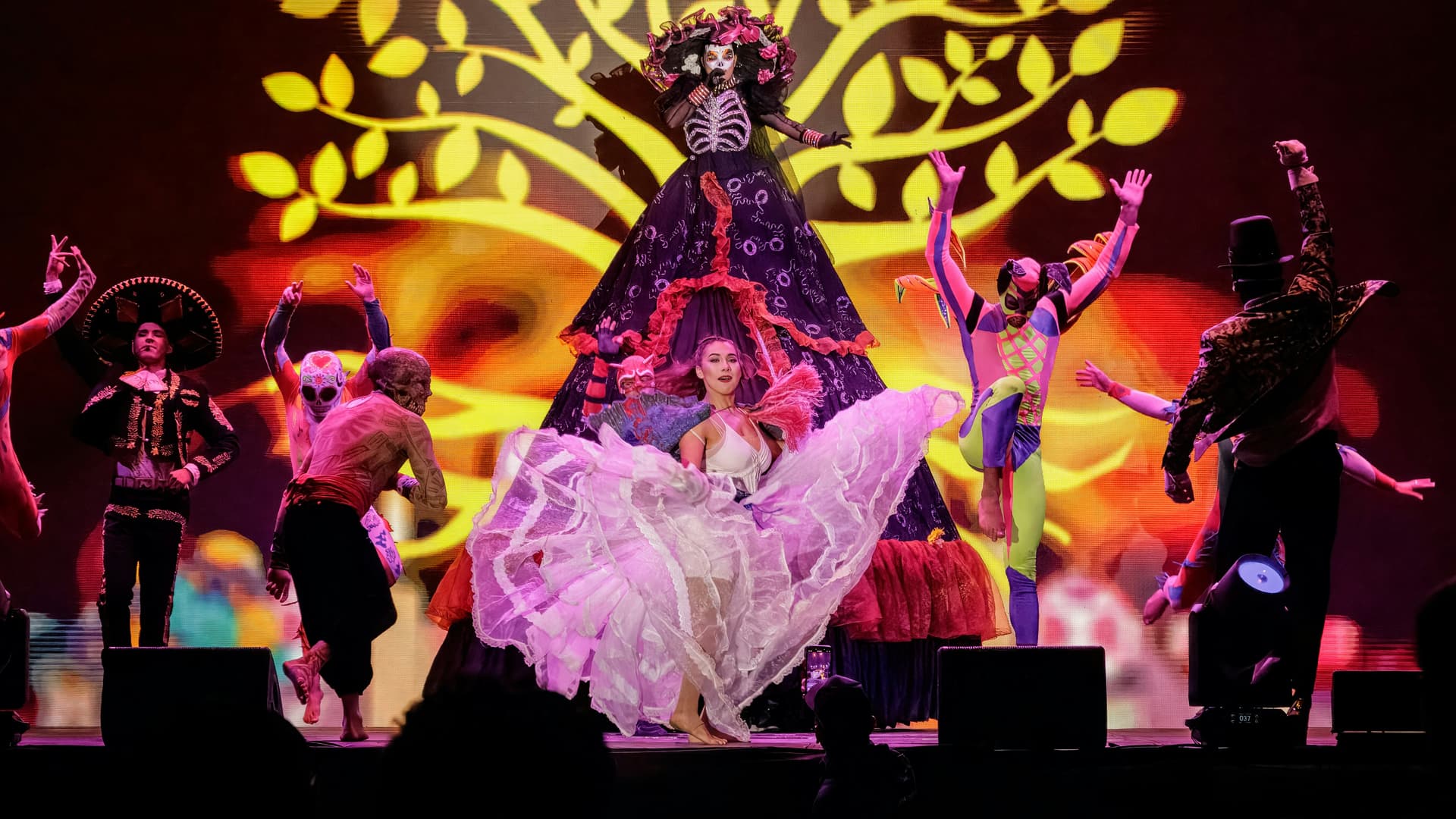
Seoul City Musical Company is bringing The Tribe back with a bigger physical language, a larger live sound, and a sharper comic engine built around one simple question: what happens when the masks people wear begin to crack? The Korean original musical, which returns to Sejong Center for the Performing Arts after its 2024 premiere, has been reworked for a broader stage and a more forceful emotional arc.
The story begins with Joseph, a restoration expert, and Chloe, a screenwriter, visiting a museum. After they accidentally break an ancient mask, a strange curse follows them: whenever they lie, an ancient tribe appears, singing and dancing with wild intensity until the characters are forced into an even more embarrassing corner.
That playful setup gives the production its immediate hook, but the creative team is aiming beyond a simple farce. The show uses the tribe's sudden appearances as a stage metaphor for the false selves modern people carry around so casually that they may no longer notice the performance.
A Return Built Around Bigger Movement
The new version opened June 9 at Sejong Center's M Theater and is scheduled to run through June 27. At a press event held June 11 at the same venue, Kim Deok-hee, head of Seoul City Musical Company, described the musical as a witty twist on contemporary people who live behind masks and forget they are wearing them.
Kim said the first version felt closer to a quiet drama, while the revival has been expanded for a medium-size theater. In practical terms, that means more visible conflict between characters, more muscular performance sequences, and a production that lets the title tribe feel less like a device and more like a physical force pushing the protagonists toward honesty.
The project has grown in stages. The Tribe first appeared as a reading in 2021 through a Korea National University of Arts graduation performance. It was later selected in the 2022 Creative Cradle script competition and then moved into a full staging through Seoul City Musical Company. When the musical premiered in 2024 at S Theater, it recorded a 99 percent seat occupancy rate, giving the revival a clear reason to return with greater scale.
For English-language readers who may be new to Seoul's original musical scene, that trajectory matters. Korea's commercial stage is often associated overseas with licensed global hits, K-pop idols crossing into theater, and prestige revivals. The Tribe represents another current in the industry: new Korean musicals built from local creative development programs and then tested in front of live audiences before being reshaped for a second life.
The Creative Team Reframes A Comedy As A Search For Self
Writer Jeon Dong-min said the original idea was always tied to the image of an ancient tribe creating an intuitive impact through overwhelming performance and music. In his view, the current version has moved closer to that initial dream because the stage now has the room and confidence to let the tribe's presence hit more directly.
Choreographer Chae Hyun-won has focused on the transformation Joseph and Chloe undergo as they dance with the tribe and gradually move away from lying. Chae described freedom and release as the heart of that process, and the revival's choreography has been designed to communicate that sensation through stronger movement rather than simply decorating the plot.
The music has changed as well. Composer Lim Na-rae expanded the live band from five members to eight, a shift that gives the production a more immediate stage sound. Lim explained that the premiere leaned heavily on African rhythms and acoustic colors, while the expanded story in the revival called for bolder use of electronic music.
Those choices are important because the musical's premise could easily become repetitive if every lie triggered the same comic beat. By broadening the sound palette and intensifying the dance vocabulary, the creative team gives each interruption a new texture: embarrassment, panic, release, or a moment of unexpected self-recognition.
Rather than treating the tribe as a joke that appears from nowhere, the revival uses the performers as a living pressure point: every lie has a rhythm, every evasion has a physical consequence.
Director Pyo Sang-a connected the show to the idea of dancing as if no one is watching. That image captures the musical's emotional target. The characters are not only trying to escape an external curse; they are learning how to stop measuring themselves through other people's eyes.
Why The Mask Motif Travels Beyond Korea
Although The Tribe is a Korean original musical, its central metaphor is easy to read across cultures. Joseph and Chloe's problem begins as an accident in a museum, but the real conflict is not the broken artifact. It is the gap between what they say, what they hide, and what their bodies reveal when music forces them into the open.
That is why the production may connect with younger theatergoers who live inside carefully managed social images. The ancient mask in the story functions less as a supernatural object than as a comic alarm system. Every time the characters lie, the stage refuses to let the lie remain private.
The revival also arrives at a moment when Korean musical theater is increasingly comfortable mixing popular entertainment with psychological themes. A show can be bright, rhythm-driven, and funny while still asking what kind of self a person is protecting when they pretend too well.
The creative team's comments suggest that the revival has been rebuilt with that balance in mind. The expanded performance is not only about spectacle. It is meant to make the characters' internal pressure visible to the audience, turning shame and avoidance into motion, sound, and eventually release.
From Strong Premiere To A More Ambitious Stage
The 99 percent occupancy figure from the 2024 premiere gives the return a notable record, especially for a newer original work. It shows that the earlier version found an audience, but the revival is not being presented as a simple repeat. The team has emphasized revised characters, adjusted direction, a larger musical texture, and more intense performance design.
That combination gives The Tribe a strong news angle for fans watching the growth of Korean stage content. The show is not only coming back; it is using its second run to test how far a comic concept can stretch when placed in a more ambitious production frame.
The casting and character details released through the fact pack center on the show's creative architecture rather than celebrity names, which also shifts attention toward the musical itself. For a scene often driven by star casting, that can be a strength: the hook is the idea, the staging, and the question of whether the revival can turn a clever premise into a fuller emotional experience.
For audiences, the most immediate appeal may be the promise of contrast. A museum accident leads to chaos; lies become dance cues; comedy opens into a story about self-acceptance. The production's tone is light enough to invite casual theatergoers, but its metaphor gives viewers something to carry out of the theater after the final number.
What Comes Next
The Tribe runs at Sejong Center for the Performing Arts' M Theater through June 27. The performance window is short, which makes the revival feel less like an open-ended return and more like a concentrated test of the musical's upgraded form.
If the new staging lands as intended, the show's path from university reading to script competition selection, full premiere, and expanded revival could become a useful case study for Korean original musicals. It shows how a compact idea can gain momentum when a company continues to revise it instead of treating the first production as the final word.
For now, the reason to watch The Tribe is clear. It takes a familiar anxiety, the fear of being exposed, and turns it into something loud, rhythmic, and oddly liberating. In a theater culture crowded with big titles, that kind of precise comic metaphor may be exactly what helps a newer Korean musical stand out.
How do you feel about this article?
저작권자 © KEnterHub 무단전재 및 재배포 금지
Film & Global Culture Reporter · KEnterHub
Film and culture reporter following Korean cinema from Chungmuro to Cannes. Noh Yechan covers theatrical releases, festival circuits and award season, and writes about how Korean entertainment reshapes global pop culture.
Comments
Please log in to comment