Their 30-Year Friendship Just Won Korea's Biggest Award
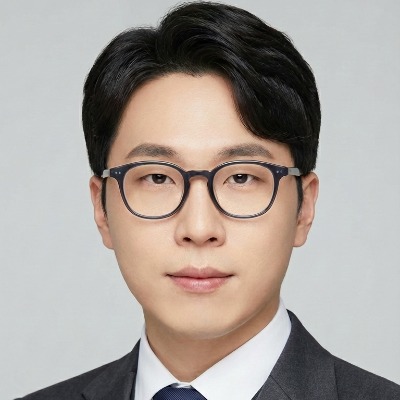
Yoo Hae-jin and Ryu Seung-ryong both claimed the Grand Prize at the 62nd Baeksang Arts Awards
 By Jang Hojin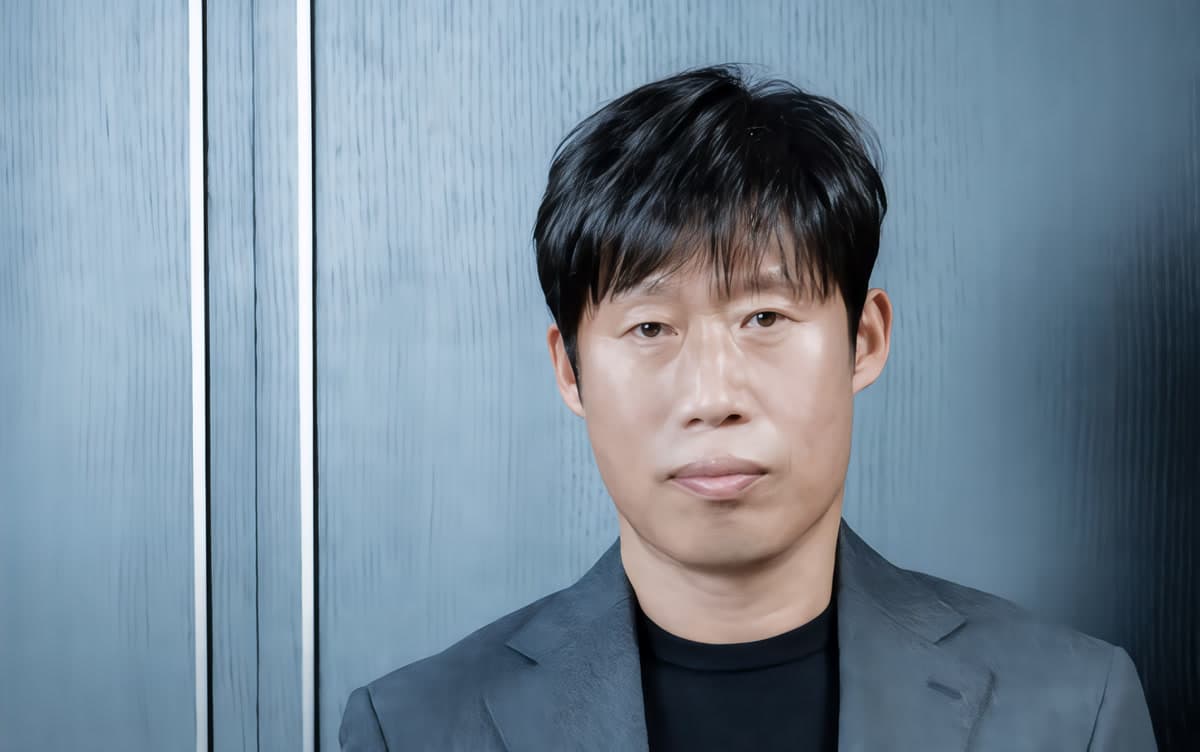
No one in the hall expected the night to end the way it did. The final Grand Prize announcement at the 62nd Baeksang Arts Awards had barely finished when Ryu Seung-ryong stepped up to the microphone — and instead of delivering the polished acceptance speech the moment seemed to call for, he started talking about a bidet factory. The story he told turned the room into something closer to a reunion.
Held on May 8, 2026 at COEX D Hall in Gangnam, Seoul, the 62nd Baeksang Arts Awards brought together Korean entertainment's most celebrated talents under the theme "The Stage." Broadcast on JTBC and live-streamed via Naver's Chzzk, the evening honored excellence across film, television, theater, and — marking a significant milestone — musical theater, which received its own category for the first time in the ceremony's history.
From a Bidet Factory in Jochiwon to Korea's Highest Acting Honor
The night's most resonant story began long before anyone walked a red carpet. Thirty years ago, two young men were trying to survive in Korean theater. Yoo Hae-jin and Ryu Seung-ryong both knew what it meant to have nothing — no stable work, no guarantee of a future in the industry they loved. At one point, they found themselves doing part-time labor at a bidet manufacturing facility in Jochiwon, sharing the kind of experience that either breaks a friendship or cements it permanently.
On May 8, 2026, they both won Korea's top acting prize on the same night.
Yoo Hae-jin took home the Film Grand Prize for his performance in The King's Man (왕과 사는 남자), a historical drama set in 1457 Joseon that became one of the most extraordinary commercial successes in Korean cinema history. The film drew approximately 17 million viewers domestically — placing it second in the all-time Korean box office — and converted Yoo, long considered one of his generation's finest supporting actors, into a bona fide lead.
"I started out doing supporting roles," Yoo said from the stage, "and at some point I thought to myself — if I can keep acting until I'm 45, that would be enough. And then the camera started coming toward me tonight." He laughed softly, then composed himself. "To the 17 million people who came out to the theater — you reminded everyone what it feels like to go to the movies."
Ryu Seung-ryong won the Television Grand Prize for his performance in Mr. Kim's Story (서울 자가에 대기업 다니는 김부장 이야기, JTBC), playing a middle-aged man watching every marker of his social identity — his apartment in Seoul, his corporate job title, his sense of purpose — disappear one by one. The performance resonated deeply with Korean audiences navigating similar pressures, earning the drama both strong ratings and widespread critical praise.
When Ryu accepted, he scanned the room until he found Yoo Hae-jin's face. "Thirty years ago," he said, "we were putting up theater posters in New York. And working a month at a bidet factory in Jochiwon. I never imagined both of us would be holding the Grand Prize in the same year." His voice cracked briefly. "I am overwhelmed." He closed with a quiet line that landed hard in the room: "Saving someone doesn't require anything grand. Sometimes it just takes one warm word."
Hyun Bin's Love Declaration and Park Bo-young's Unexpected Honesty
In the television acting categories, Hyun Bin won Best Actor for Made in Korea (메이드 인 코리아, Disney+), his first major award since returning to the screen following his military service. Director Woo Min-ho had encouraged him to embrace a sense of play on set — and the result was a performance critics noted as among his most relaxed and confident.
Hyun Bin's acceptance speech became, almost immediately, the most talked-about moment of the evening outside of the Grand Prize. After thanking his director and co-stars, he looked directly at his wife, actress Son Ye-jin, seated in the audience. "Ye-jin, and our son — thank you for supporting me through all of it. I love you." Son Ye-jin, who had been filming her husband's acceptance on her phone, broke into an enormous smile and waved at the cameras. The exchange was warm, unscripted, and very publicly adored.
Park Bo-young took Best Actress for her performance in Unknown Seoul (미지의 서울, tvN) — and used her platform for something few expected. Known for her approachable, cheerful public presence, she stood at the microphone and spoke plainly about competition, self-doubt, and the pressure of constantly having to prove herself.
"I hate competition," she said. "There were many moments where proving my value at every turn felt like too much." She paused. "But when I looked around at the people next to me, I saw actors who were extraordinarily good. And a stubborn, narrow part of me refused to fall behind. That drive is what built me. To the actors who became my best rivals — who pushed me forward without ever meaning to — I want to offer my deepest respect."
The speech resonated in ways that went beyond the ceremony itself, quickly circulating on social media as fans recognized in her words a kind of creative anxiety that rarely gets acknowledged from a winner's podium.
An Indie Film Director Stuns the Room, and Musical Theater Makes History
Best Film went to Park Chan-wook's Can't Be Helped (어쩔수가없다), which the director described, with characteristic humor, as "a film full of jokes from beginning to end." He accepted graciously and added: "I've missed Venice and the Oscars. But since I'm now a Baeksang-winning director, please trust me when I say: humor is how you find the exit."
The night's most surprising win came in Best Director, where independent filmmaker Yoon Ga-eun took the award for Owner of the World (세계의 주인), beating both Park Chan-wook and King's Man director Jang Hang-jun. She dedicated the award to survivors of familial sexual violence whose testimonies had shaped her film, saying: "I thought I was alone for much of this project. I wasn't. To everyone who shared their most painful, most luminous moments — this award is for you."
In television, Netflix drama Eunjung and Sangyeon (은중과 상연) won Best Drama. Film acting honors also went to Moon Ga-young (Best Actress, What If Us) and Park Jung-min (Best Actor, Face), with the latter — long nicknamed "the king without awards" — finally breaking his drought with characteristic wit: "I'm going to become the kind of actor who cares about awards now. I'll work hard with that in mind."
The introduction of the musical theater category was a landmark moment for Korean stage arts, coinciding with Korean musical theater's 60th anniversary. Kim Jun-su received the inaugural Baeksang Musical Performance Prize for his role in Beetlejuice. "I've only ever watched this ceremony on television," he said. "Just being in the room felt like an honor. And somehow I'm leaving with this."
The ceremony closed with a tribute to Korean entertainment figures lost in the past year, including the late Ahn Sung-ki, Lee Soon-jae, and Jeon Yu-seong. Their work appeared on screen as a musical performance played — and across the auditorium, some of the night's biggest winners sat quietly wiping their eyes.
Thirty years from a factory in Jochiwon to the Grand Prize stage. The 62nd Baeksang Arts Awards gave Korean entertainment one of its most enduring stories — not just about talent, but about time, friendship, and what it means to keep going.
How do you feel about this article?
저작권자 © KEnterHub 무단전재 및 재배포, AI학습 및 활용 금지
Entertainment Journalist · KEnterHub
Entertainment journalist specializing in K-Pop, K-Drama, and Korean celebrity news. Covers artist comebacks, drama premieres, award shows, and fan culture with in-depth reporting and analysis.
Comments
Please log in to comment