Two 90s Korean Supermodels Chase Paris Fashion Week at 50
How MBC's Sora and Jinkyung channels authentic regret into compelling television
 By Jang Hojin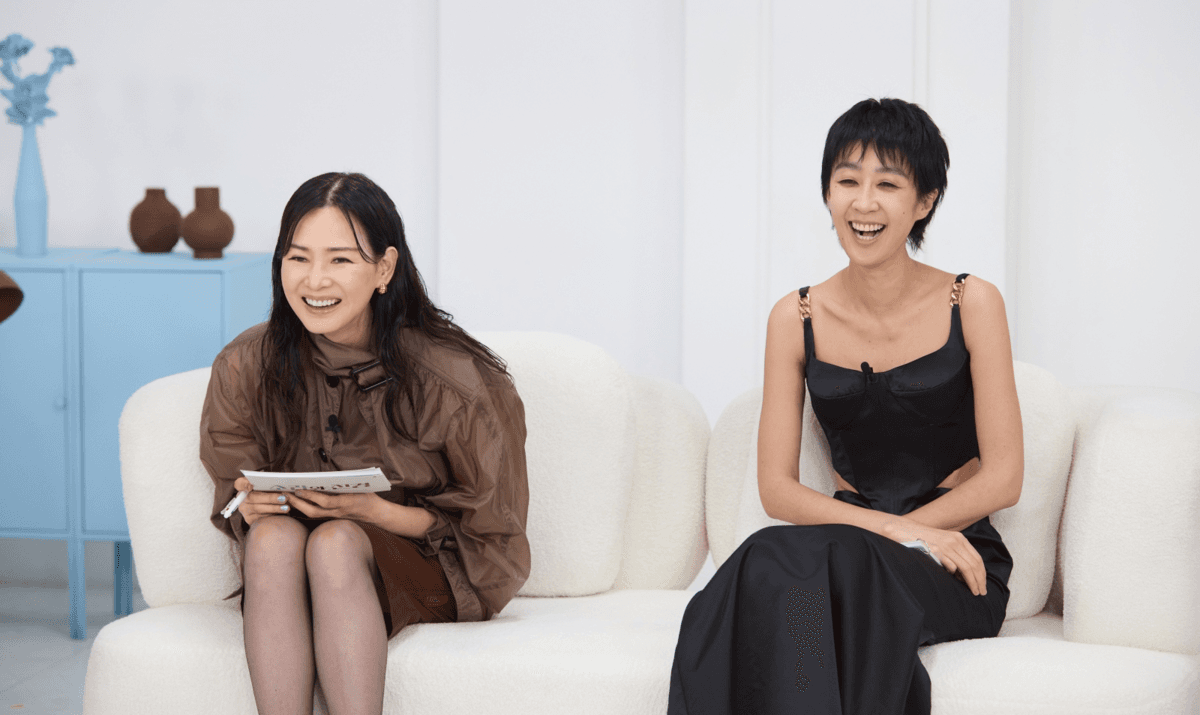
At 57 and 49, Lee So-ra and Hong Jin-kyung should not be preparing for a Paris fashion audition. But here they are, on MBC's "Sora and Jinkyung" — submitting portfolios to French modeling agencies, rehearsing runway walks with a 28-year veteran critic watching, and bracing for rejection in one of the world's most unforgiving industries. The show premiered April 26, 2026, and immediately drew roughly 3 percent of Korean viewers — a healthy launch for a broadcast variety slot — with the kind of emotional hook that manufactured K-variety formats can rarely replicate from scratch.
What makes their comeback compelling is not novelty. It is history. Both women defined the Korean modeling landscape in the 1990s. Lee So-ra was the first winner of Korea's inaugural Supermodel Selection Contest, a face plastered across every major advertising campaign in the country. Hong Jin-kyung became the first Korean signed by a global fashion house, then spent years in Paris and New York auditioning for shows that never cast her. She came home carrying nothing but a bruised ambition and, by her own account, shattered self-esteem. These are not celebrities being fed into an artificial challenge. These are people with genuine unfinished business — and the difference is visible in every frame.
From Runway to Reality: A 1990s Korean Modeling Legacy Revisited
The 1990s was a formative decade for Korean fashion. Globalization cracked open international runways to Asian faces, and Korea found itself with a small but determined cohort of women who believed they could break through. Lee So-ra arrived as the archetype: a singular presence who conquered domestic advertising before the internet existed to amplify celebrity status. She appeared in campaigns for shampoo, cosmetics, and jeans — the holy trinity of 90s Korean consumer culture — and became a cultural shorthand for aspirational womanhood during one of Korea's defining decades of modernization.
Hong Jin-kyung's trajectory was structurally different and, by the standards of the global fashion circuit, far more vulnerable. Signed as the first Korean model for a global fashion brand, she carried the weight of representation into an era when the industry had virtually no infrastructure for Korean faces. She went to Paris at roughly 22 years old, auditioned repeatedly, and left without a single runway credit. "I returned without being able to walk in a single show," she told viewers in an early episode. "My self-esteem hit rock bottom." She abandoned modeling entirely and rebuilt her career in variety entertainment — a field where her comedic timing and self-deprecating honesty made her a household name across Korea for the next two decades.
Their meeting in April 2026, after 15 years without contact, brought those two parallel histories into sharp collision: one who stepped away near the peak, and one who never quite got her moment. The show is organized around that asymmetry — and the asymmetry is why it works.
Why This Formula Works: The Emotional Mathematics of Second-Chance Television
Korean variety television has spent two decades perfecting one reliable emotional transaction: place a recognizable person in an uncomfortable situation, and let the audience watch them struggle authentically. The format behind "Sora and Jinkyung" runs on the same chassis, but with a crucial structural upgrade. Where most variety shows manufacture jeopardy — who gets eliminated, who earns the prize — this show taps into stakes that existed long before the cameras were switched on.
Hong Jin-kyung's Paris failure is not a backstory invented for television. It is 30 years of dormant regret that needed only a camera and an invitation to resurface. When she admitted on air that she was "afraid of looking embarrassed" and protective of her own feelings in advance, the resonance came from audiences recognizing something they already knew from their own lives. Second-chance anxiety is not unique to modeling. It is universal. That universality — the gap between who we imagined becoming and who we became — is the show's engine, running quietly beneath every casting prep scene and runway rehearsal.
The precedent is instructive. SBS's "Kick a Goal" (골 때리는 그녀들), which premiered in February 2021 with female celebrities learning football from scratch, ran for seven full seasons and accumulated more than 200 episodes over four years — remarkable durability for a format with no sports precedent in Korean celebrity variety. What that show proved was that Korean audiences will commit long-term to programming that puts real effort on a real stage, regardless of participants' age, athletic background, or prior fame level. The effort itself was the content.
"Sora and Jinkyung" takes that formula international. Paris Fashion Week is not a local pitch; it is a globally recognized symbol of unattainability, which sharpens both the aspiration and the potential for humiliation. The producers understand exactly what they are selling: the more extreme the goal, the more authentic the fear — and fear, when it is genuine, is riveting television.
The casting of Han Hye-jin as a mentor-critic in Episode 2 was a strategically precise editorial choice. With 28 years of experience across New York, Milan, and Paris fashion weeks, Han represents exactly what Hong Jin-kyung was attempting to become three decades ago. Her blunt assessment — that treating auditions as disposable undermines the entire exercise — landed as more than variety drama. It reframed Hong Jin-kyung's protective cynicism as an obstacle the show intends to help her dismantle, episode by episode. The mentor who has everything the student once wanted: that dynamic does not need a screenwriter.
The Age Factor: 50-Plus Women in a Youth-Saturated Industry
Korean entertainment's orientation toward youth is well-documented and commercially rational. K-pop groups debut younger, dramas cast younger, and the market's attention typically gravitates toward freshness over history. "Sora and Jinkyung" runs deliberately counter to this. Both women are over 49. Both are visibly older than the working models who dominate Paris runways. The show makes no attempt to disguise this gap — no soft-focus lighting strategy, no insistence that 50 is the new 30. Instead, it acknowledges the gap directly and asks a more interesting question: so what?
That question lands at a moment when Korean broadcast audiences have been signaling appetite for faces they grew up with. Viewers in their 40s and 50s — a demographic with strong broadcast loyalty and distinct consumer patterns — carry Lee So-ra's advertising legacy and Hong Jin-kyung's variety career as part of their own cultural autobiography. The nostalgia engine runs quietly beneath every scene, connecting the present-day challenge to a shared past that large numbers of viewers actually inhabited. That is a resource that new formats simply cannot replicate from scratch.
The detail that spread most widely online was not a runway moment. It was the reveal of a 30-year-old modeling exam ticket that Hong Jin-kyung had kept, quietly, through all the years she claimed to have moved on. That single prop communicated more about her relationship to this unfinished chapter than any scripted confession could. Something preserved in a drawer through decades of deliberate silence: the audience understood immediately what that meant, because it is a thing that most people do with some version of their own abandoned ambitions.
What the Paris Arc Determines — and What It Already Has
The full Paris chapter of "Sora and Jinkyung" is still unfolding. Episode 3 brings both women to the city facing actual agencies, actual casting rooms, and the gap between preparation and reality that variety television lives for. Success — even partial success, even the form of a single audition callback — would validate the show's emotional premise. Failure, handled honestly, would arguably make stronger television and a more durable long-term narrative for any subsequent episodes.
But "Sora and Jinkyung" has already demonstrated something significant, regardless of what happens in Paris. Korean variety television retains genuine appetite for stories that began before cameras arrived. The 30-year distance between Hong Jin-kyung's first attempt at Paris and this one is not a liability the format has to work around. For the right producers and the right broadcaster, that distance — charged with regret, survival, reinvention, and now an unexpected return — is the story itself. The runway ahead still matters. But the long walk to get there is what the audience is actually watching.
How do you feel about this article?
저작권자 © KEnterHub 무단전재 및 재배포 금지
Entertainment Journalist · KEnterHub
Entertainment journalist specializing in K-Pop, K-Drama, and Korean celebrity news. Covers artist comebacks, drama premieres, award shows, and fan culture with in-depth reporting and analysis.
Comments
Please log in to comment