TWS Just Swept Every Music Show in Korea — Here's Why Nobody Saw It Coming
How a group making music about turning twenty became the first 5th-gen boy group to achieve the Grand Slam
 By Park Chulwon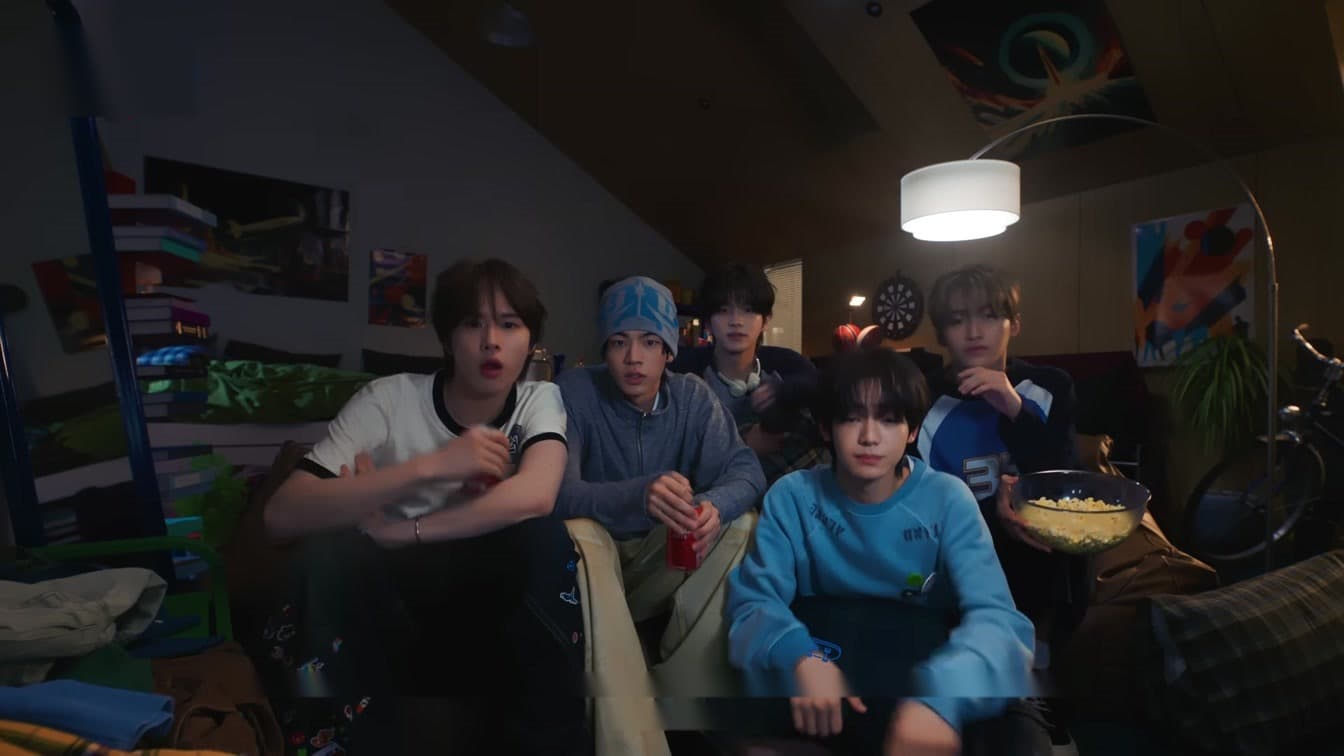
On April 21, 2025, TWS released their third mini-album, *Try With Us*. By the end of the first day, 456,557 copies had been recorded on the Hanteo Chart — the group's best single-day figure by a margin of more than 100,000 copies over their previous record. By the end of the first week, the total stood at 558,720. Over the following two weeks, "Countdown!" — the album's title track — accumulated wins at all six major Korean music shows: The Show, Show Champion, M Countdown, Music Bank, Show! Music Core, and Inkigayo. The Grand Slam was complete. TWS became the first fifth-generation boy group to achieve the feat.
TWS had debuted fifteen months earlier, in January 2024. In that span, they had released three albums — each one selling more than the last — swept rookie awards across every major Korean music ceremony, and established a commercial trajectory that had no close parallel among their peer groups. The "Boyhood Pop" concept they had introduced at debut was still in place: a deliberate positioning against K-pop's dominant fourth-generation aesthetic of dark lore, conceptual complexity, and emotionally intense visual universes. TWS made music about turning twenty, going on road trips with friends, staying up for late-night movies. The market rewarded them with numbers that the more dramatically positioned groups in their generation could not match domestically.
The Bright Concept Strategy in a Dark-Concept Era
The fourth and fifth generations of K-pop male idol groups arrived, commercially speaking, in the wake of BTS's global breakthrough — a creative model defined by emotional depth, thematic ambition, and carefully developed group narratives. The acts that followed — ATEEZ, ENHYPEN, Stray Kids, TXT, and others — built their identities partly in relation to the BTS template, emphasizing conceptual elaboration and emotional intensity that served both international streaming performance and the organized fandom engagement that drove album sales.
TWS's PLEDIS debut represented a deliberate departure from this dominant aesthetic. Their concept was explicitly built around youthful ordinariness — the daily pleasures and anxieties of adolescence, presented without dramatic framing. The debut single "Plot Twist" was a song about a crush. *Sparkling Blue* was an album about friendship and summer. *Try With Us* arrived at a specific biographical threshold — real members Hanjin and Jihoon were turning twenty during the album's promotional period — and used that threshold as its conceptual core. "Let's try together things we've never done before" was the album's stated meaning. The marketing made that meaning accessible without requiring any narrative context or accumulated lore investment from the audience.
The commercial advantage of this approach was legible in the domestic digital performance. Korean music chart performance is notoriously difficult for male idol groups, whose streaming audiences are largely composed of organized fandom who stream actively rather than casual listeners who discover organically. "Plot Twist" and "Countdown!" both achieved Melon top-100 placements at points in their chart runs — a benchmark that many fourth-generation male acts with higher album sales could not match. Pop culture critic Kim Do-heon attributed this specifically to the "three-part narrative around school youth growth" that made TWS's discography legible to audiences outside the organized fandom structure. A song about turning twenty was a song about something everyone had experienced. A song about a fictional universe's lore was a song about something that required investment to access.
The Discography That Built the Record
*Try With Us* was not a sudden commercial breakthrough. It was the fourth data point in a continuous upward trajectory that had been running since TWS's debut on January 22, 2024. *Sparkling Blue*, their first mini-album, sold 206,240 copies on its first day — a record among all 2024 debut groups, surpassing ILLIT's 142,307. That number was remarkable primarily as a proof of concept: PLEDIS Entertainment had demonstrated that a new group could enter the market with over 200,000 first-day copies, suggesting an institutional capacity to develop a dedicated fandom before commercial debut that was operating as designed.
*SUMMER BEAT!*, the second mini-album in July 2024, raised the first-week total to 513,892 — breaking the record set by *Sparkling Blue*. *Last Bell*, the November 2024 single album, added 338,719 first-day copies and topped Japan's Oricon Weekly Singles Chart with approximately 74,000 copies in that market. By the time *Try With Us* arrived in April 2025, the sales trajectory had been consistently upward across every release. The 456,557 first-day figure was large by absolute measure, but in the context of TWS's own history, it was the expected next increment of a progression that had been building for fifteen months.
The Circle Album Chart confirmed the album's domestic dominance: *Try With Us* debuted at number one with 553,178 copies in the first week, making it TWS's fourth consecutive number-one on that chart. The Weverse version charted separately at number three with an additional 54,912 copies — a result of the eleven physical version configurations that the album offered, including Try Ver., Boy Ver., seven Compact versions, KiT, and Weverse Album. Multiple physical versions are a standard K-pop commercial mechanism for increasing per-release purchasing volume within a dedicated fandom, and TWS's eleven-version configuration represented a mature application of the approach.
"Countdown!" and the Grand Slam: What Six Wins Actually Mean
The Korean music show Grand Slam — wins at all six major weekly programs in a single promotional period — is one of K-pop's most meaningful commercial benchmarks, partly because of the genuine difficulty in achieving it and partly because of what it measures. Music show wins are determined by combined fan voting, physical sales data, streaming numbers, and broadcast scores. A Grand Slam requires an act to perform competitively across all of those metrics simultaneously — winning against different competing releases in each week's contest while maintaining sufficient streaming and sales performance to accumulate points across the scoring categories.
TWS's Grand Slam for "Countdown!" was completed across six consecutive show wins between April 29 and May 4: The Show (9,570 total points), Show Champion (9,384), M Countdown (9,461), Music Bank (12,817), Show! Music Core (6,448 — their first-ever win on that program), and Inkigayo (5,987). The Show! Music Core win was itself notable because it represented a new music show for the group — expanding their win record to include a program where they had not previously placed. The completeness of the sweep — no major music show excluded — validated the album's domestic performance across all available commercial metrics simultaneously.
The achievement carried additional significance as a fifth-generation first. Grand Slams had been achieved by multiple fourth-generation groups and numerous third-generation acts, but no fifth-generation boy group had completed the sweep before TWS. The distinction placed their April 2025 campaign at a specific historical position in K-pop's generational commercial narrative — not merely another strong commercial performance, but a structural milestone in the progression of the new generation of acts competing for the market's attention.
PLEDIS, HYBE, and the SEVENTEEN Legacy
TWS's commercial position is inseparable from the institutional framework that produced them. PLEDIS Entertainment, founded in 2007, had been acquired by HYBE in 2020. Before TWS, PLEDIS's most significant commercial act was SEVENTEEN — the thirteen-member group that had become one of K-pop's most commercially consistent acts of the third and fourth generations, with a subunit strategy and sustained album sales that had made PLEDIS one of HYBE's most commercially productive subsidiaries.
TWS was PLEDIS's first new boy group in nine years since SEVENTEEN's 2015 debut. The introduction followed a pattern that mirrored SEVENTEEN's own origin: SEVENTEEN's fandom, CARAT, had been given a preview of TWS's trainees — faces covered — during SEVENTEEN's seventh fan meeting in March 2023, the same method by which SEVENTEEN had been introduced to their fans at a NU'EST fan meeting in 2013. The institutional genealogy was deliberate and legible. Dohoon, the TWS member with the longest training period at PLEDIS (seven years), stated directly: "Our role model is SEVENTEEN. All six members grew our dreams by watching SEVENTEEN." SEVENTEEN acknowledged the relationship concretely, buying the new group a celebratory meal before their debut.
The commercial comparison between TWS and SEVENTEEN at equivalent career stages is instructive. SEVENTEEN's debut in 2015 had generated strong album sales but at a significantly smaller scale than TWS's 2024 debut numbers reflected — a difference that partly measures SEVENTEEN's impact on expanding PLEDIS's institutional fanbase and partly measures K-pop's overall commercial growth between 2015 and 2024. By the time TWS debuted, PLEDIS's infrastructure included a globally distributed fanbase built on a decade of SEVENTEEN activity. TWS entered a market environment in which PLEDIS's name carried immediate commercial credibility, and the institutional support for building a dedicated fandom from debut was both better resourced and better understood than it had been when SEVENTEEN were starting.
The Album: Six Tracks at the Threshold of Adulthood
*Try With Us* contains six tracks organized around the concept of approaching adulthood with openness rather than anxiety. The album name carries a simple declarative weight: not "try this" as instruction, but "try with us" as invitation. The concept was particularly resonant because two of the members — Hanjin and Jihoon — were turning twenty during the promotional period, giving the album's themes biographical grounding that the fan community recognized and responded to.
"Countdown!" opens with the urgency its title implies: synth-pop production over electric guitar and punchy drums, building toward a chorus designed for maximum impact in live performance. The production was described by The Bias List as "incredibly solid" and by KPopReviewed as earning a 10/10 for performance value while rating the song itself at 8/10 — a distinction that reflected the track's relative conservatism in production compared to the performance execution's ambition. Some critics noted its production shares a foundation with "Plot Twist," TWS's debut single. Whether this represented creative consistency or cautious repetition was the album's most meaningful critical debate.
The remaining tracks extend the album's tonal range in ways that prevented it from reading as purely formulaic. "Lucky to Be Loved" opened the sequence with a devotional track expressing gratitude for acceptance during awkward developmental stages — the kind of emotional directness that K-pop typically reserves for balladry being applied here to an upbeat production context. "Random Play" captured the spontaneous-road-trip emotional register that has been TWS's most reliable commercial mode since debut. "심야 영화 (Now Playing)" brought a late-night cinema atmosphere that provided a contemplative counterweight to the album's more energetic tracks. "GO BACK" closed the sequence with a specific kind of romantic uncertainty — the moment of wondering whether something new could become love — that grounded the album's coming-of-age theme in a specific emotional experience rather than a general age category.
What TWS's April Proved About K-Pop's Domestic Market
The broader K-pop industry implication of TWS's April 2025 performance was a data point in a longer debate about which creative strategies translate domestic commercial success into sustainable careers. The fourth-generation dominance of internationally oriented, concept-heavy groups had produced genuine global commercial breakthroughs — ATEEZ, ENHYPEN, and Stray Kids had each developed substantial international audiences and Western chart presence. But it had also produced a cohort of groups whose domestic digital performance lagged their album sales, suggesting audiences who purchased as fandom participation without necessarily streaming as casual listeners.
TWS's domestic digital performance — "Plot Twist" and "Countdown!" both charting in Melon's top 100, a benchmark that many larger-selling fourth-generation acts could not achieve — pointed to a different commercial architecture. Their audience was smaller in terms of organized fandom size than the top-tier fourth-generation acts, but the overlap between their purchasing fandom and the broader Korean listening public was measurably larger. Songs that connected with people who were not already fans generated streaming numbers that no amount of organized fandom coordination could fully replicate.
By year-end 2025, TWS had accumulated 3,132,737 total Korean album sales and had released their fourth mini-album *Play Hard* in October with 639,787 first-week copies — another personal record, another increment in the progression. The trajectory showed no signs of having peaked. For a group in its second year of commercial activity, with the institutional support of HYBE and PLEDIS behind them and a creative approach that had demonstrated both commercial viability and critical differentiation, the April 2025 Grand Slam was not an endpoint. It was a milestone in a career that was still in the process of establishing its ceiling.
The International Dimension: Japan, Luxury Fashion, and Global Reach
TWS's April 2025 commercial performance was not limited to the Korean domestic market. The Japanese response to *Try With Us* provided a parallel data point about the group's international commercial development. The album debuted at number two on the Oricon Weekly Album Chart (dated May 5, 2025), with approximately 87,000 copies sold in Japan during the first week. In May 2025, the RIAJ certified the album Gold in Japan — representing 100,000 or more units shipped — making it TWS's second RIAJ Gold-certified release after *Last Bell*. On Billboard Japan's Hot Albums chart, *Try With Us* ranked fifth in the week of April 30.
The Japan performance was itself the product of sustained investment in that market. TWS had held their Weverse Japan Fan Meeting <42:CLUB> in March 2025 at Musashino Forest Sport Plaza in Tokyo, drawing approximately 30,000 fans over two days — a substantial live audience for a group in its second year. The fan meeting provided a promotional anchor point in the Japanese market in the weeks immediately before *Try With Us*'s release, activating the Japanese fandom's purchasing intent in advance of the album drop.
The international luxury brand dimension added another commercial layer. TWS had been named Celine's brand ambassadors in November 2024 — a French luxury fashion house association that reflected both the group's visual positioning and the fashion industry's growing recognition of K-pop's influence on global luxury consumption patterns. The Celine relationship extended TWS's visibility into media contexts that reached beyond K-pop's fan communities: fashion editorial coverage, runway-adjacent content, and the cross-market exposure that luxury brand partnerships have consistently provided for K-pop groups seeking to expand their audience beyond organized fandom.
At the Asia Artist Awards in December 2025, held in Kaohsiung, Taiwan, TWS won Best Musician in the Group Category for the second consecutive year — confirming their standing in the regional entertainment industry's assessment of generational commercial significance. The award, combined with the April Grand Slam, the Japan RIAJ certifications, and the sustained album sales trajectory, provided a multi-dimensional picture of a group whose commercial significance had moved from impressive-for-a-debut to simply impressive by any measure available.
Verdict: The Group That Proved Brightness Can Win
The K-pop industry had spent the early 2020s building an aesthetic consensus around the idea that male idol groups needed conceptual complexity and emotional intensity to generate global commercial traction. ATEEZ had their universe lore. TXT had their storytelling. ENHYPEN had their vampire mythology. The formula had worked for international audience development, producing groups with passionate global followings and Western chart presence.
TWS's April 2025 Grand Slam provided evidence that the formula was not the only formula. A six-member group from PLEDIS, making music about turning twenty and going on trips with friends, had achieved the domestic commercial milestone — the Grand Slam across all six music shows — that many of the more conceptually elaborate groups in their generation had not. The combination of straightforward emotional appeal, strong live performance credibility, and institutional infrastructure from HYBE and PLEDIS had produced a commercial trajectory that was, by the end of April 2025, unambiguously successful on its own terms.
The "Boyhood Pop" label that PLEDIS had constructed around TWS was, by April 2025, no longer just a marketing positioning. It was a demonstrated commercial strategy with four successful albums of evidence behind it. Whether TWS would eventually expand their conceptual range — incorporating the thematic complexity that their peer groups had built their identities around — or continue refining the bright concept approach through their career's development was the open question at the center of their next phase. What *Try With Us* confirmed was that the question was worth asking: a group this commercially effective at being exactly what they said they were had earned the right to decide what they wanted to become.
The six members themselves — Shinyu, Dohoon, Youngjae, Hanjin, Jihoon, and Kyungmin — had arrived at the April promotional cycle with their individual profiles more developed than they had been at any prior point in their careers. Shinyu's leader role had expanded beyond ceremonial function into genuine creative contribution, with songwriting credits appearing across the discography. Dohoon's seven-year training period had produced a performance versatility that expressed itself differently in each album cycle. Kyungmin, the maknae who had trained for only two years before debut, had developed a dance precision that reviewers cited as among the strongest in the group's generation. The individual profiles supported the group identity rather than competing with it — a balance that K-pop institutional structures sometimes produce and sometimes prevent, and that PLEDIS had managed effectively across the group's first fifteen months of commercial activity.
The fan community name — 42, pronounced as the Korean word 사이 (sai, meaning "relationship") and referencing the numerical foundation of the group name TWS (Twenty Four Seven) — captured something essential about the audience relationship that the "Boyhood Pop" concept had built. The relationship was the point: not the theatrical distance of concept, but the warmth of proximity. Music about turning twenty reached an audience that had turned twenty, or would, or remembered when they did. That audience bought the album, streamed the songs, and voted in the music shows. The Grand Slam in May 2025 was the institutional recognition of a fan relationship built, song by song, on exactly that kind of sustained proximity to ordinary human experience.
How do you feel about this article?
저작권자 © KEnterHub 무단전재 및 재배포 금지
Entertainment Journalist · KEnterHub
Entertainment journalist focused on Korean music, film, and the global K-Wave. Reports on industry trends, celebrity profiles, and the intersection of Korean pop culture and international audiences.
Comments
Please log in to comment