Urban Zakapa Turns KBS Stage Into a Vocal Reunion
 By Jang Hojin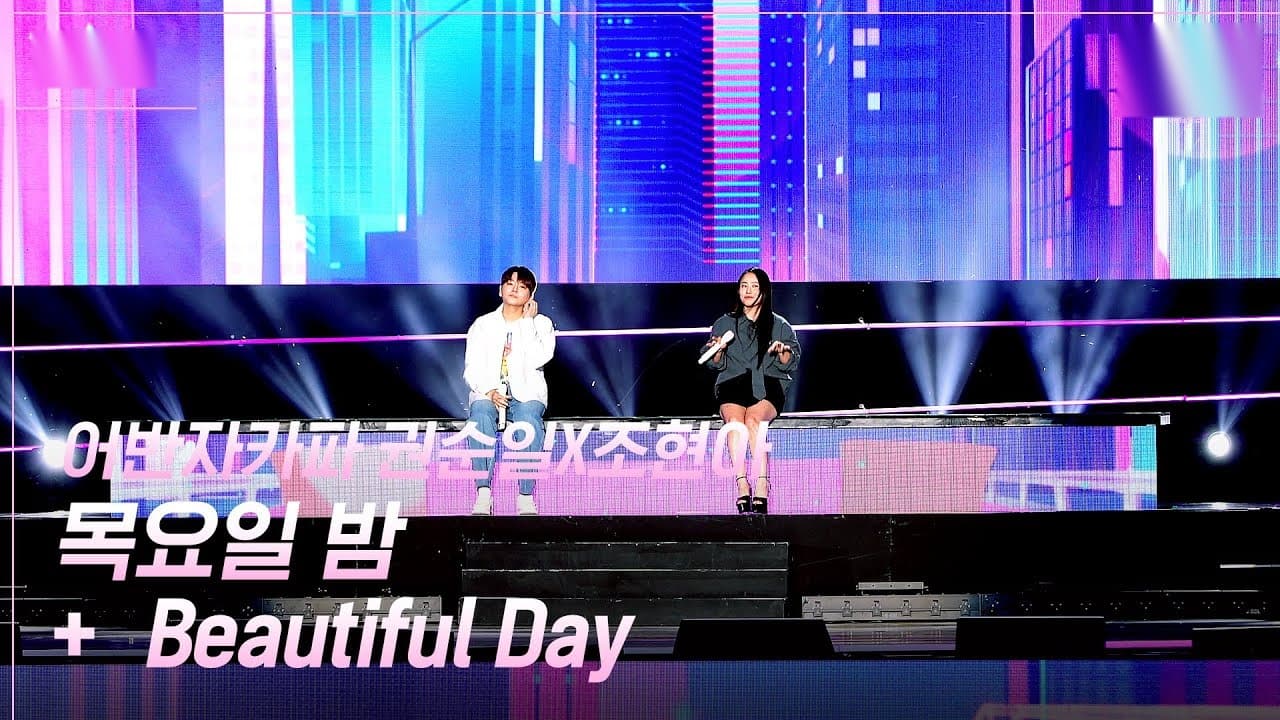
Urban Zakapa members Kwon Soon Il and Jo Hyun Ah brought a polished vocal reunion to KBS Kpop’s official YouTube channel with a new horizontal-stage clip from The Seasons: Sung Si Kyung’s Gommagnamchin. The video, uploaded from the June 12 broadcast, pairs two familiar live favorites, “Thursday Night” and “Beautiful Day,” in a compact performance designed for viewers who follow television music shows through replay clips as much as through the original broadcast. According to the KBS Kpop upload, the segment comes from the broadcaster’s long-running late-night music program, a space where vocal groups, idols, bands, and soloists can present songs with more room for tone, phrasing, and arrangement than a typical comeback stage allows.
The clip’s value is simple but effective: it places two Urban Zakapa voices in a clean television setting and lets the songs carry the narrative. “Thursday Night” remains one of the group’s most immediately recognizable upbeat pieces, while “Beautiful Day” gives the performance a brighter melodic counterweight. By placing the tracks together, the broadcast frames Urban Zakapa less as a nostalgia act and more as a catalog-driven group whose music still fits the present streaming and short-form discovery cycle. That matters for a team whose reputation has always been tied to live reliability rather than spectacle.
A broadcaster clip built around catalog strength
KBS Kpop’s presentation is especially suited to Urban Zakapa because the channel’s audience often returns to official clips after broadcast to isolate one performance, share it, and revisit individual vocal moments. The horizontal format gives the stage a direct concert-document feel, emphasizing faces, microphone work, and ensemble timing. In an era when many official music clips are edited for rapid visual impact, this one works because it does not need to overexplain the artists. It lets the contrast between Kwon Soon Il’s controlled tone and Jo Hyun Ah’s expressive phrasing become the main visual event.
The song choice also helps the segment speak to different groups of listeners. “Thursday Night” is an easy entry point for casual K-pop and K-ballad fans because of its groove and conversational mood. “Beautiful Day,” by comparison, leans into the warm, melodic side of Urban Zakapa’s identity. Together, the two tracks show why the group’s songs travel well across seasonal playlists, radio-style television programs, and concert setlists. For international fans who may know the name but not the deeper catalog, a combined stage like this offers a practical gateway.
Urban Zakapa’s broader appeal has long rested on that balance. The group can sit within K-pop coverage because its members are familiar entertainment figures and regular broadcast guests, but the music itself often follows the language of Korean R&B, ballad, and adult contemporary pop. That gives their official clips a different kind of shelf life. A dance performance may spike around choreography, while a vocal stage can continue gaining views whenever viewers search for comfort songs, duets, or late-night live vocals.
Why the two-song pairing works
The pairing of “Thursday Night” and “Beautiful Day” is more than a convenient medley. It sketches the group’s range in a short runtime. “Thursday Night” brings motion, rhythm, and a social mood; it is the song that can make a studio audience feel like it has stepped into a casual evening performance. “Beautiful Day” broadens the emotional color by shifting attention toward uplift and melodic warmth. The transition between the two allows the singers to move from lightness to brightness without breaking the intimate television tone.
That structure is useful for The Seasons, a program that often depends on conversation, musicianship, and curation rather than simple promotional timing. A performance like this can stand alone as an official YouTube asset while still pointing back to the full broadcast. Viewers who discover the clip through KBS Kpop can understand the show’s identity quickly: respected artists, live-focused production, and a host-led music-room atmosphere. The official upload also gives fans a clean source to share, which is important for preserving sound and image quality compared with unofficial reposts.
The clip arrives in a moment when official broadcaster channels have become central to K-entertainment circulation. For many fans outside Korea, KBS Kpop, MBCkpop, and similar channels are no longer secondary archives; they are primary discovery platforms. A song performed on television can re-enter conversation through a YouTube thumbnail, a search result, or a playlist recommendation. Urban Zakapa benefits from that environment because their music does not require detailed lore to be appreciated. A listener can arrive at the video with little context and still understand the appeal through the vocals.
Fan response and outlook
The expected fan response is likely to center on live tone, harmony, and the pleasure of hearing familiar songs in a current broadcast frame. Longtime fans will read the stage as a reminder of the group’s durable identity, while newer viewers may treat it as a prompt to explore earlier releases. The fact that the performance comes from an official KBS channel also makes it easier for fan communities to circulate the video without concerns over source quality or takedowns.
For Urban Zakapa, the stage reinforces a useful position in the market. The group does not need constant concept reinvention to remain relevant; it needs moments that remind listeners of its musical vocabulary. Official performance clips can do that efficiently. They package a familiar song in a fresh broadcast context, give search engines and video platforms new metadata, and create another shareable point for the catalog. When the performance is as straightforward as this one, the absence of heavy production becomes part of the message.
The next step will be whether the clip drives renewed attention to related performances, concert material, or new music activity. Even without a formal comeback narrative attached to the upload, this kind of appearance supports the group’s long-term visibility. It keeps Urban Zakapa in the conversation among viewers who use television music programs as trusted curators. More importantly, it shows that a well-sung catalog stage can still compete for attention in a feed crowded with teasers, dance challenges, and rapid promotional videos.
How do you feel about this article?
저작권자 © KEnterHub 무단전재 및 재배포 금지
Entertainment Journalist · KEnterHub
Entertainment journalist specializing in K-Pop, K-Drama, and Korean celebrity news. Covers artist comebacks, drama premieres, award shows, and fan culture with in-depth reporting and analysis.
Comments
Please log in to comment