WAVE CALL Makes AI Vocals Feel Personal
The producer's second single pairs a long-form confession title with official MV distribution and an early KakaoMusic chart signal.
 By Ricky Joo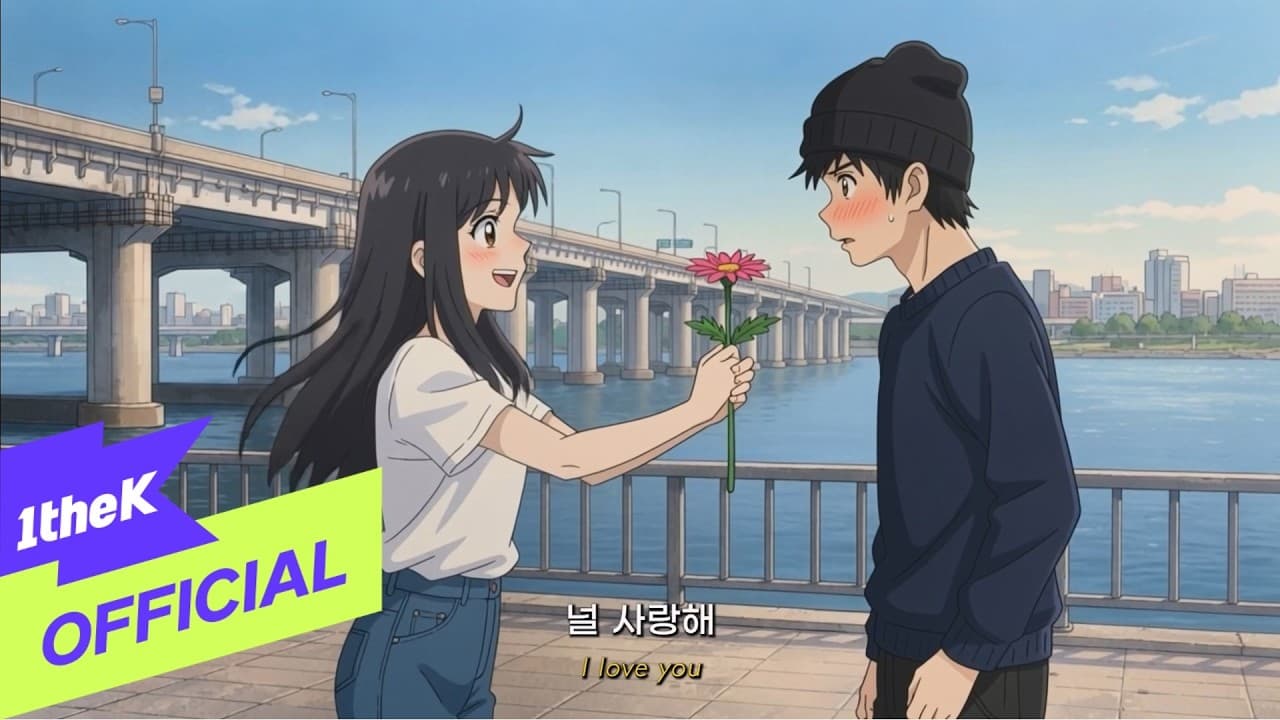
Featured on 1theK's official YouTube channel, WAVE CALL's "You Stole My Heart" arrives as a small but revealing case study in how AI-assisted music is entering the K-pop adjacent release system. The Korean title, "You stole my heart and I think about you all day," is unusually conversational and almost diary-like. Instead of hiding the song behind a compact English phrase, the release leads with a full emotional sentence. That choice matters because the track's most discussed production detail is its use of AI vocals. The title pushes the listener toward feeling before technology becomes the headline.
The single was released on July 29, and Korean coverage reported that it reached No. 1 on KakaoMusic's real-time TOP100 chart on July 30. The same coverage described the song as a love song from the perspective of a male narrator, built on a calm tempo, rhythmic sound and unadorned vocal tone. WAVE CALL handled the overall writing, composition and arrangement, while applying AI technology to the vocal area. That combination makes the release more than a novelty clip. It is a producer-led song using new tools inside a familiar pop structure.
A Love Song Before A Technology Story
The most effective part of WAVE CALL's framing is that the song does not appear to begin with a technical boast. The 1theK upload presents it in the same official music video environment as conventional idol and artist releases, and the Korean title does the emotional work immediately. The phrase is long, direct and almost awkward in a way that pop titles often avoid. But that plainness is also the point. It tells the audience that the song is about fixation, confession and the repetitive thought pattern that follows attraction.
That matters for AI-vocal music because audiences are often asked to evaluate the tool before the song. Is the voice believable? Is the use of artificial vocal production transparent? Is the track a demonstration or a record? WAVE CALL's single is more interesting when read in the opposite order. It starts as a simple romantic narrative, then reveals a production method that complicates how the listener understands the voice carrying that narrative. The emotional frame softens the technology question without erasing it.
The reported sonic description also points in that direction. A calm tempo and rhythmic arrangement give the song room to avoid overstatement. AI vocals can easily become conspicuous when a track demands too much theatrical range or hyper-detailed performance expression. A more restrained love song lets tone, phrasing and melodic repetition do the work. If the vocal is meant to sound plain and direct, the technology serves the character of the song rather than fighting it.
Why The 1theK Upload Is Important
1theK's official channel gives WAVE CALL a distribution frame that many independent or producer-led releases would struggle to secure on their own. The channel is a recognized K-pop gateway with an audience trained to browse new music videos across agencies, labels and projects. For a producer whose work crosses actual artists, AI singers and virtual-artist collaborations, that kind of platform matters. It places the release in a mainstream discovery lane instead of isolating it as a technology experiment.
The upload also includes 1theK's standard notice that the channel is an official music video outlet and that views from the channel count toward music-show rankings. Even if WAVE CALL's release does not function like a typical idol comeback, the notice situates it inside the same measurement culture. View counts, chart movement and platform visibility become part of the public story. The KakaoMusic real-time ranking then adds another early signal: listeners did not only encounter the song as a curiosity, they engaged with it on a music platform quickly enough to create chart momentum.
That does not mean one real-time chart result should be overstated. Real-time rankings can move quickly, and they often capture concentrated early interest more than long-term demand. But for a second single, especially one involving AI vocals, the signal is still meaningful. It suggests that WAVE CALL's audience is willing to treat the song as a pop release rather than a side demonstration of production technology.
AI Vocals And The Producer Identity
WAVE CALL's producer identity gives the project a flexible position. Korean reporting notes prior work with actual artists, AI singers and virtual artists, as well as a June debut track, "비가 와," that used AI vocals and entered YouTube's popular rising video chart. That background makes "You Stole My Heart" feel like a continuation of a defined creative path. The question is not whether AI vocals will appear once for attention, but how a producer can build a recognizable emotional and sonic language around them.
This is where the new single's plain-spoken approach may be useful. AI-vocal releases often face skepticism when they chase the same expressive space as human idols without acknowledging the difference. A producer-led love song can work differently. The voice becomes one layer in the arrangement, selected and shaped to serve the writer's concept. The listener can still care about the song's feeling while also noticing the production method behind it.
The title's translation also creates an interesting contrast with K-pop's usual global packaging. Many releases compress emotional ideas into short English hooks. WAVE CALL lets the Korean title remain expansive, then presents it on an international-facing channel where the English metadata simplifies it as "You Stole My Heart." That dual identity mirrors the track itself: human emotion in a familiar pop sentence, delivered through a production process that points toward a newer music economy.
What Comes Next
The release's next test is durability. A real-time No. 1, an official MV upload and AI-vocal curiosity can generate a strong first wave, but the song will need repeat listening and continued social circulation to become more than an interesting July data point. The track's advantage is that its concept is easy to explain. It is not an abstract technology pitch. It is a romantic song with a clear title, a calm rhythmic base and a vocal approach that gives listeners something to discuss.
For WAVE CALL, that may be enough to establish a lane. The producer does not need to resolve every debate about AI vocals in popular music. The more immediate task is to prove that a song using AI vocal production can still feel intentional, emotionally readable and commercially presentable. The 1theK release of "You Stole My Heart" is a step in that direction. It packages the experiment as a song first, and that may be the smartest way to make the technology feel less distant.
If WAVE CALL continues to connect official-video distribution with recognizable songwriting and chart-facing results, the project could become a useful indicator for how Korean pop platforms absorb AI-assisted production. The question is not whether AI will replace the emotional center of a song. In this case, the better question is whether a producer can use AI vocals to deliver a feeling simply enough that listeners stop treating the method as the only story.
How do you feel about this article?
저작권자 © KEnterHub 무단전재 및 재배포 금지
New Music & Comebacks Reporter · KEnterHub
New-music reporter covering K-pop comebacks as they drop. Ricky Joo tracks official channel premieres, music video releases and debut showcases, breaking down what each comeback signals about an artist's next chapter — often within hours of release.
Comments
Please log in to comment