What Brought Lee So Ra to Tears After Her 6-Year Hiatus
The legendary Korean singer opened up about fan comments, her health struggles, and her slow return to public life
 By Park Chulwon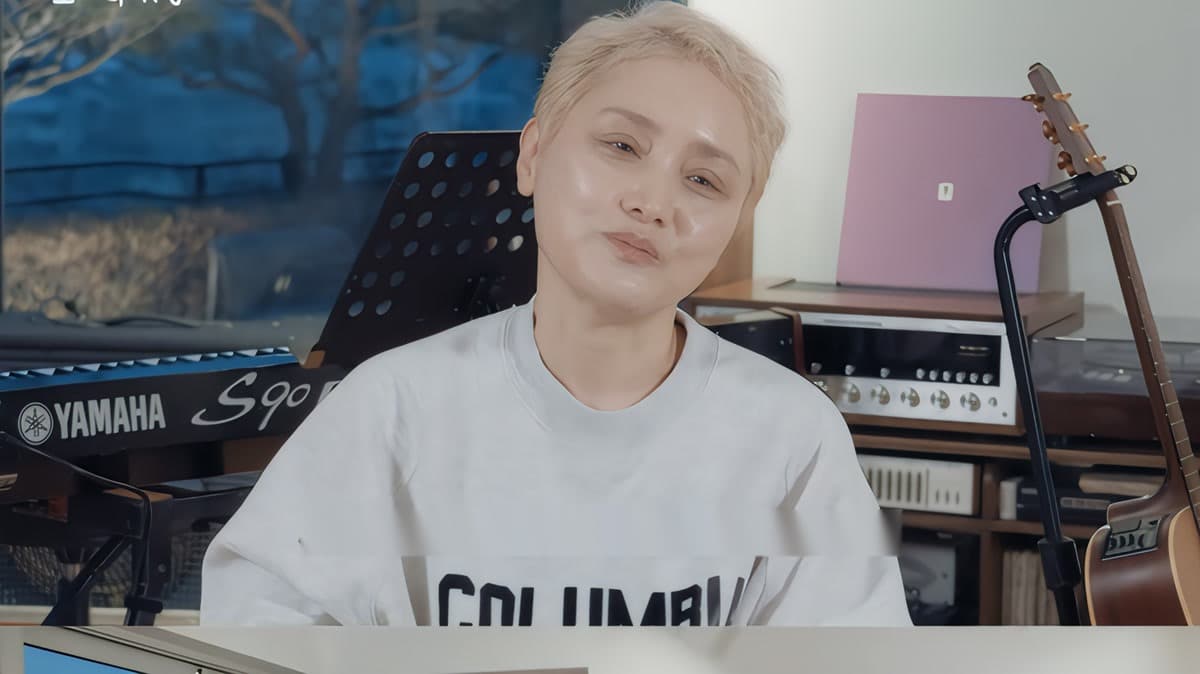
Singer Lee So Ra sat across from a fan who had admired her for years, listened to him describe exactly how much her music had meant to him, and — in a moment she later admitted she didn't expect — started crying. Not delicately. With tears streaming down her face, not bothering to wipe them. She was reading comments from the subscribers on her new YouTube channel, and the weight of six years away from public life was, apparently, sitting right at the surface.
Lee So Ra appeared on the popular Korean YouTube series Odanggi (오당기) on April 22, 2026, hosted by comedian and entertainer Moon Sang-hoon. The show is known for pairing Moon with guests he genuinely admires — and his admiration for Lee So Ra required no performance. He described being able to interview her as "one of the greatest privileges of hosting this show."
Six Years, One of Korea's Most Distinctive Voices
To understand why her return carries this much emotional weight, you need to understand what Lee So Ra means to Korean popular music. She debuted in the 1990s with a voice that stood apart from everything around it — deep, expressive, and unhurried, capable of conveying the kind of grief or longing that takes most artists decades to develop. Her signature tracks, including Sky (하늘) and Mirage (신기루), became standards. In 2019, a collaboration with BTS's Suga and Epik High's Tablo — "We Were in Love" (어떻게 이별까지 사랑하겠어, 널 사랑하는 거지) — introduced her to a new generation of listeners, many of whom arrived as K-pop fans and stayed as Lee So Ra fans.
Then she disappeared. For approximately six years, she made almost no public appearances and released no new music. There was no formal announcement, no statement. She was simply gone, and the silence was long enough that many fans quietly wondered if she would return at all.
She did. But the story of how she got there is not a simple one.
What Happened During the Absence
Lee So Ra spoke candidly about the years between her last public activity and now when she launched her YouTube channel in March 2026. She described a life that had contracted dramatically — going outside "only once or twice a year, primarily for essential performances," staying largely indoors, cutting herself off from the world and, for a period, from music itself.
The physical toll was visible. Her weight climbed to 100 kilograms. Her blood pressure reached dangerous levels. She was dealing with severe depression, compounded by problems with her voice — the very thing her identity had been built on.
"My existence lacks meaning without music," she later said, which puts the severity of that period in sharp relief. To lose one's voice, and then lose music altogether as a result, is not a career interruption. It's a fundamental unraveling of who you are. She stopped listening to music. She rarely left her home. The years passed.
What changed, according to her own account, was a piece of music. Composer Jung Jae-hyung sent her a soundtrack song for a new drama, and something in it reached through the fog. She described it as "a ray of light." She began to record again — cautiously at first, then with more purpose.
The YouTube Channel and a Slower Kind of Return
On March 6, 2026, Lee So Ra launched her official YouTube channel with an introductory video titled Lee Sora's First Spring: Episode 0 — a title that works as both a literal seasonal reference and something more pointed. The "first spring" after a long winter. She was visibly nervous in that inaugural video, acknowledging the strangeness of stepping back into public view after so long away.
The channel quickly attracted subscribers who had been waiting, and those who discovered her for the first time. Comments poured in — warm, specific, personal. Fans writing about which songs had carried them through difficult years. People writing in Korean, in English, in messages that made clear her music had traveled further than she might have known during her isolation.
She read them. Alone. At the computer, without anyone watching. And she cried.
"I really do cry easily," she said on Moon Sang-hoon's show, recounting the moment. "I was looking at the comments while tears were streaming down my face, not even wiping them." She paused, then added something that captured the particular feeling she was describing: "If people who think like me are there, in my channel — I don't need the numbers to grow any further. That's how good it feels."
It's the kind of thing that gets said sometimes by artists who have been away and come back to find their audience has not left. For Lee So Ra, who had genuinely stopped being sure there was an audience to return to, the feeling is clearly more visceral than the words suggest.
Moon Sang-hoon and the Significance of Being Seen
The dynamic between Lee So Ra and Moon Sang-hoon on the April 22 episode was worth paying attention to. Moon is an entertainer and comedian with his own substantial following, and his show has made a reputation for treating its guests not as subjects to be interviewed but as people to be genuinely engaged with. His declaration of admiration for Lee So Ra was not the standard television praise — he was specific, earnest, and visibly moved by the opportunity to talk to her.
Lee So Ra, for her part, responded with the dry humor her longtime fans will recognize immediately. When Moon mentioned that his appearance on her own channel had resulted in floods of praise from mutual friends, she deadpanned: "I didn't get any feedback like that at all." The audience laughed. She moved on. The exchange lasted thirty seconds and established the warmth of their rapport completely.
There is something particularly meaningful about Lee So Ra's return unfolding in this format — YouTube channels, podcast-style conversations, direct engagement with fans rather than through the traditional broadcast media pipeline. It is, in a real sense, a more intimate way to come back. The distance that comes with a television special or a magazine interview doesn't apply here. She is choosing closeness.
What Comes Next
Lee So Ra has not announced a specific new album or single release date. Her focus, at least for now, appears to be on rebuilding her connection with her audience and her own relationship with music before committing to a formal project. The YouTube channel continues to be her primary platform for that process.
But the response to her return — the subscriber count, the depth of the comments, the reception she received on Odanggi — suggests that the audience has been waiting and that there is genuine hunger for whatever she chooses to create. Six years is a long time. It is also, for many artists, the length of time it takes to have something worth saying again.
Lee So Ra is back. She is, by her own admission, still adjusting. And she is crying while reading your comments.
How do you feel about this article?
저작권자 © KEnterHub 무단전재 및 재배포 금지
Entertainment Journalist · KEnterHub
Entertainment journalist focused on Korean music, film, and the global K-Wave. Reports on industry trends, celebrity profiles, and the intersection of Korean pop culture and international audiences.
Comments
Please log in to comment