What J.Y. Park Told OurBirthday Reveals How K-Pop Has Changed
Eleven years of debut lessons reveal how the industry's priorities have fundamentally shifted
 By Ricky Joo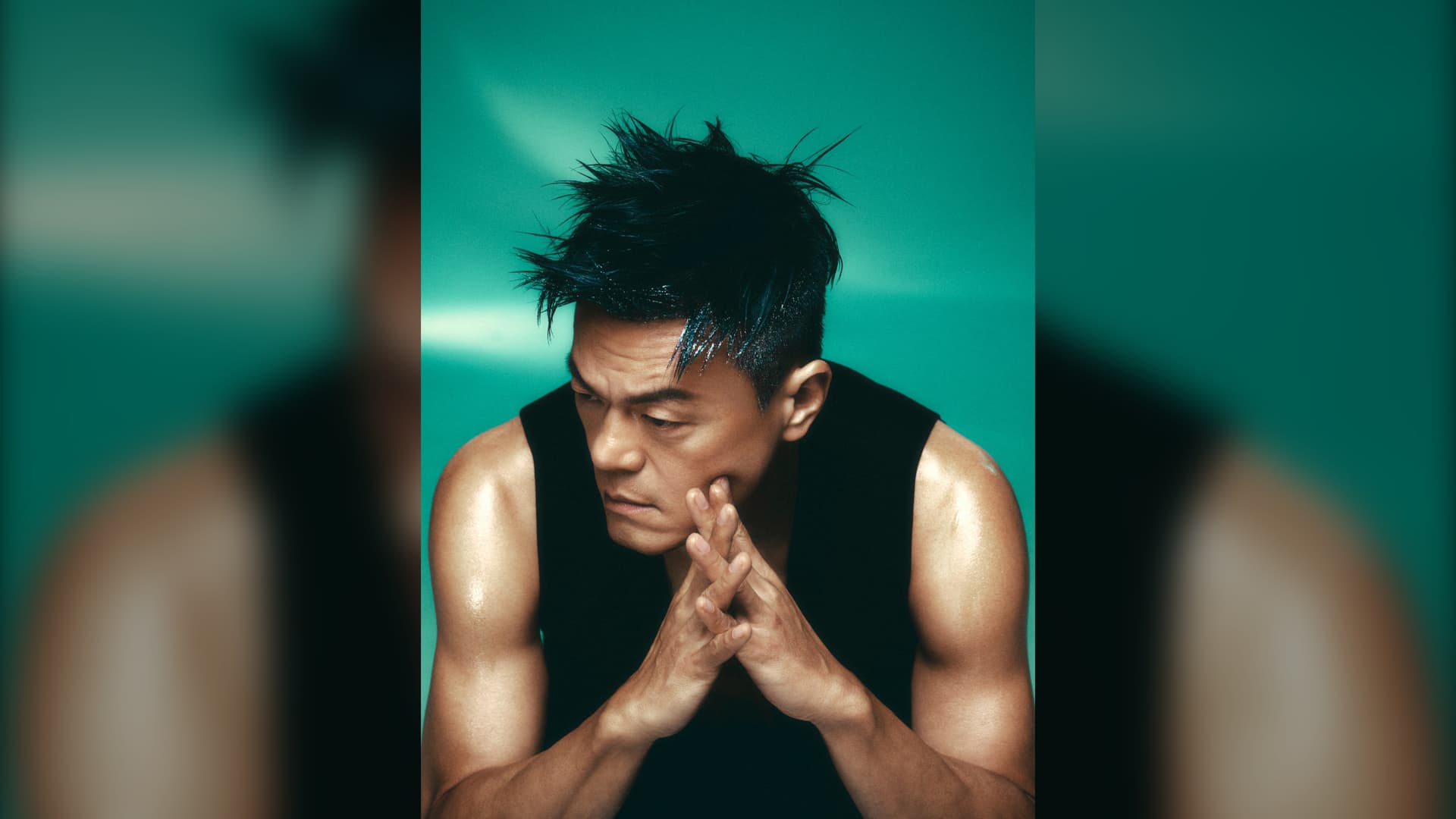
In 2015, Park Jin Young told TWICE — JYP Entertainment's newest girl group at the time — to be good people before they were good singers. In 2026, he sat down with OurBirthday, JYP's latest debut act, and said something that would have felt out of place eleven years earlier: "Becoming a singer doesn't mean you'll be happy." The shift between those two opening statements is not a betrayal of his earlier values. It is an eleven-year education in what the K-pop industry actually does to the people inside it.
Park Jin Young, who serves as JYP Entertainment's Chief Creative Officer and stepped down from the company's board in March 2026 to focus on creative work, has now mentored five distinct JYP girl groups through their debut seasons. The consistency of his involvement — always the same mentor, always a documented debut lesson — makes the evolution of his advice unusually legible. Each cohort received a version of his philosophy shaped by what he had learned from the ones before them.
The Original Blueprint: TWICE and the Era of Character (2015)
TWICE's debut through Mnet's survival show "SIXTEEN" — which documented the selection process in real time — gave Park Jin Young his first major public platform as a mentor. His message was clear and idealistic: "I want you to be a good person before you're a good singer." The three core virtues he identified were truthfulness, diligence, and humility. This was advice aimed at character formation, not career strategy. The implicit assumption was that if you got the interior right — if you became the kind of person who treats others well, who works without corners cut, who stays grounded — the exterior career would follow.
The philosophy reflected its moment. In 2015, the K-pop market was structured enough that a well-prepared group from a major agency had a relatively navigable path to sustained success. When ITZY debuted in 2019, Park Jin Young passed along the same three virtues without significant revision — truthfulness, diligence, and humility. The framework was still working. But something was already shifting beneath the surface of the industry, and the next debut class would receive a meaningfully different lesson.
The Pivot to Longevity: NMixx and a Harder Market (2022)
By 2022, Park Jin Young's debut advice had evolved to reflect a more demanding landscape. To NMixx, he offered something with a longer time horizon: "Don't just look at what's immediately in front of you — look further ahead." He also added a relational principle that moved beyond individual character into group dynamics: "Be strict with yourself and generous with others." The third principle — specific enough to be immediately actionable — was that conflicts between members should be resolved privately, away from cameras and from the rest of the group.
The shift is subtle but meaningful. "Look further ahead" acknowledges a market in which short-term success is increasingly insufficient. Between ITZY's debut and NMixx's, the number of active K-pop girl groups had grown substantially, and the content calendar required to stay relevant had become more demanding. Groups that did not plan for the two-year mark and beyond risked creative stagnation or simply being overtaken by the pace of new debuts. Park Jin Young's advice to NMixx was a tacit acknowledgment that the market had grown more competitive and that the mental architecture required to survive it needed to be built before the debut, not during it.
The 2026 Lesson: Reality Over Inspiration
The advice Park Jin Young delivered to OurBirthday on MBC's "Knowing Bros" in 2026 represents the most direct departure from his 2015 framework. "You are among the many professions in the world that chose singing as a career" — the framing deliberately strips away the exceptional mythology of the debut moment. It normalizes idol work without diminishing it, asking the incoming group to see clearly what they are entering. Fame and happiness are not the same thing, and one does not automatically produce the other. The work of building a satisfying life while being an idol is a separate undertaking that requires intentional effort.
The practical instructions that accompanied this reframe are equally revealing. Choose your friends carefully. Do not compare yourself to others. When conflict arises within the group, address it in private — directly, between the people involved, not in front of everyone. These are not motivational talking points. They are strategies for managing the specific psychological pressures that have become more visible in K-pop over the past several years: the comparison culture that social media accelerates, the internal dynamics that public scrutiny can distort, the difficulty of sustaining genuine friendships in an environment structured around professional performance.
The broader industry context matters here. Artists across major Korean entertainment agencies have spoken more openly in recent years about the psychological demands of idol schedules and coordinated public image management. Park Jin Young's pivot from character-building to career-sustainability to psychological preparation is not a response to a single crisis — it is an accumulated response to what he has observed across multiple debut classes and more than a decade of watching young performers navigate an exceptionally demanding profession.
What the Evolution Reveals About K-Pop Today
The arc of Park Jin Young's debut philosophy — from "be a good person" (2015) to "look ahead and be resilient" (2022) to "this won't automatically make you happy" (2026) — is a compressed version of the K-pop industry's own maturation. The first generation of this advice emerged from an era when the industry's aspirational mythology was largely intact: work hard, be genuine, and stardom will come. The second generation acknowledged that the path had grown longer and the competition stiffer, requiring a different kind of durability. The third generation — OurBirthday's generation — arrives into an industry that has examined itself from the inside out, where the costs of idol life are openly discussed and the default assumption of debut-equals-happiness has been publicly complicated.
None of this makes the debut less meaningful. What it does is change what the most useful preparation looks like. TWICE's decade-long career, and the internal culture that has sustained it, may be the proof of concept for Park Jin Young's 2015 curriculum. NMixx's evolving artistic identity — often pointed and experimental — suggests a group that internalized the instruction to look beyond the immediate comeback cycle. What OurBirthday will build on the foundation of their mentor's most candid advice remains to be seen. But the lesson they received is the most honest one yet.
The Mentor's Evolution and What Comes Next
Park Jin Young has now delivered debut lessons to multiple JYP girl groups across eleven years. What he has not changed is his belief that these conversations — before debut, on camera, available for fans and the industry to observe — are worth having. What has changed is his definition of what a new idol most needs to understand. In 2015, it was character. In 2022, it was durability. In 2026, it is perspective.
The advice he gave OurBirthday may also represent one of his last formal debut sessions in his current role, given his March 2026 transition away from the company's board. That context gives the lesson additional weight: a man who has watched K-pop transform across four generations of JYP girl groups has concluded that the most important thing to tell the newest arrivals is not how to become a star, but how to stay a functional human being while trying to. The career you want and the life you want are not the same goal. Figuring out how to pursue both at once — that is the real work, and it starts before the debut, not after.
How do you feel about this article?
저작권자 © KEnterHub 무단전재 및 재배포 금지
New Music & Comebacks Reporter · KEnterHub
New-music reporter covering K-pop comebacks as they drop. Ricky Joo tracks official channel premieres, music video releases and debut showcases, breaking down what each comeback signals about an artist's next chapter — often within hours of release.
Comments
Please log in to comment