Why BTOB's Minhyuk Goes Viral at WATERBOMB Every Single Summer
Four consecutive years, four viral moments — and what this pattern reveals about K-pop's most uninhibited summer stage.
 By Ricky Joo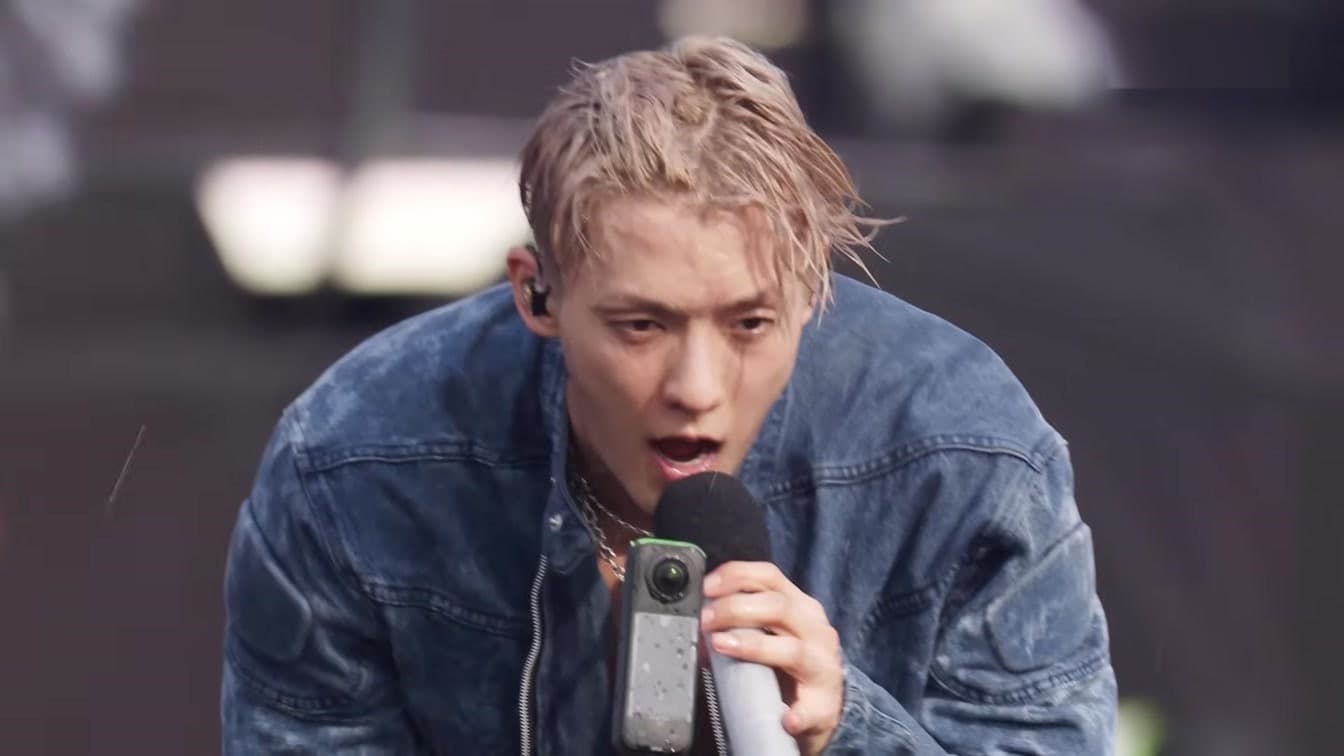
On the evening of July 24, 2026, a video began circulating across Korean social media. In it, BTOB member Lee Minhyuk — performing under his solo name HUTA at the WATERBOMB SEOUL 2026 festival — danced through a high-energy set without a shirt, the combination of festival water and HD fancams doing what viral content always requires: revealing something that caught people completely off guard. The clip accumulated over 500,000 views before most of his casual fans had even heard about his appearance. "Indecent!" declared some posts, with visible quotation marks that made the irony clear. His physique was, by any fair reading, the least scandalous thing about it.
That Minhyuk is 35 years old — a relative rarity for a K-pop idol still commanding this kind of attention — makes the moment more interesting. That this is his fourth consecutive year performing at WATERBOMB makes it something else entirely: a pattern. And patterns in K-pop are worth analyzing.
What WATERBOMB Actually Is — And Why It Produces Different Moments
WATERBOMB SEOUL 2026 runs July 24 through 26 at KINTEX, the convention and exhibition complex in Ilsan, Goyang City. The festival format is simple in concept and elaborate in execution: K-pop idols, hip-hop artists, and international DJs perform on outdoor stages while the audience is periodically drenched with water. This year's lineup includes Taemin, aespa's Karina, RISE, Stray Kids members Leeteuk and Heechul, and Minhyuk among the K-pop contingent, alongside a roster of EDM producers and international acts.
The water element is not incidental to the festival's identity. It creates a specific visual condition that ordinary K-pop concerts cannot replicate. Stage lighting reflects differently through wet fabric and wet hair. Performers who would typically maintain careful control over their presentation are operating in conditions that are inherently uncontrollable. Fancams captured under these conditions look distinctly different from standard music show footage. The result is that WATERBOMB consistently generates images and short videos that circulate far beyond the fandoms of the artists performing — and far beyond Korea.
Minhyuk has understood this dynamic long enough to have returned four times. He first appeared at WATERBOMB as part of the complete BTOB lineup in 2023, then began returning as a solo act in 2024 and 2025. Each appearance generated attention. His 2026 performance followed the same formula, but with the added context of a recently released solo EP that had already built anticipation heading into the summer.
The 3rd-Gen Idol Still in the Room — And Why That Matters
Korean pop music has an unusually youth-oriented industrial structure. Groups are typically assembled from trainees in their teens, debut in their late teens or early twenties, and face declining commercial relevance within a decade. The third generation of K-pop idols — roughly those who debuted between 2012 and 2016 — includes artists who are now well into their thirties, at an age when most of their contemporaries have transitioned to military service, acting, or other entertainment fields.
BTOB debuted in 2012 under Cube Entertainment. In the years since, the group has navigated military enlistments, label transitions, and the industry's relentless cycle of generational turnover. Minhyuk, now operating in parallel as both a BTOB member and solo artist HUTA, has not retreated from performance to capitalize on brand deals or variety show appearances exclusively — the conventional path for third-generation idols in their mid-thirties. Instead, he is competing on a stage that increasingly rewards physical performance over nostalgia, and apparently thriving there.
His 2026 WATERBOMB moment arrived alongside the release of his latest solo material, including the track "KO" and a visualizer that had already been building momentum online. The timing was not accidental. WATERBOMB has become, for Korean artists who understand its mechanics, a reliable amplification tool: appear, perform in conditions that naturally generate memorable images, let the fancam ecosystem distribute the footage, and receive coverage that would require a significantly larger promotional budget to replicate through conventional channels.
Timeline showing BTOB Minhyuk/HUTA performing at WATERBOMB Seoul for four consecutive years from 2023 to 2026HUTA at WATERBOMB Seoul: Four Consecutive Years2023with BTOB2024Solo debut2025Solo return2026Viral (500K+)Age 32 → 35. Still K-pop's most talked-about summer performance.Pink = viral moment with 500K+ views. KINTEX Ilsan, Goyang City.
WATERBOMB's Ambitions — and Their Complications
The festival's domestic success has naturally generated expansion ambitions. WATERBOMB attempted its first United States event in September 2024, targeting Los Angeles. That attempt did not go according to plan — reports characterized it as a difficult launch that ultimately did not produce the kind of event the organizers intended. Plans shifted to Las Vegas, with a debut initially targeting late 2026.
In July 2026, organizers announced that the Las Vegas event would be pushed back once more, now targeting June 2027. The stated reasons involved lineup logistics, though the venue itself presents additional challenges. Las Vegas in June regularly reaches temperatures above 105 degrees Fahrenheit. WATERBOMB's format relies on outdoor stages, festival-scale water systems, and the kind of high-energy physical performance that 35-degree heat makes significantly more demanding. The city's relationship with water — Las Vegas is located in the Mojave Desert and operates under ongoing conservation agreements — adds another layer of complexity to an event format built around abundant water use.
The gap between WATERBOMB's domestic success and its international struggles is itself revealing. Part of what makes the Seoul festival work is its embedded cultural context: KINTEX is a well-established large-scale venue, the lineup is populated with artists whose fan bases are already mobilized, and the summer timing aligns with when Korean entertainment culture is at its most visible and active. Replicating those conditions in a market where K-pop's fan infrastructure is less concentrated requires a different kind of logistics than simply booking a venue and announcing a lineup.
What the WATERBOMB Pattern Tells Us About K-Pop's Summer Economy
The WATERBOMB moment, and Minhyuk's particular place in it, is a useful lens for understanding how K-pop's summer entertainment economy functions. The festival does something that regular K-pop concert formats struggle to do: it creates spontaneous viral content in conditions that feel unrehearsed, even when the performance itself is meticulously prepared. Minhyuk's viral moment was not a scripted reveal — it was the consequence of a performer with significant physical discipline appearing in a context that made that discipline visible in an unfiltered way.
This quality explains why WATERBOMB attracts artists who have something to prove or something to show. Taemin, appearing on the 2026 lineup after years navigating his own career evolution, is using the same stage for similar reasons: to demonstrate relevance in a setting where the performance conditions leave no room for the usual machinery of K-pop promotion. The result is that WATERBOMB has quietly become one of the most honest stages in Korean entertainment — a place where what you bring to the performance is what gets amplified, without the noise of complex staging or broadcast editing to soften the impression.
For Minhyuk specifically, the pattern of four consecutive WATERBOMB appearances and four consecutive cycles of attention suggests something more deliberate than coincidence. At an age when the Korean entertainment industry has a well-documented tendency to redirect artists toward "safe" formats, he appears to be making an active choice to remain in spaces where the stakes are higher and the exposure more direct. Whether that choice reads as strategy, stubbornness, or simply the natural expression of what he's been building toward in his training regimen, the result is the same: a 35-year-old K-pop idol who is currently one of the most discussed artists in the country's summer entertainment landscape.
WATERBOMB's global expansion may eventually find its footing. But its most important contribution to K-pop's ecosystem is already visible, every summer, at KINTEX. It has given artists a format that rewards physical commitment over production budget, and audiences a reason to keep watching artists they thought they already knew.
A Brief History of WATERBOMB — From Niche Festival to National Summer Institution
Understanding why Minhyuk's annual returns matter requires some understanding of what WATERBOMB has become. The festival launched in South Korea as a relatively modest concept — a music event where water is actively incorporated into the audience and performer experience rather than treated as an inconvenience to be managed. It has since grown into what is broadly considered one of the most distinctive recurring events in Korean popular culture.
WATERBOMB's signature is not its lineup, which varies year to year, but its format. Unlike conventional K-pop concerts, which are optimized for controlled environments and carefully managed visual presentations, WATERBOMB is deliberately chaotic. The outdoor setting, the water elements, and the mix of K-pop, hip-hop, and EDM across different stages creates an atmosphere closer to a hybrid music and sports event than a standard entertainment production. Artists who perform there know they will get wet. The question is only how wet, and what moments will be captured when they do.
This format has created a specific kind of cultural output. Every year, a handful of performances generate clips that circulate well beyond the immediate fan bases of the artists involved. Sometimes these moments are choreographic — a particularly sharp dance sequence that the water makes look more dynamic. Sometimes they are physical — a performer's intensity visible in a way that stage lighting and controlled concert environments would diffuse. Sometimes they are simply accidental, the product of conditions that no amount of rehearsal can entirely predict.
What WATERBOMB has developed, over years of consistent operation, is a reputation for producing these moments. That reputation is itself a form of marketing. Artists who perform at WATERBOMB are not just booking one event; they are accessing a cultural context that audiences already associate with authenticity, energy, and the possibility of something unexpected happening. For any artist trying to reset their public image or demonstrate ongoing physical and artistic relevance, that context is valuable in a way that is difficult to quantify but easy to recognize.
The Longevity Question: How K-Pop Treats Its 3rd-Generation Stars
The Korean entertainment industry's relationship with its own history is complicated. K-pop's global expansion over the past decade has been accompanied by an accelerating generational turnover that keeps audience attention directed almost exclusively toward newer groups. Third-generation idols — those who built their careers in the 2012-2017 window that produced many of K-pop's globally recognized acts — now occupy an unusual position. They are famous enough to maintain fan bases, experienced enough to command significant stages, and old enough that the industry's default promotional infrastructure has largely moved on to 4th and 5th generation acts.
Different artists have navigated this transition in different ways. Some have leaned heavily into the nostalgia economy, performing retrospective concerts and releasing anniversary content. Some have transitioned into acting or hosting, where their name recognition provides a foundation for a different kind of career. Some have simply reduced their activity, releasing occasional solo material while waiting for the industry to catch up with a reassessment of their contributions. Some are currently serving mandatory military service, a factor that removes many male artists from public activity for 18 months or more.
Minhyuk's path has been different in a specific way: he has continued to compete in spaces that are not organized around nostalgia at all. WATERBOMB is not a 3rd-generation reunion stage. It is a contemporary summer festival with a booking strategy oriented toward current relevance and current fan activity. When Minhyuk appears there alongside 5th-generation acts and contemporary artists, he is not being positioned as a legacy act — he is appearing because he has demonstrated, repeatedly, that he can generate the kind of audience response that makes WATERBOMB's booking decisions easy.
The physical dimension of this is notable. K-pop's idol training system has always included fitness components, but the visibility of those components has historically been managed carefully. WATERBOMB's format removes that management. What gets amplified at WATERBOMB is whatever the performer has actually developed, without the mediating layer of controlled presentation. For Minhyuk, four consecutive years of that amplification suggests that whatever discipline he has brought to his physical preparation is genuinely exceptional — and that Korean audiences are responding to that exceptionalism in a way that crosses generational lines.
The 500,000-plus views on the 2026 viral clip are not, in isolation, a remarkable number for K-pop content. What is remarkable is that those views came from an audience that included both long-term BTOB fans and casual observers who had no existing investment in his career — the kind of cross-over attention that most 3rd-generation artists can no longer reliably generate. WATERBOMB gave him a stage where that attention was available to be earned, and he earned it.
How do you feel about this article?
저작권자 © KEnterHub 무단전재 및 재배포 금지
New Music & Comebacks Reporter · KEnterHub
New-music reporter covering K-pop comebacks as they drop. Ricky Joo tracks official channel premieres, music video releases and debut showcases, breaking down what each comeback signals about an artist's next chapter — often within hours of release.
Comments
Please log in to comment