Why Byeon Woo Seok’s Camp Moment Is Going Viral
 By Jang Hojin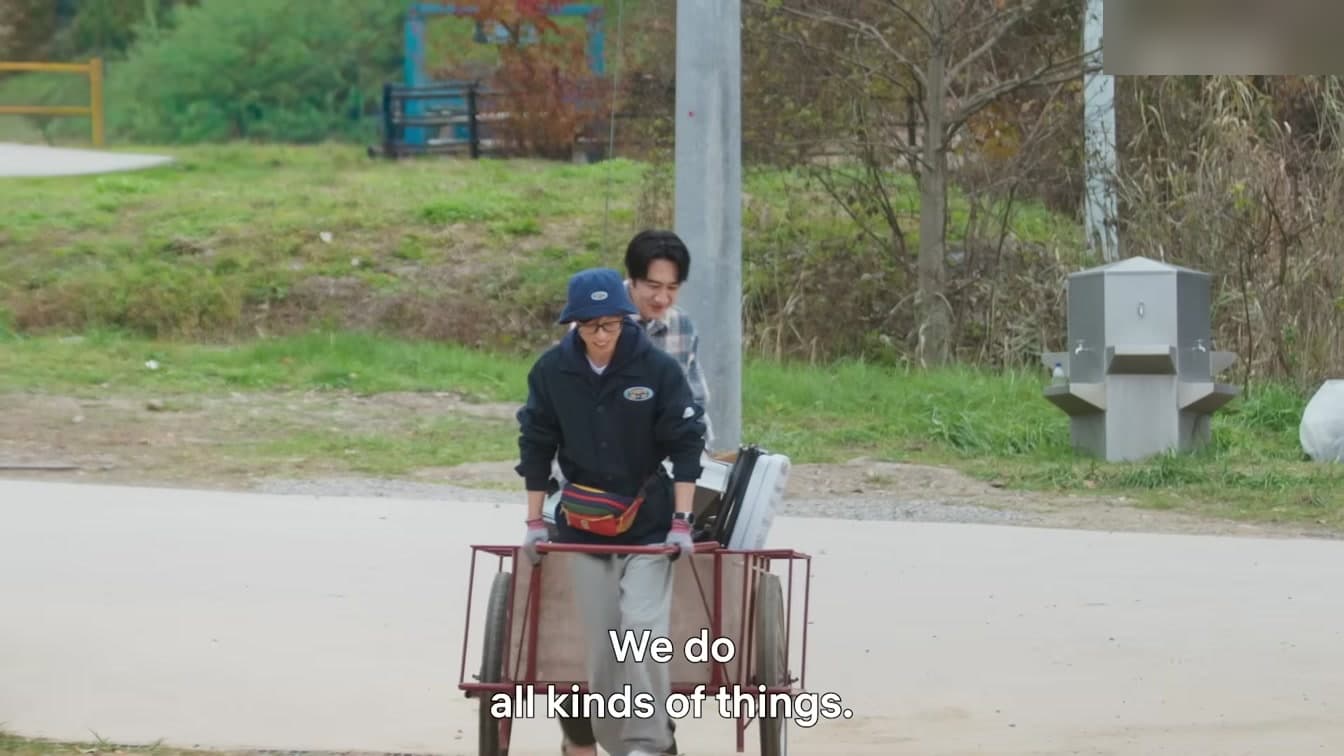
Byeon Woo Seok has given Yoo Jae-suk Camp the kind of viral variety-show moment that travels faster than a formal review. The Netflix series released its second half on June 2, and one lighthearted exchange involving Lee Hyori, Yoo Jae-suk, Lee Kwang-soo, and Byeon quickly became the scene Korean viewers kept revisiting.
The moment is simple, which is exactly why it works. Lee Hyori, a veteran singer and television personality whose calm confidence has shaped Korean variety for years, met Byeon at the camp and reacted with visible delight. Yoo and Lee Kwang-soo immediately noticed the difference in her tone, teasing that she seemed unusually warm toward the actor. Byeon, rather than trying to out-joke the comedians around him, answered with an easy smile and let the awkward sweetness of the scene breathe.
For a show built around ordinary guests, shared meals, campsite tasks, and improvised conversations, that tiny shift in energy mattered. It showed why Yoo Jae-suk Camp is currently drawing attention in Korea: the program is not only selling the cast list, but also the unpredictable chemistry that appears when seasoned entertainers, rising actors, and real guests share the same space.
A Small Reaction Became the Camp’s Biggest Hook
The source of the buzz came from the episodes released on June 2, when the camp welcomed its second group of guests. Yoo Jae-suk returned as the beginner camp director, with Lee Kwang-soo, Byeon Woo Seok, and Ji Ye-eun working as staff members. Lee Hyori and her husband, musician Lee Sang-soon, joined as surprise helpers, giving the camp an immediate connection to Korea’s beloved guesthouse-variety tradition.
In the episode, Lee Hyori’s first greeting to Byeon turned into a running joke. She reacted with a high-pitched welcome and an unmistakably brighter mood, while Yoo Jae-suk and Lee Kwang-soo complained that her kindness seemed to have a very specific target. When Byeon asked if she and Lee Sang-soon could stay longer, Hyori answered in a softer tone than usual, prompting Yoo to tease her again. Later, during a busy cooking sequence, Yoo pointed out that she was giving Byeon especially gentle treatment while remaining brisk with everyone else.
The comedy did not come from a scripted punchline. It came from the contrast between Lee Hyori’s unguarded response, Yoo Jae-suk’s quick reading of the room, Lee Kwang-soo’s mock jealousy, and Byeon’s almost disarming politeness. That blend has become one of the clearest examples of the show’s appeal. It lets famous entertainers behave like people stuck in a slightly chaotic group project, then trusts viewers to enjoy the small social shifts.
Byeon’s role is important because he does not try to dominate the format. Since his breakout drama success, the actor has carried intense public attention into every new appearance. In a variety setting, that level of attention can become stiff. On Yoo Jae-suk Camp, however, he plays into a softer image: cheerful, a little clumsy, eager to help, and comfortable being teased by bigger variety personalities.
That is why the Lee Hyori scene landed so cleanly. It gave fans an easy clip to share, but it also gave casual viewers a quick explanation of Byeon’s current star power. He can become the center of a scene without pushing himself there. The camera catches other people reacting to him, and that reaction becomes the story.
Why Yoo Jae-suk Camp Feels Familiar but Still Clicks
Yoo Jae-suk Camp follows a format Korean viewers know well: celebrities run a temporary space where guests eat, sleep, talk, and build memories away from daily routines. The series premiered on Netflix on May 26 and later released its remaining episodes on June 2, making the full 10-episode run available at once for viewers who wanted to follow the camp from its nervous opening to its warmer final stretch.
The show’s cast gives the familiar structure a useful spread of personalities. Yoo Jae-suk anchors the chaos with the timing that made him Korea’s representative MC. Lee Kwang-soo brings the physical comedy and wounded pride that viewers have long associated with him. Ji Ye-eun adds a sharper, newer variety rhythm. Byeon Woo Seok brings the curiosity factor: a drama star and model stepping into a workplace-style camp format where polished image is less useful than quick adaptation.
Lee Hyori and Lee Sang-soon’s appearance sharpened that structure. Their own history with guesthouse-style entertainment made their arrival feel more meaningful than a standard cameo. Korean reports described them as experienced helpers who could quickly settle into the camp, from meal planning and kitchen support to morning yoga and music around the campfire. That experience also shifted the energy around Yoo, who had spent much of the program carrying the pressure of a camp director who is still learning on the job.
The second-half episodes leaned into that contrast. The staff faced bigger tasks, more guests, heavier cooking, and the emotional unpredictability of people sharing personal stories in a temporary community. Some scenes were comic, including the teasing around Hyori’s fondness for Byeon. Others were quieter, including conversations that reminded viewers why Korean healing variety often depends on sincerity as much as laughter.
That balance helps explain why the show has generated steady conversation despite criticism that its format is not entirely new. Several Korean outlets noted that the series works through the comfort of an “already familiar taste.” In other words, it does not reinvent celebrity guesthouse television. Instead, it uses a strong cast, a well-understood structure, and moments of emotional release to make the familiar feel watchable again.
Byeon Woo Seok’s Variety Image Is Expanding at the Right Time
For Byeon Woo Seok, the timing is especially useful. After the explosive popularity of Lovely Runner, he became one of the actors most closely watched by fans looking for both screen projects and unscripted appearances. A variety show like Yoo Jae-suk Camp gives him a different kind of visibility. It is less about a character and more about how he listens, reacts, laughs, and handles embarrassment.
Korean coverage around the show has repeatedly highlighted his emotional investment. One report noted that Byeon became visibly moved while talking about the camp and expressed the hope that the program would become a memory people could lean on during difficult moments. That sentiment fits the series’ broader pitch: a place where people step away from routine, eat together, and leave with something warmer than a simple travel experience.
His chemistry with Yoo Jae-suk and Lee Kwang-soo also matters because both men are skilled at turning a guest’s strengths into variety material. Yoo frames the scene, asks the question, and finds the social contradiction. Lee Kwang-soo exaggerates jealousy and awkwardness without making the moment feel hostile. Byeon becomes the gentle center of the joke, and because he reacts without defensiveness, the teasing feels affectionate.
The Lee Hyori reaction adds one more layer. Hyori has long been treated as a personality who is difficult to impress in an entertaining way. When she visibly softens around Byeon, viewers understand the joke immediately. Yoo and Lee Kwang-soo do not need to explain it. Their mock complaints simply confirm what the audience has already seen.
That is a valuable variety skill for an actor. The best unscripted moments are often built from reaction rather than performance. Byeon’s current appeal is not just that he looks good on camera, but that other people’s responses to him create readable, shareable emotional beats. On a platform like Netflix, where clips and short scenes often help international viewers decide what to watch, that kind of instantly understandable chemistry can be as useful as a formal trailer.
The Viral Scene Points to a Bigger Trend
The attention around the scene also shows how Korean variety programs are adapting to global streaming. Yoo Jae-suk Camp is deeply local in tone: it depends on the audience knowing Yoo’s MC image, Lee Kwang-soo’s comic persona, Hyori’s guesthouse legacy, and Byeon’s post-drama popularity. Yet the basic situation is easy to understand even without that full background. A famously cool star suddenly becomes extra kind to a handsome younger actor, and the two comedians beside him cannot resist calling it out.
That simplicity gives the show export value. International viewers may not catch every reference, but they can read the body language, the jealousy, the shy smile, and the warm embarrassment. It is the kind of scene that subtitles can carry because the emotional logic is already visible.
Korean reports also pointed to strong early global interest, with the show described as entering Netflix’s global top-five conversation for non-English television shortly after the later episodes arrived. Whether viewers came for Yoo Jae-suk, for Byeon Woo Seok, or for Lee Hyori and Lee Sang-soon’s special appearance, the result is the same: the camp has produced a conversation bigger than a routine variety release.
The next question is what this does for Byeon’s unscripted career. He does not need to become a full-time variety star, and that may be the point. A few well-chosen appearances can protect the freshness of his image while showing sides that dramas cannot fully capture. Yoo Jae-suk Camp gives him a setting where awkwardness, kindness, and visual impact all work in his favor.
For Netflix and Korean variety producers, the lesson is equally clear. Familiar formats still have room to move when the casting creates genuine social friction and warmth. Yoo Jae-suk Camp may be built on an established blueprint, but the reason viewers are talking now is more specific: Lee Hyori’s sudden softness, Yoo Jae-suk and Lee Kwang-soo’s comic jealousy, and Byeon Woo Seok’s ability to turn a small greeting into the most replayable moment of the camp.
How do you feel about this article?
저작권자 © KEnterHub 무단전재 및 재배포 금지
Entertainment Journalist · KEnterHub
Entertainment journalist specializing in K-Pop, K-Drama, and Korean celebrity news. Covers artist comebacks, drama premieres, award shows, and fan culture with in-depth reporting and analysis.
Comments
Please log in to comment