Why Choi Kang Hee Left K-Drama to Clean Celebrity Homes
The actress radical career pivot reveals uncomfortable truths about burnout in South Korea relentless entertainment machine
 By Jang Hojin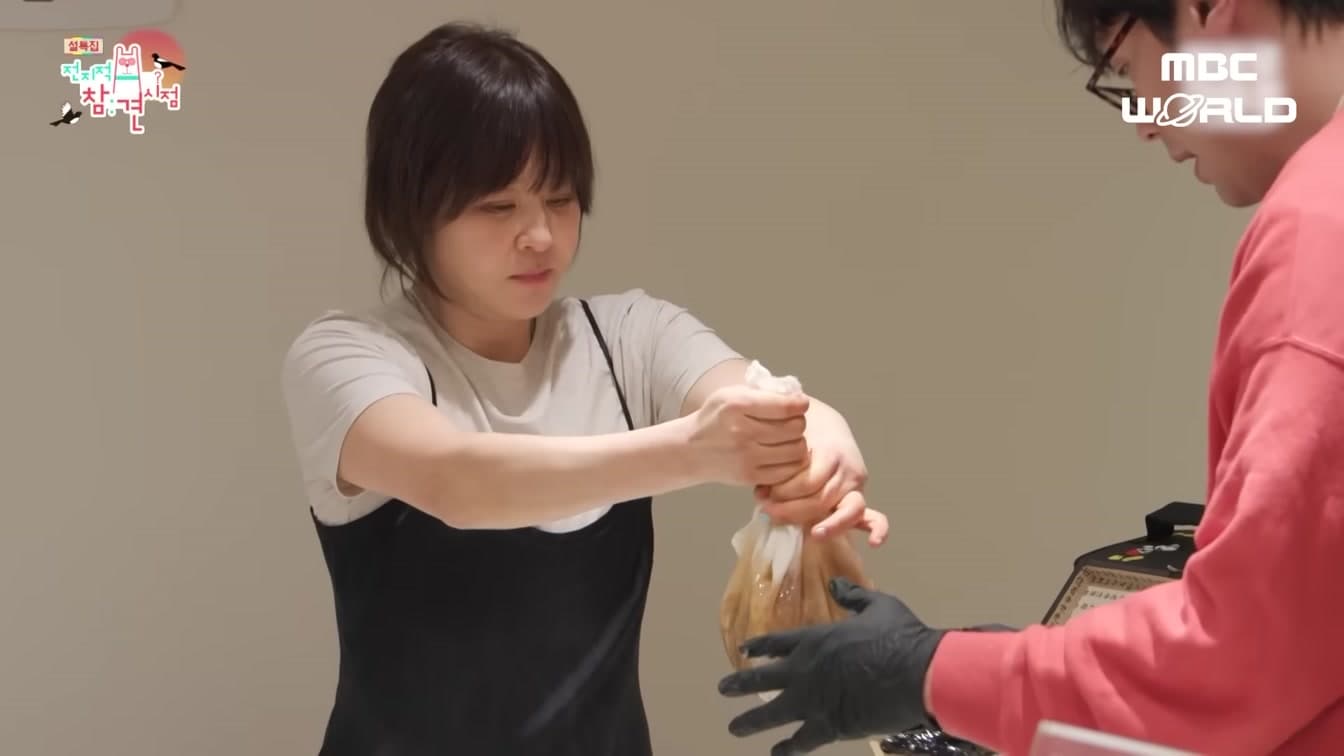
At the height of her career, Choi Kang Hee had everything a Korean actress could want. Award show trophies. A string of hit dramas. Fan recognition that came with two decades of work. Then one day in 2021, she changed her phone number, told her manager to stop accepting scripts, and quietly disappeared — not into retirement, but into a bucket and mop.
For three years, the Baeksang Award-winning star worked as a restaurant dishwasher, an environmental sanitation worker, and — most remarkably — a house cleaner specializing in the homes of other celebrities. When she finally returned to public view in early 2024 on MBC's Point of Omniscient Interfere, audiences were stunned. But Choi's explanation was disarmingly simple: after 25 years of acting, she just wasn't happy.
Her story has since become one of the most talked-about career pivots in Korean entertainment — not because it ended in failure, but because it raised a question the industry rarely asks: Is fame enough?
A Quarter Century Under the Spotlight
Choi Kang Hee debuted in 1995, the year South Korea's entertainment industry was just beginning its global ascent. She was 18, cast in horror film Whispering Corridors (1998), which became a cult classic and cemented her place in Korean cinema. Over the next two decades, she built a filmography that spanned genres — from the rom-com warmth of Petty Romance (2010) to the breezy workplace dynamics of Protect the Boss (2011).
The industry recognized her staying power with hardware. She won the KBS Best New Actress Award in 1999, the Baeksang Arts Most Popular Actress in Film in 2010, and the SBS Top Excellence Award in 2011. She was, by any measure, a success story.
But success and satisfaction do not always share the same address. By the time Hello, Me! wrapped in 2021 — her most recent drama — Choi had already made her decision. The work that had defined her since her teens no longer felt like her own. She was ready to find out what else she was.
When the Industry Breaks the People Who Built It
What Choi did next shocked Korean media, but it should not have. She enrolled in broadcast writing school, learned video editing from scratch, and picked up part-time jobs to keep busy. Among them: washing dishes at a restaurant, collecting garbage from trucks, working at incinerators as a sanitation crew member — and cleaning the homes of celebrities she once shared red carpets with.
"I was not happy. I worked for 25 years. But I wondered what am I good at, so I tried out various things. My life motto is those who do not work, do not eat," she said on MBC's Point of Omniscient Interfere.
That quote — self-deprecating, almost defiantly ordinary — landed differently than most celebrity confessions. It was not about burnout from a specific production or a toxic co-star. It was about the accumulated weight of a career that had become more about performing an identity than living one.
The K-drama industry's relationship with its performers has long been under-discussed. While K-pop's mental health challenges have drawn growing coverage — from idol group hiatuses to the broader conversation around training culture — Korean actors have largely been expected to stay on the hamster wheel without pause. Multiple dramas a year, press tours, fan events, and brand endorsements leave little room for the kind of internal inventory Choi eventually demanded for herself.
The physical toll alone tells part of the story. Veteran actor Ji Sung reportedly lost 15 kg through extreme dieting for the 2024 SBS drama Connection. Park Min-young pushed her health to the limit for a terminally ill role in the same year. These numbers circulate as admirable dedication. But viewed through the lens of Choi's journey, they register differently — as signals of an industry that exacts extraordinary psychological costs that rarely get counted until someone walks away.
Choi's three years outside the industry were not passive. She spent them deliberately — building new skills, taking on unglamorous work, and running a YouTube channel that documented her life with startling honesty. The result was not a breakdown narrative. It was a portrait of someone doing the hard, unglamorous work of self-discovery. She had in fact demonstrated this same orientation years earlier: in 2007, she became the first Korean celebrity to donate bone marrow, a quiet act of civic engagement that sat at odds with the entertainment industry's usual self-promotional logic.
The Response That Said It All
When Choi's MBC appearance aired in early 2024, the public response was not pity — it was admiration. Viewers praised what commentators called "an exceptional mindset," and her story spread across Korean online communities, entertainment platforms, and international K-drama fan forums alike.
Her YouTube channel attracted a steady following drawn not to drama recaps or brand deals, but to something rarer: an entertainer being honest about ordinariness. Clips of her cleaning work and broadcast writing school lessons performed well precisely because they felt unscripted. Fans who had grown up watching her on screen found themselves watching her scrub floors — and responding with warmth rather than shock.
By mid-2024, she had signed with a new agency, Media Lab Seesaw, signaling a structured return to public life. The industry, which rarely leaves space for performers who did not exit on conventional terms, appeared willing to receive her back — older, clearly grounded, and by her own account, genuinely happier. The broader cultural moment mattered too. South Korean dramas like Doctor Slump (2024) had recently explored burnout and depression as mainstream storylines, signaling that audiences were ready to engage with these questions openly. Choi's story arrived in that context — not as an anomaly, but as a real-world data point in an ongoing conversation.
What Comes Next — For Her and the Industry
Choi Kang Hee's story has not yet reached its final chapter. With a new agency and renewed public engagement, she has options that many of her peers who burned out more privately never received. What is harder to quantify is the influence her very public middle chapter might have on younger performers watching from the wings.
The K-drama landscape is changing. Streaming platforms have multiplied the volume of available projects while also intensifying the pressure to fill them. Conversations about performer wellbeing are starting, slowly, to enter public discourse. Choi did not start that conversation — but she stepped into it in the most literal way possible, choosing a mop over a screenplay.
Her willingness to say she was not happy — and to mean it, and to do something about it — may turn out to be as significant as anything she ever put on screen. In an industry that celebrates endurance above almost everything else, she chose something harder: honesty about her own limits, and the courage to act on it.
How do you feel about this article?
저작권자 © KEnterHub 무단전재 및 재배포 금지
Entertainment Journalist · KEnterHub
Entertainment journalist specializing in K-Pop, K-Drama, and Korean celebrity news. Covers artist comebacks, drama premieres, award shows, and fan culture with in-depth reporting and analysis.
Comments
Please log in to comment