Why Choi Min-sik Became a Junior Again Before Shin Gu
 By Jang Hojin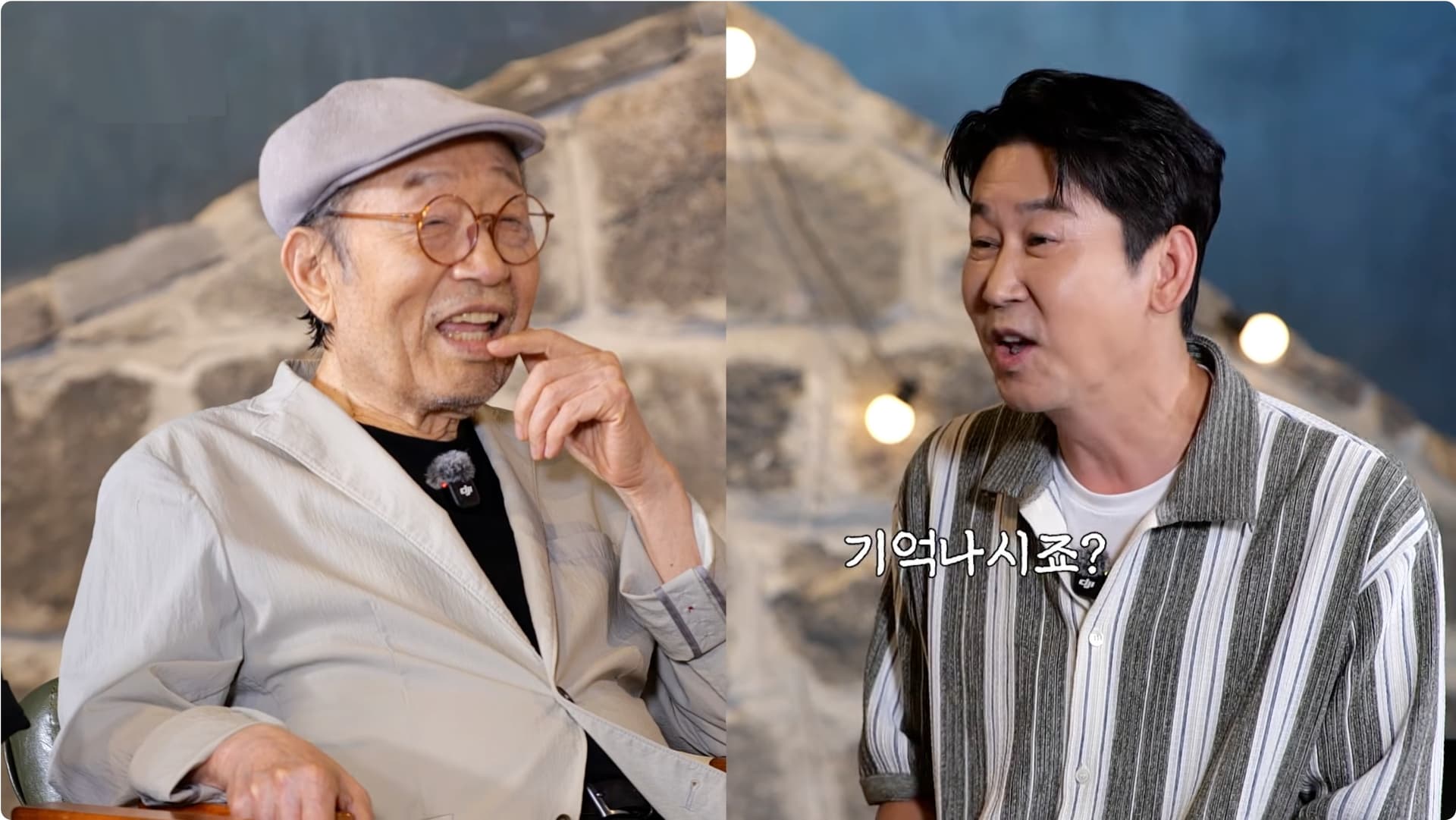
Veteran actor Shin Gu's appearance on the YouTube talk show Zzanbro Shin Dong-yup has turned a promotional stop for the stage production The Merchant of Venice into a warm story about hierarchy, memory, and longevity in Korean acting. The moment drawing attention is not a dramatic scene from the play, but actor Jo Dal-hwan's account of seeing Choi Min-sik, one of Korea's most commanding screen actors, instantly soften in front of the 91-year-old Shin.
The July 13 episode brought together Shin Gu, Jo Dal-hwan, and Lee Sang-yoon, all connected to the new staging of Shakespeare's play. During the conversation, Jo recalled a post-performance gathering attended by Choi Min-sik and director Hur Jin-ho. What began as a light anecdote became a revealing glimpse of how Korean performers understand seniority, mentorship, and the long memory of theater.
A Star Actor Becomes a Junior Again
Jo said he had felt uncomfortable after the performance because so many senior figures were present, so he initially tried to leave. Shin Gu called him back, and Jo eventually found himself seated near Choi Min-sik. According to Jo's recollection, Choi was quietly drinking soju when Shin Gu called across the room to him. The striking part was Choi's reaction: the actor, often associated with fierce and intimidating screen performances, answered immediately and hurried over.
That small response is why the story traveled. Choi Min-sik, born in 1962, is not a junior actor in the ordinary sense. He debuted in the 1989 drama Years of Ambition and became one of Korea's defining film performers through works including Oldboy, I Saw the Devil, Roaring Currents, and Exhuma. In recent years, he has continued to move between film and streaming projects, including the Netflix series The Boy at the Back of the Class, in which he played Korean literature professor Heo Moon-oh.
Yet in Jo's telling, Shin Gu's presence reset the room. Shin asked Choi how old he had been when they once worked together, and Choi answered that he had been 28 after completing military service. Shin then remembered Choi studying his script on the stairs and praised how hard he had worked at the time. Choi reportedly expressed gratitude that Shin still remembered and had looked upon him kindly.
The emotional force of the anecdote comes from that reversal. Choi is now the kind of senior actor whose own arrival can change the atmosphere of a room. But in front of Shin Gu, he appeared like a younger performer receiving recognition from a mentor figure. Jo said the scene itself felt almost unreal, and host Shin Dong-yup agreed that witnessing such a dynamic would feel surprising because Choi has become such a major figure among Korean actors.
Why Shin Gu's Presence Carries Weight
Shin Gu's authority in the conversation is not built only on age. Born in 1936, he appeared on the program as its oldest guest to date, but the episode also revisited the unusual path that led him into acting. Shin Dong-yup described Shin's background as a graduate of Kyunggi Middle School and Kyunggi High School, schools historically associated with elite academic tracks. Shin later studied Korean literature at Sungkyunkwan University after failing to enter Seoul National University's business school, but the academic path did not fit him, and he turned toward theater.
That choice was not fashionable at the time. Shin acknowledged that among his school peers, few chose artistic work, recalling that professions such as banking, law, prosecution, and medicine carried far more conventional prestige. He said it could feel embarrassing to tell others he was doing theater. For international readers who know Korean entertainment mainly through film, television, or idol culture, that background matters: Shin belongs to a generation that entered performance before celebrity work had the social status it has now.
The same episode also showed Shin's humor. Earlier reports from the broadcast noted his relaxed drinking banter, including stories from his past appearance on tvN's Life Bar. Those lighter moments helped keep the program from becoming merely reverential, but they also sharpened the contrast. Shin Gu was not presented as a distant monument. He appeared as an active stage performer, a guest with timing, and a senior artist whose memories still shape the way younger colleagues see themselves.
That is why Jo's Choi Min-sik story landed. It was not simply about a famous actor acting politely. It was about a living chain of memory: Shin remembering Choi as a young performer on the stairs, Choi receiving that memory as a gift, and Jo watching the exchange as a younger colleague in the room.
The Merchant of Venice Becomes a Generational Stage
The conversation was tied to the stage production of The Merchant of Venice, which opened July 8 at the National Theater of Korea's Haeoreum Grand Theater and is scheduled to run through August 9. The production has been framed as a large-scale classical theater event, pairing veteran performers with a broad ensemble that includes Park Geun-hyung, Shin Gu, Lee Seung-joo, Kai, Choi Soo-young, Won Jin-ah, Lee Sang-yoon, Kim Seul-gi, Kim Ah-young, Park Myung-hoon, Jo Dal-hwan, and others.
According to Korean theater coverage in the fact pack, the production surpassed 80 percent seat occupancy and reached No. 1 in the theater category on Korea's performing arts box-office system after opening. Those numbers are important because classical stage productions do not always become mainstream entertainment stories. In this case, the cast itself has become part of the draw, especially with 90-year-old Shin Gu and 86-year-old Park Geun-hyung appearing in the same production.
Park Geun-hyung plays Shylock, the Jewish moneylender whose demand for a pound of flesh drives the legal and moral tension of Shakespeare's play. The production's director, Oh Kyung-taek, has reportedly emphasized a reading of Shylock that considers discrimination and exclusion rather than reducing him to a stock villain. Shin Gu plays the Duke who presides over the trial, a role described as limited in movement and dialogue but strengthened by his distinctive stage gravity.
That casting turns the play into more than a revival of a familiar text. It becomes a meeting point between theatrical history and current star culture. Younger viewers may recognize Choi Soo-young from Girls' Generation, Lee Sang-yoon from television dramas, or Kim Seul-gi from comedy and drama work. Older theater audiences may come for Shin Gu and Park Geun-hyung. The overlap gives the production a rare cross-generational pull.
Why the Anecdote Resonates Beyond Korea
For English-language readers, the most accessible headline may be that Choi Min-sik appeared unexpectedly humble in front of an older actor. But the deeper story is more specific to Korean entertainment culture. Seniority is not simply a matter of age; it is tied to training, shared stage experience, and the memory of who witnessed whom before fame arrived. Shin Gu remembering Choi's work ethic from decades earlier gave the anecdote emotional detail that a generic compliment could not provide.
It also reframes Choi Min-sik's public image. His best-known international role remains Oldboy, a performance that helped define the global reputation of modern Korean cinema. Many viewers also know him through historical spectacle and darker genre work. Jo's story places him in a different register: not as the intense screen presence, but as a former young actor still visibly moved when a senior colleague remembers his early dedication.
The timing helps explain the response. Korean entertainment is increasingly global, but the infrastructure behind that success was built by artists who worked through periods when theater was less glamorous and film did not yet command today's international attention. Shin Gu's episode gives viewers a condensed version of that history, not through a lecture but through an after-show gathering and one remembered staircase.
What Comes Next
The Merchant of Venice continues at the National Theater of Korea through August 9, keeping Shin Gu and Park Geun-hyung in front of live audiences while the broadcast anecdote circulates online. The production's early box-office strength suggests that interest is not limited to celebrity curiosity; audiences are responding to the chance to see major veteran actors share a classical stage with younger performers.
For Shin Gu, the attention reinforces a career defined by endurance rather than nostalgia. For Choi Min-sik, even as a supporting figure in someone else's story, the anecdote adds a human counterpoint to his formidable screen reputation. And for Jo Dal-hwan, the storyteller, the scene he described may be the kind of backstage memory that explains why theater still carries a different emotional charge: in one room, the hierarchy of Korean acting briefly became visible, and it looked less like distance than gratitude.
How do you feel about this article?
저작권자 © KEnterHub 무단전재 및 재배포 금지
Entertainment Journalist · KEnterHub
Entertainment journalist specializing in K-Pop, K-Drama, and Korean celebrity news. Covers artist comebacks, drama premieres, award shows, and fan culture with in-depth reporting and analysis.
Comments
Please log in to comment