Why Girls' Generation's 20th Anniversary Hint Matters
Yoona's brief comment points to a bigger question: how legacy K-pop groups turn anniversaries into measurable demand.
 By Im Garam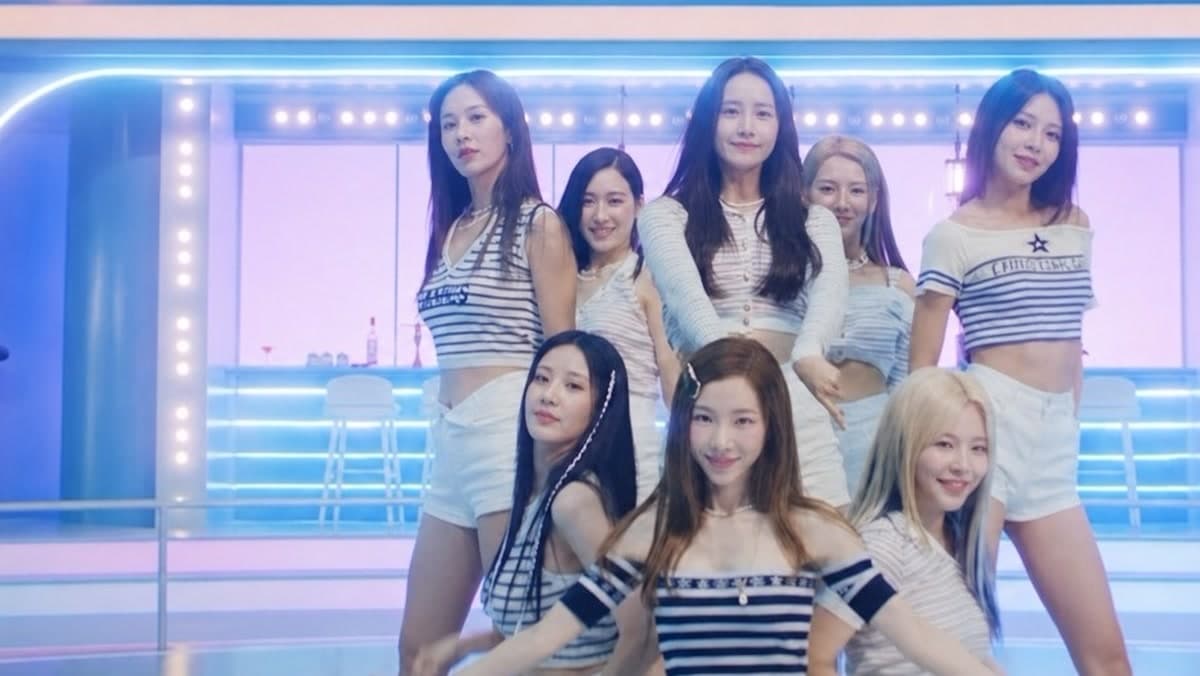
Yoona’s casual answer has turned Girls’ Generation’s next anniversary into a live industry question.
Appearing on Kim Young-ok’s YouTube program on August 19, 2026, the singer and actor was asked whether Girls’ Generation should return for the group’s 20th anniversary in 2027. Her reply was direct enough to travel beyond the clip: the members should mark it, and they may try to gather again. The line was not an official comeback announcement. It still matters because Girls’ Generation has already shown that anniversary activity can be more than nostalgia when it is matched with a clear release plan, television visibility and measurable demand.
This article analyzes how Girls’ Generation’s 20th-anniversary hint matters because its prior 10th- and 15th-anniversary cycles show a measurable template for legacy K-pop reunions. In a market now built around rapid debuts and short attention loops, the group’s value is different. It is not only about whether a veteran act can return. It is about whether a second-generation group can still turn memory into current consumption without pretending to be a rookie act.
The Anniversary Pattern Already Exists
The reason Yoona’s comment generated coverage is that Girls’ Generation has done this before. The group debuted in 2007, reshaped mainstream Korean girl-group pop through the late 2000s and early 2010s, and later moved into a less predictable phase as members pursued acting, solo music, variety work and overseas activity. That evolution made every full-group schedule harder to coordinate, but also more meaningful when it happened.
The 10th-anniversary cycle in 2017 set the first modern precedent. Holiday Night, released in August 2017, peaked at No. 2 on the Gaon Album Chart and sold 167,638 physical copies on the 2017 Gaon year-end album chart, according to the chart’s published annual tally and later chart references. It also reached No. 1 on Billboard’s World Albums chart in the week ending August 10, 2017, with Billboard reporting roughly 2,000 U.S. sales for that frame. Those numbers were not rookie-scale blockbuster figures, but they proved something important: a group already a decade into its career could still make a coordinated anniversary release visible across Korea and overseas K-pop channels.
That is why the 2027 question is not a simple “will they or won’t they.” It is a question about operating model.
From 10th to 15th, the Numbers Moved Up
But the stronger comparison comes from 2022. Girls’ Generation returned with Forever 1, released digitally on August 5 and physically on August 8, 2022, to mark the group’s 15th anniversary. Circle Chart placed the album at No. 2 on the weekly album chart for the August 7-13, 2022 chart week and No. 5 on the August 2022 monthly album chart. On the year-end album chart, Circle listed Forever 1 at No. 46 with 294,948 copies. In the United States, Billboard’s August 20, 2022 chart issue placed the album at No. 16 on Heatseekers Albums and No. 88 on Top Current Album Sales.
The time-series signal is clear: Holiday Night moved 167,638 copies on Gaon’s 2017 year-end album chart, while Forever 1 reached 294,948 copies on Circle’s 2022 year-end album chart. That is an increase of 127,310 copies, or about 76%, across two anniversary albums separated by five years. The growth does not mean the 15th-anniversary album competed like a fourth-generation million seller. It means the group’s audience did not merely remember Girls’ Generation; enough fans converted that memory into purchases at a higher level than the previous anniversary cycle.
Bar chart comparing Gaon/Circle year-end physical album sales for Holiday Night in 2017 and Forever 1 in 2022. 0 75k 150k 225k 300k 167,638 294,948 Holiday Night 2017 Gaon Forever 1 2022 Circle Anniversary Album Sales Rose About 76%
The chart also shows why a 20th-anniversary project would carry commercial pressure. A fan-driven reunion can no longer be judged only by sentiment once the previous cycle created a measurable benchmark. If Girls’ Generation returns in 2027, the market will compare it against 294,948 copies, the No. 2 Circle weekly position and the Billboard chart entries from 2022. That gives SM Entertainment and the members a useful but demanding reference point: the comeback can be smaller than younger groups’ campaigns, but it cannot feel underbuilt.
Why Legacy Demand Works Differently Now
Still, the value of a possible 20th-anniversary return is not limited to album sales. Girls’ Generation sits in a rare category of K-pop acts whose members are individually recognizable across multiple entertainment fields. Yoona’s current public image is not only that of an idol center; it is also that of a leading actor with mainstream drama and film visibility. Taeyeon’s solo catalog, Hyoyeon’s performance identity, Tiffany’s overseas-facing career, Sooyoung and Seohyun’s acting work, and the group’s broader television presence all expand the audience funnel.
That structure changes the economics. A younger group comeback often concentrates attention through music-show stages, short-form choreography and first-week sales competition. A Girls’ Generation comeback would work more like a cross-platform event. Music would be the anchor, but variety clips, interviews, drama audiences, fan communities and international nostalgia would all carry part of the campaign. The 2022 cycle already tested that logic through coordinated music, media appearances and anniversary storytelling.
There is a risk, too. Anniversary releases can become overly ceremonial. If the concept leans only on “we are back,” the emotional lift fades quickly after the first wave of headlines. Forever 1 worked because the title itself spoke to continuity while the album still gave fans a full 10-track project. A 20th-anniversary return would need the same discipline: a clear musical reason to exist, not simply a calendar reason.
Fan Reaction Is Really About Trust
The immediate reaction to Yoona’s remark was excitement because fans heard possibility in an unscripted moment. That matters. K-pop reunion news often begins with agency language that is careful, conditional and legally tidy. This came from a member speaking warmly about the milestone, which made the idea feel personal before it became strategic.
For longtime fans, the emotional math is straightforward. A group that debuted in 2007, marked its 10th year with Holiday Night in 2017 and returned for its 15th year with Forever 1 in 2022 has trained its audience to read anniversaries as windows of possibility. The 20th anniversary in 2027 is therefore not random wish-casting. It is the next point on an established timeline.
The key question is not whether nostalgia exists. It is whether the members and SM can organize that nostalgia into a project substantial enough to match the standard set in 2022.
That is why restraint matters in interpreting the quote. No member announced a date, tracklist or promotion plan. But the fan response shows that the brand remains active in public imagination, and that is a real asset. In K-pop, dormant attention is difficult to revive. Girls’ Generation appears to have kept enough of it alive.
The 20th Year Is a Different Test
A 2027 comeback would arrive in a tougher environment than either 2017 or 2022. The girl-group field has become faster, more global and more data-conscious. Album buyers now expect multiple versions, platform-specific benefits and rapid video content. Streaming audiences expect short-form hooks before they commit to a full project. That means Girls’ Generation would not only be competing with younger groups for attention; the group would be competing with the standard that K-pop promotion itself has set since Forever 1.
That does not make the task impossible. It simply changes what success should look like. A realistic 20th-anniversary campaign would probably not need to chase every metric at once. It would need to define two or three measurable goals and build around them: a stronger first-week physical total than the 167,638-copy 2017 baseline, stable Korean chart visibility beyond the opening weekend, and enough international discovery to make the Billboard and global-platform story credible. The 2022 numbers provide a floor for ambition because they show that the fandom can still mobilize when the project feels complete.
The member calendar is the other major constraint. Girls’ Generation is not a continuously promoted team with a single annual comeback window. It is a group of established adults whose careers now sit across music, acting, musicals, brand work and broadcast schedules. That reality should shape expectations. A smaller but fully aligned project would be stronger than a larger release that appears rushed. The industry lesson is practical: legacy groups need longer planning cycles, clearer rights coordination and promotion that respects individual brands while still making the group feel central.
This is where Yoona’s comment carries weight. She did not promise an album, but she framed the 20th anniversary as something that deserves recognition. In legacy K-pop, that kind of public willingness can be the first step in testing whether members, agency and fans are looking in the same direction. It gives the market a signal without locking the group into a premature rollout.
How the Industry Should Read the Signal
For agencies, the broader implication is that veteran girl groups may be underused assets. K-pop companies often treat older groups as catalog brands, anniversary merchandise opportunities or occasional festival names. Girls’ Generation’s record suggests a more active model. If a group can produce a 76% rise in year-end physical sales between its 10th- and 15th-anniversary albums, then a reunion is not only a sentimental event. It can become a repeatable commercial cycle, provided the release is planned with enough respect for the audience.
There are limits to that argument. Girls’ Generation is not a normal case. The group has unusually high public recognition, a deep hit catalog and members with durable individual careers. That makes its reunion potential stronger than most acts from the same era. But precisely because the group is exceptional, it can set the reference point for others. If the 20th anniversary becomes a coherent project, it could encourage companies to think beyond one-night reunion stages and toward better archival strategy, remastered content, anniversary documentaries and properly resourced new music.
The global side also deserves attention. In 2017, the Billboard World Albums No. 1 for Holiday Night showed that international K-pop channels still recognized the group’s name. In 2022, Forever 1 reaching No. 16 on Heatseekers Albums and No. 88 on Top Current Album Sales in Billboard’s August 20 issue showed a different kind of reach: not just specialist K-pop interest, but a small but visible footprint inside wider U.S. sales charts. That is why a 2027 release would be watched closely. The question would be whether Girls’ Generation can maintain global recognition after another five-year interval.
The answer will depend on execution. A strong 20th-anniversary project would need to make older fans feel seen while giving newer listeners a simple entry point. The catalog can do some of that work, but new material has to carry the final argument. Nostalgia gets people to click. A persuasive song, visual identity and performance plan are what keep them there.
What a 2027 Return Would Need
The most credible path would be focused rather than maximal. A full album would carry symbolic weight, but even a tightly planned mini-album or special single could work if paired with a high-quality video, a documentary-style anniversary program and a limited fan event. The lesson from 2022 is that fans rewarded coordination. The lesson from 2017 is that legacy alone can open the door, but it does not guarantee momentum.
If the group does return, the fairest benchmark will not be whether it outruns the newest girl groups. It will be whether it improves or meaningfully reframes its own anniversary history. Matching the Forever 1 cycle would already signal durable demand. Exceeding it would make a stronger argument: that second-generation K-pop is no longer only archival culture, but a living segment of the market with its own release rhythm.
Yoona’s answer was brief. The implications are not. A 20th-anniversary Girls’ Generation project would test how far K-pop’s first global wave can travel into its third decade, and whether the industry has learned how to build comebacks for legends without reducing them to nostalgia.
How do you feel about this article?
저작권자 © KEnterHub 무단전재 및 재배포 금지
Music Charts & Data Analyst · KEnterHub
Music data analyst turned journalist. Im Garam covers K-pop through the numbers — chart performance, album sales, streaming milestones and touring economics — and writes the deep-dive reviews and industry analyses that put those numbers in context.
Comments
Please log in to comment