Why H1-KEY’s Waterbomb 2026 Stage Matters Beyond Summer Buzz
The group’s July 26 Waterbomb Seoul slot is less a routine festival booking than a test of whether its seasonal sound can become a durable live-market advantage.
 By Park Chulwon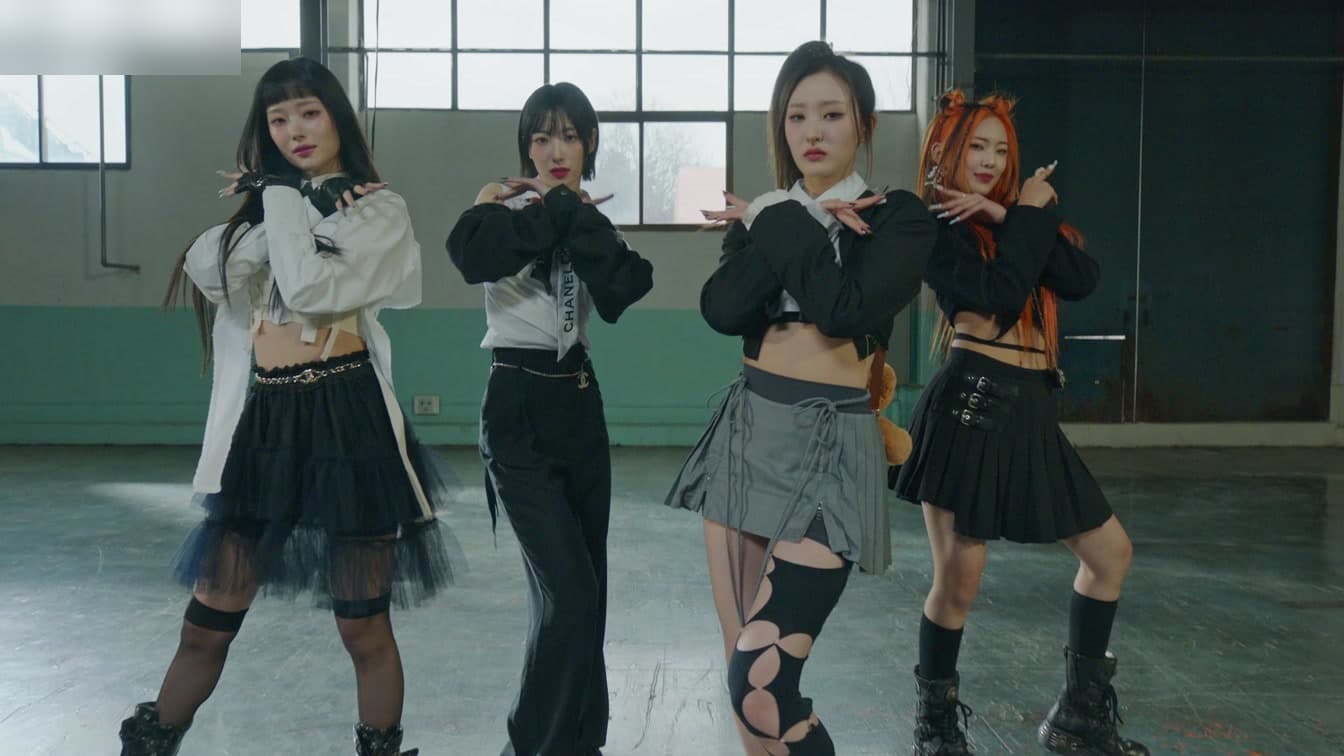
H1-KEY will perform at Waterbomb Seoul 2026 on July 26.
That simple booking matters because it places the four-member group on a stage that now functions as a live audition for summer credibility, viral reach, and real-world fandom conversion. This article analyzes how H1-KEY’s Waterbomb Seoul 2026 booking turns a festival appearance into a test of the group’s summer identity and live-market credibility. The Seoul event runs from July 24 to 26, with local reports placing H1-KEY on the Kintex Outdoor Global Stage on the final day.
The news arrives at a useful moment. H1-KEY have already built a recognizable story: a smaller-agency girl group that found broader attention through songs about resilience, youth, and seasonal emotion rather than through sheer promotional scale. Waterbomb gives that story a sharper question. Can H1-KEY convert a warm public image into a festival moment strong enough to travel through short-form video, fan accounts, and the next booking cycle?
Why Waterbomb Has Become A Career Filter
But a festival slot alone does not explain the stakes.
Waterbomb has become unusually important in K-pop because it blends three markets that usually operate separately: ticketed live performance, visual virality, and casual summer listening. A music-show stage can prove choreography. A fan concert can prove loyalty. Waterbomb tests whether an artist can command attention from people who may not have arrived as committed fans.
Kwon Eun-bi is the clearest precedent. Her Waterbomb Seoul 2023 performance pushed her beyond the former IZ*ONE member frame and helped attach her name to a new summer image. Kiss of Life also benefited from the festival circuit, where live confidence and bold performance language translated well to online clips. The lesson is not that Waterbomb automatically creates stars. It is that the event rewards performers whose existing identity is ready to be simplified, shared, and repeated.
That distinction is crucial for H1-KEY. Their strength has not been shock value. It has been a steadier kind of accessibility: clear vocals, bright group chemistry, and songs that carry emotional hooks without losing pop directness. On a Waterbomb stage, those qualities need to feel immediate. If they do, the group can make the festival serve its brand instead of merely borrowing the festival’s heat.
H1-KEY’s Summer Story Was Already In Motion
That is why this booking feels less sudden than strategic.
H1-KEY debuted on January 5, 2022, under GLG, and the group’s current four-member lineup of Seoi, Riina, Hwiseo, and Yel has gradually built an identity around lift rather than intimidation. The turning point was “Rose Blossom,” released in 2023, which became associated with perseverance and gave the group a public-facing narrative that felt unusually easy to understand. It was not merely a song title. It became a frame for how listeners could read the group.
The next question was whether that frame could stretch. “Summer Was You,” the title track from the 2025 mini album “Lovestruck,” gave H1-KEY a more seasonal vocabulary. Local reports now describe the group as continuing that “summer queen” direction through Waterbomb Seoul 2026, while also noting their March 2026 return with “LOVECHAPTER” and its title track “To. My First Love.” The sequence matters: resilience, summer memory, then youthful romance.
So what? It shows a group trying to own a lane without flattening itself into one gimmick. H1-KEY are not entering Waterbomb as a blank slate looking for a viral label. They are arriving with enough musical continuity for the stage to clarify the brand rather than invent it from scratch.
The Real Test Is Live Translation
Still, the strongest concept can weaken if it does not travel live.
Waterbomb is an unforgiving format because it magnifies energy but exposes thin staging. The crowd is outdoors, the pacing is fast, and the camera economy is fragmented across professional clips, fan cams, and short vertical edits. For H1-KEY, the practical challenge is to make songs built on freshness and uplift feel physically big enough for that setting. A delicate hook must become a crowd hook. A clean vocal line must cut through festival noise.
This is where H1-KEY’s recent path helps. Reports around the announcement emphasize their university festival and large-event activity, which suggests the group has been accumulating the kind of stage experience that does not always show up in chart summaries. Festival literacy is learned through repetition: where to hold a pause, when to let the crowd sing, how to make eye contact read from far away, and how to keep formations clear when the stage is wide.
There is also a market reason this matters. K-pop groups now compete not only on comeback-week metrics but on repeatable performance assets. A strong Waterbomb clip can extend a song’s shelf life, make a member more recognizable, and signal to promoters that the act can function outside tightly controlled broadcast conditions. For a group from outside the largest agency systems, that kind of proof can be more valuable than a short spike in attention.
Impact For Fans, Promoters, And The Group’s Position
The immediate fan reaction will likely center on setlist and styling.
That is natural, but the wider impact sits in positioning. H1-KEY’s Waterbomb Seoul 2026 slot places them in the same conversation as artists who have used the festival to sharpen public image. It also gives fans a simple argument to repeat: this is a group whose songs and live delivery belong in summer spaces. In K-pop, repeatable arguments matter because they help casual audiences decide what an act is “for.”
Promoters will be watching a different signal. They need acts that can fill time, create clips, and keep an event’s energy coherent across a mixed lineup. If H1-KEY deliver a set that feels bright without being lightweight, the group can strengthen its case for more seasonal festivals, campus shows, and overseas K-culture events. The Waterbomb brand itself has been expanding beyond Seoul, which makes a successful Seoul appearance a useful calling card.
For the group, the opportunity is also internal. A confident festival response can consolidate the members’ roles in public memory. Seoi, Riina, Hwiseo, and Yel do not need one member to dominate the conversation for the appearance to work. A balanced group impression may actually suit H1-KEY better, because their appeal has been tied to ensemble warmth and vocal steadiness.
What Comes After July 26
The longer-term question begins after the water cannons stop.
If the July 26 stage travels online, H1-KEY’s team will need to move quickly. The best follow-up would connect the festival image to music already in the catalog, especially the songs that support their summer and youth narratives. A behind-the-scenes clip, a live performance version, or a targeted short-form push could turn one event into a multi-week content arc.
The risk is overclaiming the moment before it happens. Waterbomb can amplify readiness, but it cannot manufacture it. H1-KEY’s advantage is that the group already has a coherent reason to be there. Their task now is to make that reason obvious in one set: not just to existing M1-KEY, but to every viewer who encounters a clip without context and understands the point in seconds.
If they manage that, Waterbomb Seoul 2026 will not simply be another summer booking. It will become a public test passed in real time, and a signal that H1-KEY’s next phase can be built around live credibility as much as seasonal charm.
How do you feel about this article?
저작권자 © KEnterHub 무단전재 및 재배포 금지
Entertainment Journalist · KEnterHub
Entertainment journalist focused on Korean music, film, and the global K-Wave. Reports on industry trends, celebrity profiles, and the intersection of Korean pop culture and international audiences.
Comments
Please log in to comment