Why Khruangbin's Pentaport Slot Feels Huge
 By Jang Hojin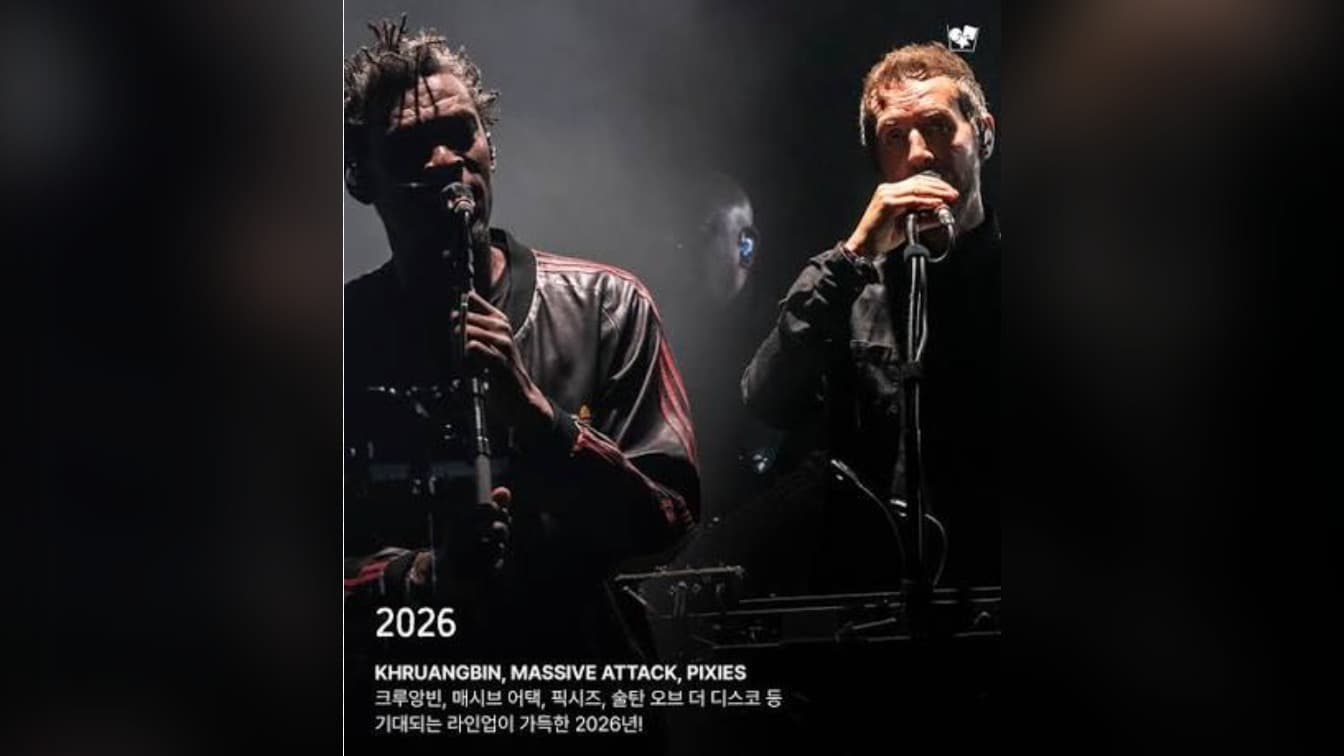
Khruangbin’s next Korean festival appearance is not just another name on a summer poster. For fans tracking the 2026 Incheon Pentaport Rock Festival through Google Trends Korea, the sudden spike around Southeast Asia-flavored music, global bands and the Songdo lineup points to a bigger story: a Texas trio built on borderless groove is about to headline one of Korea’s most established rock weekends.
The band is scheduled for the first day of the festival, July 31, 2026, at Songdo Moonlight Festival Park in Incheon. That placement gives Khruangbin a symbolic role before the weekend expands into a heavyweight run that also includes Massive Attack and Pixies as marquee names across the three-day program. In a year when Korean festival audiences are increasingly quick to reward genre-fluid lineups, Khruangbin’s slot feels unusually well timed.
What makes the booking feel different is the contrast between scale and sound. Khruangbin’s music is spacious rather than maximal, groove-led rather than slogan-driven, and often built around small details: a bassline that keeps walking, a guitar tone that sounds sunlit and slightly distant, a drum pocket that refuses to hurry. On paper, that restraint might seem risky for a headlining festival slot. In practice, it is exactly why the announcement has generated interest. The band has spent the last decade proving that quiet confidence can still command enormous outdoor stages.
A Headliner Built From Global Groove
Khruangbin is made up of bassist Laura Lee Ochoa, guitarist Mark Speer and drummer Donald “DJ” Johnson. The trio came out of Texas but never sounded confined to one region. Their catalog folds together psychedelic rock, funk, soul, dub, disco, Middle Eastern melodic colors and Southeast Asian musical references without turning those influences into a costume. The result is a sound that travels easily because it does not insist on one language, one scene or one fixed identity.
That matters for Pentaport. Korean festival crowds have become fluent in a much wider map of live music than the old binary of domestic rock versus imported headliners. A stage can now move from Korean indie to Japanese city-pop-adjacent acts, British trip-hop, American alternative rock and globally minded psych-funk without feeling scattered. Khruangbin sits neatly inside that shift. Their songs often work like invitations rather than declarations, giving listeners a groove first and letting the references reveal themselves slowly.
The band’s recent run also gives the booking a sense of momentum. After breaking wider internationally with Con Todo El Mundo in 2018, Khruangbin continued expanding through Mordechai in 2020, the Vieux Farka Touré collaboration Ali in 2022, and A LA SALA in 2024. In 2025, the group revisited its debut era with The Universe Smiles Upon You ii, a move that underlined how strongly the band’s earliest sound still connects with new listeners. By the time the trio reaches Incheon in 2026, fans will be hearing a band with both nostalgia and current activity behind it.
Why Pentaport’s 2026 Lineup Feels Bigger Than One Band
The 2026 edition marks another major chapter for Pentaport, which has long been treated as one of Korea’s key summer rock festivals. The confirmed dates, July 31 through August 2, give the event a three-day arc at Songdo Moonlight Festival Park. Khruangbin’s first-day headline role sets the mood with groove and atmosphere, while Massive Attack and Pixies bring different kinds of historical weight to the rest of the weekend.
That combination is important because each headliner pulls a different audience memory. Khruangbin represents the streaming-era global band whose music spread through playlists, festival clips and word of mouth. Massive Attack brings the long shadow of Bristol trip-hop and cinematic electronic music. Pixies carry the foundational influence of American alternative rock, the loud-quiet-loud architecture that reshaped so many bands after them. Put together, the lineup tells a story about how rock festivals have changed: they are no longer only about guitar volume, but about influence, mood, texture and cultural reach.
Korean acts in the broader lineup deepen that story. Names such as Silica Gel, The Volunteers, Jang Pill Soon, Hyukoh, Lee Seung-yoon, QWER and others connect the international bookings to a domestic scene that is not merely supporting the festival but defining its identity. For younger fans, Pentaport is a place to compare the global canon with Korea’s current live strengths in real time. For longtime festivalgoers, it is a reminder that the event’s value has always come from friction between discovery and recognition.
Khruangbin’s presence also explains why a keyword connected to Southeast Asia can intersect with a Korean entertainment trend. The band’s own aesthetic has often been discussed through the way it absorbs non-Western grooves, including Southeast Asian references, without building songs around obvious spectacle. When Korean users search around those terms and land on the Pentaport announcement, the connection is not random. It reflects the way audiences now follow sound, not just celebrity names.
The Fan Appeal Is Emotional, Not Only Informational
For Discover-style readers, the hook is not simply that Khruangbin is coming to Korea. The emotional pull is the possibility of a very specific live moment: a warm July evening in Songdo, thousands of people moving to music that feels relaxed on the surface but intensely controlled underneath. Khruangbin’s best festival sets are not built around one explosive chorus. They build pressure through repetition, tone and shared patience. That can make a field feel smaller and more intimate, which is rare for a headliner.
Fans who discovered the band through tracks like “White Gloves,” “Time (You and I),” “Maria También” or the A LA SALA era are likely to arrive with different entry points. Some come for the basslines, some for Mark Speer’s glassy guitar phrasing, some for the band’s visual identity, and some for the feeling that the songs can sit comfortably between late-night listening and an outdoor festival crowd. That breadth is part of the achievement. Khruangbin has become a large-scale act without abandoning the slow-burn qualities that made the trio distinctive.
The booking also gives Korean audiences a chance to see how the band’s understated style holds up next to more historically forceful names on the bill. Massive Attack and Pixies arrive with towering reputations and decades of influence. Khruangbin arrives with a newer kind of authority, one built through global touring, visual consistency and a sound that has become instantly recognizable even when it avoids conventional pop drama. That contrast may become one of the weekend’s most interesting conversations.
What To Watch Before July 31
The next question is how the festival frames the day-by-day experience. With Khruangbin leading the opening day, the schedule around them will matter. A smart running order can make the transition from Korean bands to international psych-funk feel natural, while a crowded timetable could turn the first day into a discovery sprint. Either way, the first-day headline slot gives Khruangbin a clear narrative: they are not arriving as a curiosity, but as a central reason to enter the festival gates early.
Ticket interest will also show how deeply Korea’s festival audience has embraced this kind of headliner. The group is famous among global music fans, but its Korean mainstream recognition is more layered than a K-pop act or television celebrity. That makes the trend signal useful. Search interest around the announcement suggests that people are trying to understand the band, the lineup and the festival context at once. For an entertainment platform, that is exactly the kind of gap that rewards a clear explainer.
There is a broader industry lesson here as well. Korean festivals are competing not only for ticket sales but for identity. A lineup that can place Khruangbin, Massive Attack, Pixies and major Korean performers under one banner says that Pentaport wants to be read as a music-first event with international memory and local relevance. That is a stronger pitch than simply importing big names. It gives fans a reason to talk about the festival as a curated weekend rather than a list of separate concerts.
For now, Khruangbin’s Pentaport headline slot stands as one of the 2026 festival season’s most intriguing Korean live music stories. It has a clear date, a recognizable venue, a strong visual setting, and a band whose sound matches the very search trend that surfaced the news. If the performance lands the way fans expect, July 31 could become one of those festival nights remembered less for noise than for atmosphere: a field in Incheon moving together to a groove that started in Texas and kept crossing borders until it reached Korea.
How do you feel about this article?
저작권자 © KEnterHub 무단전재 및 재배포 금지
Entertainment Journalist · KEnterHub
Entertainment journalist specializing in K-Pop, K-Drama, and Korean celebrity news. Covers artist comebacks, drama premieres, award shows, and fan culture with in-depth reporting and analysis.
Comments
Please log in to comment