Why Kim Bujang's Rainy Twist Has Korea Hooked
 By Park Chulwon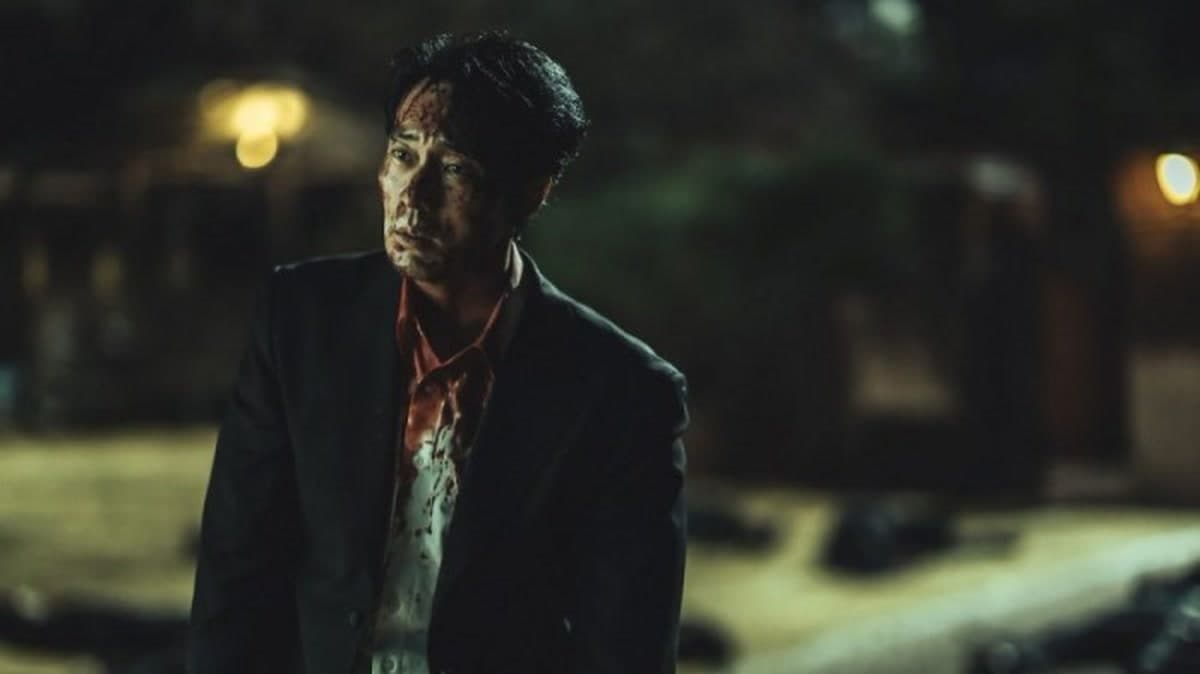
SBS's Friday-Saturday drama Kim Bujang has turned one missed reunion into the kind of cliffhanger that sends viewers straight to search engines. Episode 5, which aired in Korea on July 10, pushed So Ji-sub's desperate father character to the edge just as his daughter seemed to escape danger, only for the story to flip into a colder threat in its final minutes.
The result is exactly the kind of television moment that travels beyond a recap. Korean entertainment outlets focused on the same emotional pivot: Kim Bujang learns that his daughter Kim Min-ji is alive, chases the faint possibility of bringing her home, then watches the situation move from rescue to captivity again when she unknowingly enters the car of Joo Sang-wook's villain, Joo Kang-chan.
That ending matters because the series is no longer selling suspense only through action. It is tying every fight, secret, and betrayal back to a simple promise between a father and a child. For Korean viewers following the drama in real time, the hook is not just whether Kim Bujang can win another confrontation. It is whether he can reach Min-ji before every power around him turns her into leverage.
A Rescue That Collapsed In The Rain
Episode 5 centered on Kim Bujang's race to Myeongpo Port after clues pointed him toward the place where Min-ji had been held. The episode built its tension through parallel movement: Bujang fighting through the men guarding the port, Min-ji waking up inside a freezing storage space, and Joo Kang-chan's side also closing in after assuming that the girl had already been dealt with.
Min-ji's escape gave the hour its first emotional release. Rather than waiting passively, she used her own judgment to lure out the man watching her, struck back, and got herself out of the cold storage area. That detail is important for the drama's momentum. She is not simply a victim who exists to motivate the hero. The episode underlines her survival instinct, her fear, and her determination to return home alive.
At nearly the same time, Bujang reached the space where she had been confined. He found a message left behind by Min-ji apologizing to her father and admitting that she was scared. The image works as a brutal reversal: after believing his daughter might be dead, he finally has proof that she survived, but the proof arrives a few moments too late to put her back in his arms.
The drama then staged the near-reunion in the most punishing way possible. Bujang spotted Min-ji as she was getting away from the port, called out to her, and tried to close the distance. Heavy rain swallowed his voice, and Min-ji moved beyond his reach without realizing how close her father had come. It is a classic melodrama device, but the episode makes it land because it follows a chain of decisions rather than a random accident.
The rain sequence also clarifies why the show is connecting with a wide audience. Kim Bujang is packaged as a revenge action drama, but its strongest scenes are not only the fights. They are the seconds when Bujang is forced to choose between rage, guilt, and restraint while the one person he is trying to protect remains just out of reach.
Joo Sang-wook's Villain Raises The Stakes
The final turn came after Min-ji escaped the port and tried to flag down help on the road. A car stopped, creating what looked like a moment of relief. Instead, the vehicle belonged to Joo Kang-chan, the powerful figure connected to Min-ji's suffering and one of the most dangerous people she could have encountered at that exact moment.
Joo Sang-wook's performance gives the twist its chill. Kang-chan does not need a loud threat to make the scene work. His satisfaction at Min-ji entering his orbit by chance turns the rescue into a trap, and it tells viewers that he sees people less as human beings than as useful pieces in his own calculation. That makes him a clean dramatic opposite to Bujang, whose violence is driven by attachment rather than control.
The episode also widened the danger through the special task force watching Bujang. Instead of treating Min-ji only as someone who needs protection, figures inside the unit recognize that she is Bujang's weakness and consider reaching her first. That means Min-ji is no longer threatened by one villain alone. She is now the target of several forces that understand her value in the larger chase.
This is where Episode 5 becomes more than a simple kidnapping cliffhanger. The story has placed Bujang in a three-sided conflict: Joo Kang-chan has Min-ji within reach, the task force wants to use her to control Bujang, and Bujang himself is operating with injuries, guilt, and limited information. Every side believes Min-ji can change the outcome, which makes her rescue the axis of the next episode.
The drama also folded in a revelation tied to Park Kang-sung and the past of the real "66," Park Young-kwang, played by Ok Taecyeon in flashback material. Bujang's confrontation with Kang-sung exposed more of the old betrayal that shaped his current life. That background gives the action a heavier tone: Bujang is not merely fighting strangers at the port, but people connected to the identity, losses, and survival choices that made him who he is.
Why The 20% Rating Milestone Changes The Conversation
The cliffhanger is arriving while Kim Bujang is already performing like a breakout. Nielsen Korea figures cited by Korean reports put Episode 5 at 20.5 percent nationwide and 21.0 percent in the Seoul metropolitan area. Although that is slightly below the previous episode's 21.6 percent nationwide rating, the drama remains firmly in the 20 percent range, a major marker for a prime-time Korean series in the current fragmented viewing market.
The growth curve is part of the story. Reports noted that Kim Bujang began at 9.5 percent, climbed to 15.7 percent for Episode 2, reached 18.8 percent for Episode 3, and crossed into the 20 percent bracket with Episode 4. Holding above 20 percent after such a fast rise suggests that viewers are not only sampling the drama because of So Ji-sub's return to an action-heavy role. They are staying for the serialized pressure.
Those numbers also explain why a single plot turn is trending. When a show is already being watched by a large live audience, an ending built around a father missing his daughter by seconds becomes a shared event. It gives fans something immediate to discuss: Min-ji's resourcefulness, Kang-chan's timing, the task force's motives, and whether Bujang can break into the next location before the trap closes.
For international fans, the drama's Netflix availability gives the ratings another layer. A domestic broadcast hit with streaming access can convert a Korean cliffhanger into a global conversation within hours, especially when the premise is easy to understand: an ordinary father becomes dangerous because his child is in danger. The cultural specifics of the task force and past operations deepen the story, but the emotional engine is universal.
Episode 6 Now Has One Clear Question
The preview for Episode 6 points toward Bujang moving toward Joo Kang-chan's villa and calling out to Min-ji again. That image gives the next chapter a clean promise: the story is heading from a rain-soaked near miss into a direct rescue attempt. The show has already established that Kang-chan will not let Min-ji go easily, and that the task force may complicate any simple confrontation.
What makes the next episode compelling is that Bujang cannot solve every problem by force. If he storms into Kang-chan's territory, he risks walking into a prepared trap. If he hesitates, Min-ji remains exposed. If he trusts the wrong person, the task force could reach her first. The drama has narrowed the emotional objective while multiplying the practical obstacles around it.
Min-ji's role should also remain central. Episode 5 made a point of showing that she can think under pressure, escape confinement, and act despite fear. The most satisfying version of Episode 6 would not reduce her to a silent hostage, but would keep that survival instinct alive while Bujang closes in. That dynamic is what separates a strong rescue arc from a routine one.
For now, Kim Bujang has the advantage every serialized drama wants: a high-rating episode, a clear emotional wound, and a final image that makes waiting feel difficult. Bujang was close enough to see hope and too late to hold it. Kang-chan now has the advantage, but the drama's momentum belongs to the father who has already shown that he will tear through every barrier between himself and his daughter.
How do you feel about this article?
저작권자 © KEnterHub 무단전재 및 재배포 금지
Entertainment Journalist · KEnterHub
Entertainment journalist focused on Korean music, film, and the global K-Wave. Reports on industry trends, celebrity profiles, and the intersection of Korean pop culture and international audiences.
Comments
Please log in to comment