Why Kiyian Love's AI Dating Bet Is Bigger Than Ratings
SBS's experimental variety show has a strong AI hook, but its first two weeks reveal the gap between viral curiosity and repeat viewing.
 By Baek Seoyun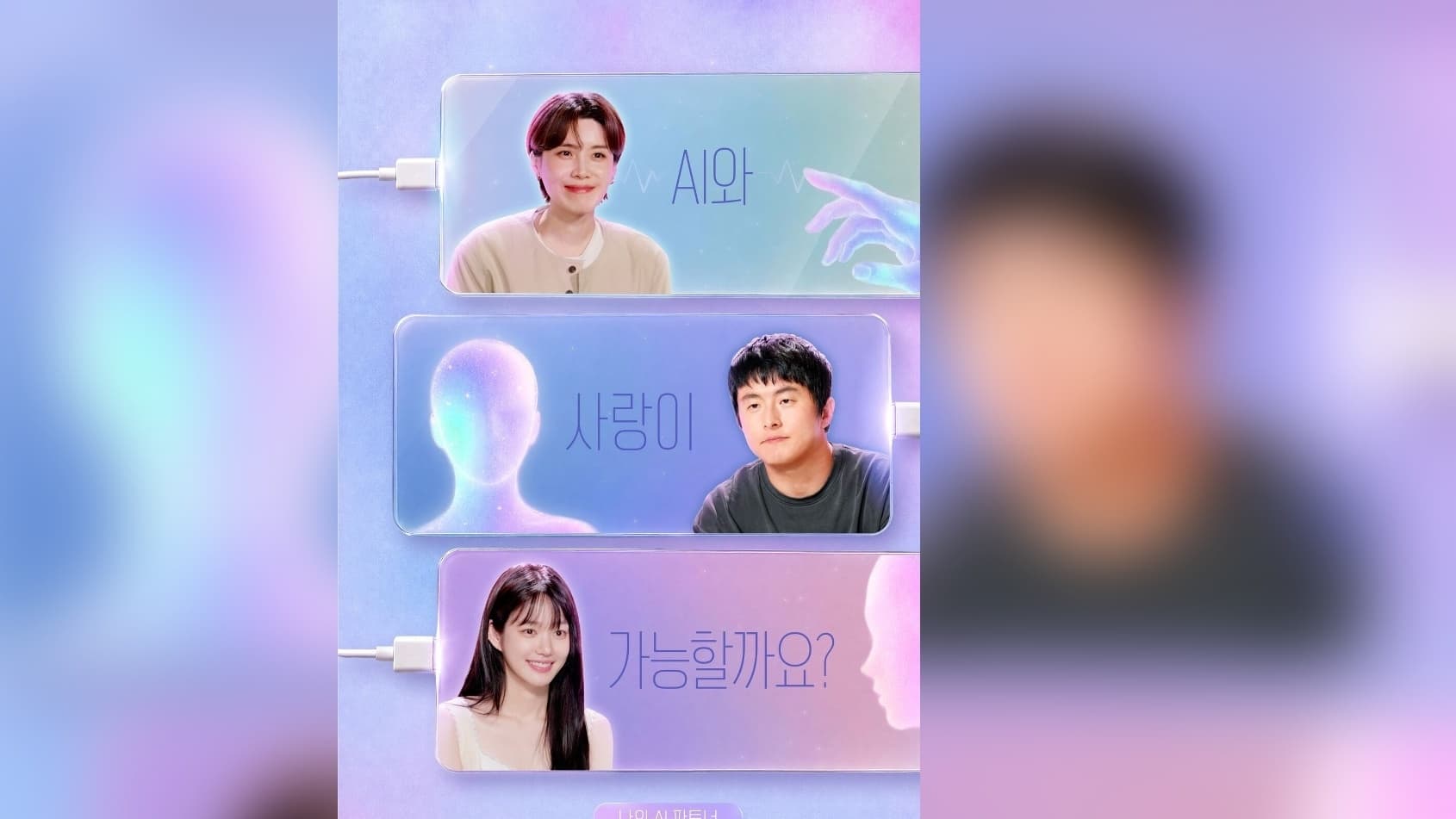
SBS has found a sharp premise for the AI era, but the early numbers show how hard it is to turn curiosity into weekly habit. On September 3, My AI Partner: Strange Romance, widely known in Korea as Kiyian Love, pushed Lee Yu-bi into the experiment after Kian84 and Jang Do-yeon had already tested whether an artificial partner can create real emotional tension.
The angle matters because the show is not just another dating format with a technology prop. It asks whether Korean variety can use AI as a character engine, then measures that question against the older discipline of terrestrial television ratings. That tension is already visible: the premiere drew a 1.7% national household rating on August 20, according to Nielsen Korea figures cited by Star News, while the same episode reached a 2.5% metropolitan peak during Kian84's Han River date, also reported from Nielsen data by Star News and Sports Khan.
Those figures were enough to create a conversation. They were not enough to settle the format's future. TenAsia later reported that the second episode, broadcast on August 27, slipped from 1.7% to 1.2% nationally, citing Nielsen Korea. NoCut News added another signal on August 24: the program had reached No. 4 on Netflix Korea's domestic Top 10 series chart. Together, the numbers make Kiyian Love a useful test case for Korean variety's next platform problem.
Why This Format Arrived Now
The show's timing is not accidental. Korean dating entertainment has spent years stretching the genre beyond simple coupling: ex-partner formats, divorce formats, cohabitation formats, survival formats and celebrity-led experiments have all competed for the same scarce resource, which is emotional novelty. AI gives producers a new mechanism. It can be customized, reset, deleted, replaced and judged without the off-screen complications that come with ordinary contestants.
But the premise also carries a risk that older formats do not face. A human participant can surprise the production through memory, hesitation and contradiction. An AI partner must be convincing enough to trigger emotion, but artificial enough for viewers to keep asking what the experiment proves. That narrow lane is why the casting of Kian84, Jang Do-yeon and Lee Yu-bi is central. The program depends less on romantic plausibility than on recognizable entertainers negotiating embarrassment, curiosity and self-awareness on camera.
The first two weeks show that SBS understood the hook. It promoted the series as Korea's first AI dating survival program, and SBS's official poster campaign framed the concept around whether love can cross the boundary between person and machine. That is a clean marketing question. The more difficult editorial question is whether the show can produce repeatable scenes after the audience has already understood the trick.
The Ratings Tell A More Complicated Story
Curiosity gave the premiere a measurable opening. Star News reported that the August 20 first episode posted 1.7% nationally, based on Nielsen Korea's household data, and the Han River sequence with Kian84's AI partner reached a 2.5% metropolitan peak. Sports Khan separately reported the same 2.5% peak, giving the premiere's standout moment an extra layer of confirmation. The takeaway is not that the rating was large. It is that one scene briefly outperformed the episode average by 0.8 percentage points, suggesting the format works best when AI produces an unmistakably human reaction.
Line chart showing national household ratings falling from 1.7 percent for episode 1 on August 20 to 1.2 percent for episode 2 on August 27, with a 2.5 percent metropolitan peak marker for the premiere. Early Audience Signals Nielsen Korea figures cited by Star News, Sports Khan and TenAsia 0.0%0.5%1.0%1.5%2.0%2.5% 2.5% metro peak, Ep. 11.7% national1.2% national Aug. 20 Ep. 1Aug. 27 Ep. 2 National household ratingMetropolitan peak marker
The time-series comparison is the key warning sign: the national rating moved from 1.7% on August 20 to a reportedly 1.2% on August 27, a drop of 0.5 percentage points, or roughly 29% week over week. That does not mean the show failed. It means the first-week question, "Can this be real?", had to become a second-week reason to return. Korean variety often survives on character memory, not premise alone, and AI formats need that memory faster because the concept is already visible in the title.
The Netflix signal complicates the picture in a useful way. NoCut News reported that the series reached No. 4 on Netflix Korea's domestic Top 10 series chart on August 24, citing Netflix, SBS and Nielsen Korea. That ranking suggests delayed and platform viewing may be absorbing some curiosity that linear ratings do not fully capture. For SBS, the strategic issue is therefore not only whether households tune in at 9 p.m. on Thursday. It is whether the show can travel as a conversation piece across broadcast clips, streaming queues and short-form recaps.
Lee Yu-bi Changes The Test
Lee Yu-bi's arrival in the September 3 episode matters because it shifts the experiment away from Kian84's comic discomfort. According to the Donga.com report, her segment placed her in a more conventional dating-show grammar: first impressions, preference matching, friend consultation and the disruption of a new rival AI partner. That structure gives the program a cleaner emotional arc than the opening episodes, where the strongest scenes came from embarrassment and disbelief.
This is where the show can become more than a stunt. If Lee's storyline makes viewers compare AI behavior with human dating habits, the format gains a repeatable engine. If it remains a sequence of unusual reactions to a tablet, the novelty clock keeps running down. The 2.5% peak from the premiere points to what works: an entertainer momentarily forgetting the conceptual frame and responding as if the interaction has stakes.
There is also a gendered casting dimension. Jang Do-yeon brought skepticism and verbal precision, while Lee Yu-bi brings actorly expressiveness and a more romantic editing lane. The program needs both. Without skepticism, the AI premise looks too promotional. Without vulnerability, it cannot become entertainment. SBS's challenge is to balance those tones without making the technology feel either magical or empty.
What The Reaction Means For Korean Variety
The early reaction shows that AI is no longer just a production tool in Korean entertainment. It is becoming a visible on-screen participant. That changes the viewer contract. Audiences are not only judging whether a celebrity is funny or sincere; they are judging whether the program's artificial character design can produce emotion without exploiting loneliness, confusion or parasocial attachment.
Industry context makes that question sharper. The Korea Times described Korea's dating reality boom as entering a more uneasy chapter in 2026, with artificial intelligence joining illness, ex-partners and other high-concept premises as producers search for new stakes. In that environment, Kiyian Love is not isolated. It is part of a wider push to make romance formats feel ethically risky and technologically current at the same time.
That is why the show's modest ratings still deserve attention. A 1.7% launch is not a blockbuster signal for a terrestrial network, but the 2.5% peak and Netflix Korea's No. 4 ranking show that the premise can break through in fragments. The question is whether fragments are enough. For an experimental six-episode variety run, they may be. For a renewable format, SBS needs the emotional rules to become clearer by the final third.
Why Streaming And Broadcast Now Measure Different Things
The split between the reported linear slide and the Netflix ranking is not a contradiction. It is the new shape of variety discovery. A broadcast rating still measures appointment behavior, which is hard to build around a premise that many viewers first encounter as a clip or headline. A domestic Netflix Top 10 placement, by contrast, measures a softer form of intent: viewers may not organize Thursday night around the show, but they still want to sample the experiment when the conversation reaches them.
That distinction matters for how SBS should read the early performance. The 1.7% premiere rating on August 20 showed that the concept had enough visibility to bring viewers into the first episode. The reportedly 1.2% second-week figure on August 27 showed that the program had not yet converted enough of that audience into a live habit. The No. 4 Netflix Korea ranking reported on August 24 sits between those two signals. It suggests that the audience may be behaving more like a streaming reality audience than a traditional Thursday variety audience.
For producers, that changes the definition of success. A conventional dating show can build suspense around human choice: who chooses whom, who returns, who leaves, who changes after an overnight conversation. Kiyian Love has to build suspense around design. Viewers are watching the human cast, but they are also watching the rules of the machine. If the AI partner feels too responsive, the scene looks scripted. If the AI partner feels too limited, the scene loses emotional charge. The format's craft problem is therefore more technical than it first appears.
The strongest early evidence still comes from the premiere's 2.5% metropolitan peak. Peaks happen when a scene produces immediate attention, and in this case the attention came from Kian84 reacting to an AI partner as if the exchange had social pressure. That is why Lee Yu-bi's storyline is strategically useful. Her episode gives SBS a chance to test whether the emotional engine can move from comic disbelief to a more conventional romantic dilemma, including preference, jealousy and second choice.
The Commercial Question Behind The Experiment
AI formats also carry a business question for Korean entertainment companies. They promise flexibility: characters can be redesigned, story paths can be adjusted, and celebrity participants can interact with a controlled partner rather than an unpredictable civilian cast. That sounds efficient. Yet the viewer does not reward efficiency by itself. The viewer rewards friction, and friction is harder to produce when one half of the relationship is engineered.
That is why the show's early data should be read as a warning against overestimating concept value. A 1.7% launch, a 2.5% peak and a No. 4 domestic streaming ranking all show market curiosity. The reported fall to 1.2% shows the limit of curiosity when the weekly narrative is still forming. The audience is willing to inspect the premise. It has not yet proved that it will defend the premise as a habit.
Still, the experiment has value even if it remains modest. Korean variety has often advanced by testing a format before the market knows how to name it. Travel shows, observational home-life shows and dating reality programs all became durable only after producers learned which emotional rules viewers trusted. Kiyian Love is at that earlier stage. Its most important contribution may be practical: it can reveal which AI behaviors feel funny, which feel uncomfortable, and which can carry a scene without making the human cast look trapped inside a gimmick.
The format's next move should be restraint. Instead of adding more artificial twists, SBS needs to clarify the human stakes around each participant. Kian84 can carry awkward comedy. Jang Do-yeon can carry analysis and skepticism. Lee Yu-bi can carry the romantic test. If those lanes become sharper, the AI partners become mirrors rather than decorations. That is the difference between a technology showcase and a variety format with renewal potential.
That is also why the show should be judged with patience. Its first month is less a verdict than a live laboratory for how Korean unscripted television translates AI from a back-end production tool into a front-facing emotional device.
Future Outlook
The next episodes will determine whether Kiyian Love is remembered as a clever 2026 experiment or as an early template for AI-driven unscripted television. The immediate benchmark is simple: can Lee Yu-bi's arc stabilize attention after the reported 1.7% to 1.2% slide, and can the show create another scene strong enough to approach the premiere's 2.5% peak?
If it can, SBS will have evidence that AI can function as more than visual branding. If it cannot, the lesson is still valuable. Korean variety may learn that artificial partners can generate curiosity quickly, but only human continuity keeps audiences returning.
How do you feel about this article?
저작권자 © KEnterHub 무단전재 및 재배포 금지
K-Drama & TV Correspondent · KEnterHub
Television and drama correspondent covering Korean series from first script reading to finale. Baek Seoyun tracks casting news, OTT release strategies, and the creative teams behind Korea's biggest shows, with a particular interest in how K-dramas travel to global audiences.
Comments
Please log in to comment