Why Ko So-young's No-Hagwon Parenting Went Viral
 By Park Chulwon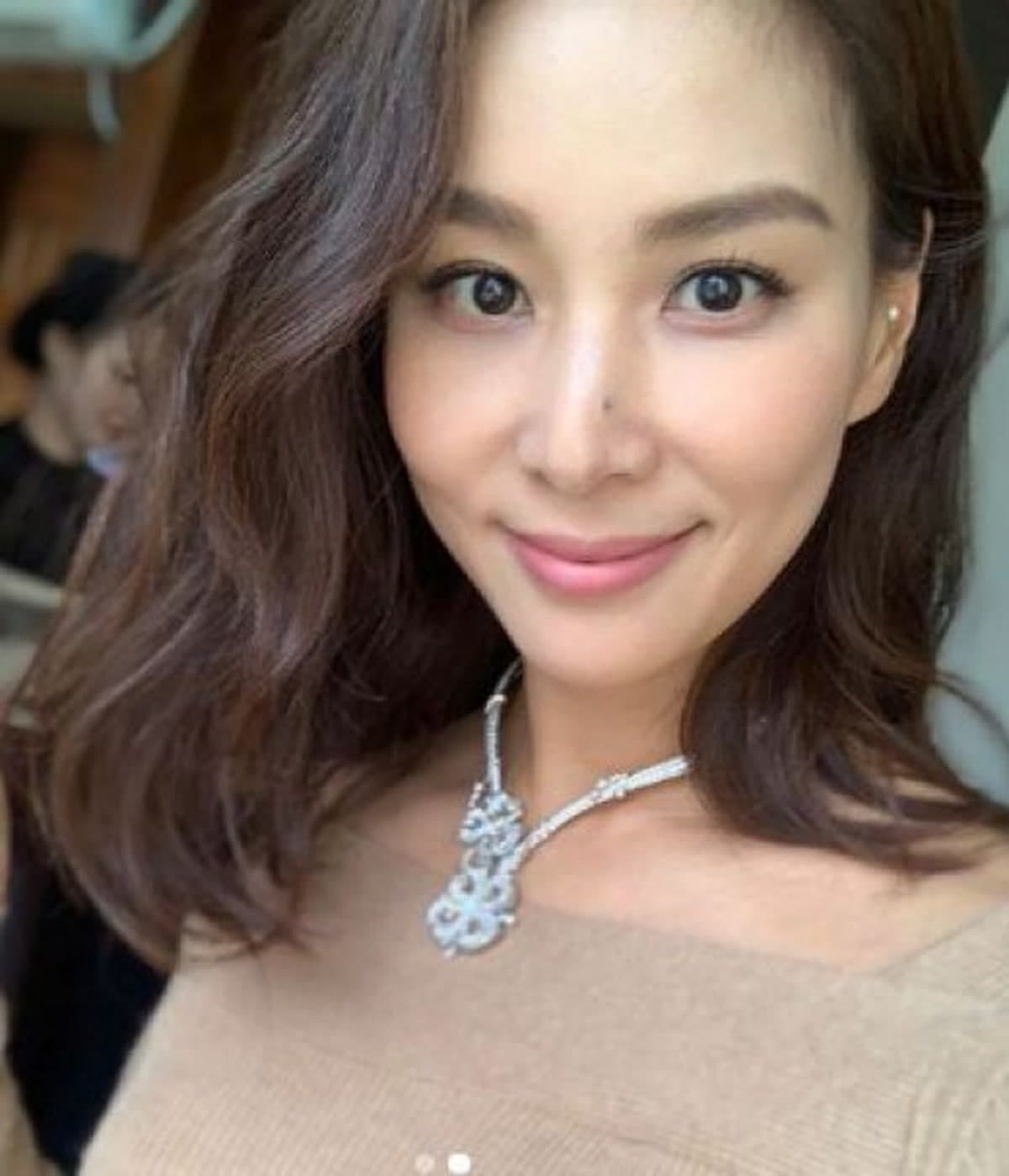
Ko So-young is back in the spotlight for a reason that has little to do with a new drama, a red-carpet look, or a brand campaign. The veteran actress was recently seen in photos from an international school graduation ceremony, and the images quickly revived interest in her unusually relaxed approach to parenting in one of Seoul's most education-obsessed neighborhoods.
For Korean readers, the story landed because it cuts against a familiar expectation. Ko and her husband, actor Jang Dong-gun, are one of the country's most recognizable celebrity couples, yet her recent comments about private academies, family routines, and teaching children independence sounded less like elite show-business mystique and more like a candid parent explaining what has and has not worked at home.
The latest attention began after dancer Poppin Hyun Joon posted photos from his daughter's middle school graduation on social media. Among the pictures was a shot taken with Jang and Ko at the ceremony, drawing immediate notice because the couple rarely appears in such ordinary school-event settings. Reports noted, however, that it has not been confirmed whether Poppin Hyun Joon's daughter and Jang and Ko's child attend the same school.
That caveat matters. The photo was not a formal family announcement, and the school connection should not be overstated. What made the moment newsworthy was the way it intersected with Ko's recent public conversation about education, motherhood, and the pressure that surrounds families in Seoul's Gangnam area.
Why One Graduation Photo Became a Parenting Story
Ko, who married Jang in May 2010, is a mother of two. The couple welcomed their first child later that year and their second child in 2014. For years, public curiosity around the family has often been tied to status markers: their celebrity standing, their residence in one of Seoul's most expensive districts, and the broader image of affluent Gangnam parenting.
That is why her comments about not relying heavily on private academies attracted so much attention. In South Korea, the word "hagwon" carries enormous cultural weight. These after-school academies are a major part of the country's education system, and families in areas near Daechi-dong, Seoul's best-known private education district, are often assumed to build their children's lives around packed evening schedules.
Ko challenged that assumption in a recent appearance on Hong Jin-kyung's YouTube channel. Asked about the so-called "academy ride," the daily routine of driving children from one private class to another, she said she does not send her children to academies very often. Her explanation was simple and disarmingly practical: when she tried it, the children did not always go straight to class and sometimes wandered off to convenience stores instead.
The detail was small, but it made the conversation feel specific rather than performative. Ko was not presenting a grand theory of education. She was describing the kind of everyday parental discovery that only becomes a philosophy after repeated trial and error: if a system creates more friction than growth, perhaps the system needs to be reconsidered.
She also described a home routine built around presence. Ko said her mornings start early enough to send the children to school, after which she exercises, walks, or rests before being home around the time they return in the afternoon. She framed those hours less as supervision than as emotional consistency, explaining that she wants the children to know a parent is there when they come back.
A Different Image of the Celebrity Mother
Ko's comments resonated because they contrasted with a dominant image of elite Korean parenting. Celebrity mothers are often discussed through the lens of school choices, tutoring costs, overseas education, and neighborhood status. Ko did not completely escape that frame; the reports surrounding the graduation photo noted that the school in question is a Gangnam-based American-style alternative education institution, with middle school tuition reportedly in the range of 23 million to 25 million won per year.
But the more interesting part of the story is not the tuition figure. It is the tension between expensive educational environments and Ko's stated desire to avoid over-programming her children. In a media ecosystem that often treats celebrity parenting as a luxury checklist, she offered a version that emphasized restraint, timing, and autonomy.
She has said that family became her highest priority after marriage and motherhood, even though her career had once been central to her identity. That admission gave the education discussion a more personal frame. Rather than speaking as a lifestyle influencer selling a method, Ko spoke as an actress who had stepped back from the pace of her earlier public life and was now reassessing what kind of example she wanted to set at home.
Her recent YouTube activity is part of that reassessment. Ko launched her own channel, "Baro Geu Ko So-young," and has presented it as a way to show her children a working version of their mother, not only the parent waiting at home. That point gives the story a second layer: her parenting philosophy is not simply about staying close to the children, but about slowly making room for herself again in public.
The balance she described will be familiar to parents far beyond Korea. She wants to be available, but not overprotective. She wants her children to feel emotionally secure, but also to learn how to do things for themselves. She acknowledged that she once raised them very carefully, then suggested that the next stage is learning to step back and let them try.
Why It Matters Beyond One Family
For international readers, the fascination around Ko's remarks may seem surprising at first. A celebrity saying she does not send her children to many after-school classes might not sound like a headline. In Korea, however, that statement lands inside a much larger debate about private education, household spending, childhood stress, and parental identity.
Recent Korean coverage around celebrity parenting has repeatedly returned to the cost of enrichment programs, the intensity of daily schedules, and the emotional burden that accompanies competition. Ko's comments entered that conversation from a softer angle. She did not criticize other parents or claim that her choice is universally better. She simply explained why the high-pressure route did not suit her family in the way people might have assumed.
That restraint is part of why the story traveled. It allowed readers to project their own anxieties onto a familiar public figure without turning the issue into a confrontation. Fans could read the graduation photo as a rare glimpse of a famous couple in an ordinary parental setting, while general readers could connect it to the broader question of how much structure children actually need.
The graduation setting also gave the story a natural emotional hook. Graduation photos mark transition: one stage ending, another beginning, parents watching from the side as children move forward. For Ko, whose recent remarks have focused on letting children become more independent, the timing made the image feel symbolic even if no formal statement was attached to it.
There is still a limit to what can responsibly be said. The children are not public figures, and the exact school relationship behind the photo has not been confirmed. The stronger story is not about identifying a campus or mapping a celebrity family's private routine. It is about how Ko's public comments have reframed her image at a moment when many Korean parents are questioning whether more classes, more pressure, and more spending always lead to a better childhood.
What Comes Next for Ko So-young
Ko's return through YouTube may continue to shape how the public sees her. She has long carried the aura of a top actress from an earlier era of Korean screen stardom, but online video favors a different kind of presence: casual, self-aware, and conversational. Her remarks about family, education, and routine suggest that she understands the appeal of showing less polish and more process.
That does not mean she is abandoning her star image. If anything, the recent attention shows how powerful that image remains. A single graduation photo was enough to pull together years of public curiosity about her marriage, her children, her home life, and her career choices. The difference is that Ko now appears more willing to speak in her own voice about what those choices have meant.
For fans, the appeal lies in seeing a familiar actress in a more grounded chapter. For general readers, the story offers a window into a Korean parenting debate that is often discussed through numbers and competition, but rarely through the small, human details of what happens when a child does not follow the plan. Ko So-young's answer, at least for now, is not to add another plan on top of it. It is to be present, give space, and let the children learn how to find their own way.
How do you feel about this article?
저작권자 © KEnterHub 무단전재 및 재배포 금지
Entertainment Journalist · KEnterHub
Entertainment journalist focused on Korean music, film, and the global K-Wave. Reports on industry trends, celebrity profiles, and the intersection of Korean pop culture and international audiences.
Comments
Please log in to comment