Why Korean Variety Is Turning Veterans Into Beginners Again
A new wave of shows puts established stars back at the starting line, turning humility into Korean unscripted TV's sharpest format hook.
 By Jang Hojin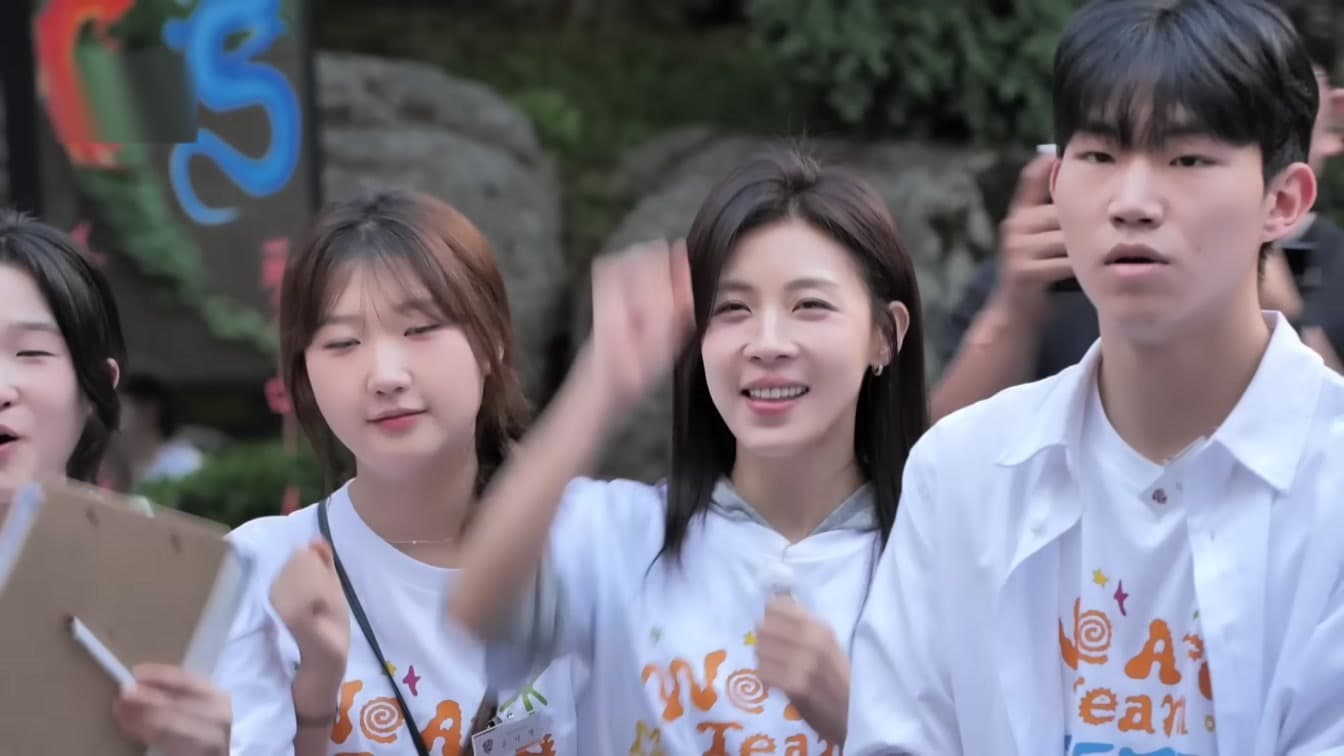
Veteran stars are finding fresh momentum by agreeing to look inexperienced again.
That is the quiet logic behind a new wave of Korean variety programming in 2026, where established names such as Ha Ji-won, Lee So-ra, Hong Jin-kyung, Sam Kim, Kwon Sung-joon and Jung Ji-sun are being placed back at the starting line. Instead of asking celebrities to display mastery, these shows ask them to absorb embarrassment, learn new rules, and accept correction in public. The result is not simply another round of reality television. It is a format strategy built around humility as spectacle.
This article analyzes how proven Korean entertainers are using “beginner again” formats to give variety TV a sharper emotional hook, a lower-risk production model, and a bridge to viewers who are also rethinking age, work and reinvention. The trend matters because Korean unscripted entertainment is no longer competing only for quick laughs. It is competing for durable formats that can travel across platforms and still feel intimate.
Why Expertise Is Being Rewritten As Vulnerability
The appeal begins with contrast. A star chef usually enters a show with authority; a veteran model arrives with visual polish; a famous actor brings years of screen command. When those same people become the youngest worker in a foreign kitchen, auditioning models in Paris, or a late-returning university freshman, the program instantly creates dramatic friction without inventing a scandal or a forced rivalry.
That is why MBC's eight-part Sora and Jin-kyung, tvN's Undercover Chef, and JTBC's YouTube-centered Class of '26 Jiwon sit naturally in the same conversation. Their premises differ, but their engine is similar. Each format takes a familiar public figure and strips away the protective layer of seniority. The audience is not watching whether a celebrity is talented. It is watching whether success can survive a setting where old status has little practical value.
The background is important. Korean variety has long used travel, workplace labor and fish-out-of-water scenarios, but the 2026 version feels more pointed because the participants are not rookies chasing recognition. Lee So-ra and Hong Jin-kyung built careers from the early 1990s onward, while Ha Ji-won is presented as returning to campus life roughly two decades after graduating from university. Those time gaps are the story. They turn “trying something new” into a reflection on what adulthood does to confidence.
That shift explains why the format lands beyond fandom. For viewers in their thirties, forties and fifties, the shows offer a fantasy of restarting without pretending that restart is easy. For younger viewers, they make senior celebrities less distant. The bridge is awkwardness. Everyone understands the feeling of not knowing the room.
But The Trend Is Also A Production Strategy
Emotional relatability is only half of the equation. The “veteran as beginner” format is attractive because it gives producers a repeatable structure that does not depend on expensive sets or elaborate fictional stakes. A kitchen, a campus, an audition room or a training site can become a pressure chamber if the participant has enough reputation to lose.
That is a crucial point for Korean unscripted TV at a time when the global appetite for reality and variety formats remains strong. Netflix's Culinary Class Wars helped underline how Korean food competition and personality-driven unscripted storytelling can travel internationally; trade coverage has also noted that Korean reality formats have become a larger part of the K-content export conversation. In that environment, formats built on a clear role reversal are easier to explain than programs that depend on highly local celebrity gossip.
Undercover Chef is the cleanest example. Chefs known through cooking competitions and studio shows enter overseas kitchens where language, hierarchy and technique reset the scoreboard. The premise is immediately legible: mastery at home does not guarantee fluency abroad. That makes every mistake useful. A failed dish, a misunderstood instruction or a physically demanding task does not merely fill airtime; it tests whether professional pride can be converted into learning.
The same logic operates in Sora and Jin-kyung. Paris Fashion Week is not just a glamorous backdrop. It functions as a market test, placing two Korean veterans in an arena where international gatekeeping and youth-heavy competition make their domestic fame less decisive. The story becomes more than nostalgia. It asks whether a career built on past visibility can still move through a globalized fashion system that values novelty, speed and constant reinvention.
There is no SVG chart in this analysis because the available verified numbers do not form a comparable dataset. The sources provide useful scale markers, including an eight-episode broadcast, 1990s debut years, Ha Ji-won's age, and a reported top YouTube view count of about 1.83 million, but they measure different things. Turning them into one chart would create a false comparison rather than clarify the trend.
Why Viewers Reward The Reset
Still, production efficiency alone cannot explain the emotional response. These shows work because they let viewers see competence under pressure rather than competence as branding. A celebrity who is already excellent can be admired, but a celebrity who is corrected, confused and still willing to continue can be believed.
That distinction is valuable in the current entertainment climate. Many celebrity reality formats have become promotional extensions of albums, dramas, restaurants or personal channels. Audiences recognize that polish. The beginner-again structure gives programs a defense against that fatigue because the star cannot fully control the image. If the kitchen is busy, the audition is harsh, or the campus slang is unfamiliar, the performer has to react in real time.
Ha Ji-won's Class of '26 Jiwon illustrates the softer version of the same mechanism. The pleasure is not humiliation; it is social re-entry. A major actress navigating a student setting gives the audience a low-stakes way to watch generational distance, from speech habits to dating culture to campus rituals. The format does not need to claim that she is an ordinary student. Its charm comes from the gap between her public stature and the everyday uncertainty of a new environment.
That is the “so what” of the trend. Korean variety is finding drama in the temporary suspension of status. When a famous person becomes the junior again, the show can talk about aging, ambition and reinvention without using those words too heavily. It feels light, but the emotional architecture is serious.
The Export Value Of A Simple Premise
The global usefulness of the beginner-again format comes from how little explanation it requires. A viewer does not need detailed knowledge of Korean celebrity hierarchy to understand the discomfort of being corrected by someone younger, faster or more fluent in the room. That clarity matters for platforms trying to move Korean unscripted content beyond domestic broadcast habits and into subtitled, clipped, algorithm-driven discovery.
It also gives producers a flexible casting map. The central role can be filled by actors, singers, athletes, chefs, models or comedians, while the setting can shift from classrooms to kitchens, small businesses, dance studios, farms or overseas workplaces. In other words, the format is not tied to one fandom. It is tied to a repeatable emotional transaction: the participant lends the show their reputation, and the show temporarily puts that reputation at risk.
That risk is commercially useful because it creates stakes without requiring elimination. Korean variety often excels when competition is present but not cruel, and these programs sit in that middle zone. The participant may fail a task, misunderstand a custom or receive blunt feedback, but the larger arc still points toward adaptation. That balance makes the shows easier to watch across age groups. They can be funny without becoming mean, and sincere without becoming slow.
The model also fits the way entertainment now circulates. A single awkward exchange can become a short clip, while the longer episode provides context for viewers who want the full emotional payoff. The web-first appeal of Class of '26 Jiwon is especially instructive here. Campus moments, generational misunderstandings and spontaneous reactions are naturally clip-friendly, but they also build a continuing story of re-entry. That dual use is valuable: a format can chase discovery and retention at the same time.
For broadcasters, the advantage is different. Shows such as Sora and Jin-kyung and Undercover Chef can package travel, workplace observation and celebrity transformation into a recognizable weekly arc. The format feels contemporary, but it does not abandon the older strengths of Korean variety: ensemble reaction, task-based comedy, and a sentimental belief that effort reveals character. The innovation is not the presence of labor or travel. It is the decision to make seniority the obstacle.
The Risk Of Turning Humility Into Formula
The trend will face a problem if too many shows treat beginner status as costume rather than condition. Viewers can tell when a star is only pretending to be vulnerable, especially when the surrounding cast is arranged to flatter them. The more these formats multiply, the more important it becomes for producers to preserve real friction. A kitchen must be genuinely demanding. An audition must be uncertain. A campus must feel socially alive rather than merely decorative.
There is also a dignity line. The best beginner-again shows do not invite viewers to laugh at age itself. They invite viewers to laugh at the collision between experience and unfamiliar systems. That distinction is critical. If the joke becomes “older celebrity cannot keep up,” the format narrows and becomes cruel. If the joke becomes “even accomplished people have to learn again,” the format widens and becomes generous.
That generosity is why the trend has room to grow. South Korea's entertainment industry has an unusually deep bench of performers whose careers span broadcast television, film, music, YouTube and commerce. Many of them are too established to be presented as mystery personalities, but too active to be treated as legacy figures. Beginner-again formats give them a third path. They can be respected for their past while still being tested in the present.
For viewers, that is the final emotional payoff. The shows say that expertise is not a fixed identity but a portable discipline. A model can audition again, a chef can scrub back into the lowest kitchen rank, and an actress can sit among students who live by different rhythms. The details are entertaining, but the underlying message is broader: restarting is not the opposite of success. Sometimes it is how success stays alive.
What It Means For Korean Variety's Next Phase
The strongest future for this format will depend on specificity. A vague “celebrity tries a job” premise can wear out quickly, especially if the challenge feels like a tourist experience. The better versions are built around a meaningful mismatch: a chef in a kitchen where their fame is irrelevant, a model at an audition where history does not guarantee booking, or an actor entering a campus culture shaped by people half a generation younger.
That is why the trend should not be dismissed as a cute gimmick. It reflects a broader recalibration in Korean unscripted entertainment. Producers are looking for formats that can be clipped for social platforms, sustained across episodes, and explained to international viewers in one sentence. “A master becomes a trainee again” does all three.
For celebrities, the risk is real. Looking inexperienced can damage an image if the show feels condescending or overly staged. Yet the potential reward is also substantial: renewed warmth, younger audience access, and a narrative of growth that conventional talk shows rarely provide. In a media economy crowded with polished self-presentation, controlled awkwardness can feel more valuable than another perfect appearance.
The next wave will likely test the boundaries of that formula. Expect more senior entertainers entering unfamiliar creative fields, more chefs and performers crossing borders, and more web-first formats that use short clips as discovery engines before building longer loyalty. The key will be whether producers protect the sincerity of the reset. Once viewers sense that failure has been over-managed, the format loses its human charge.
For now, the beginner-again boom shows Korean variety at its most adaptable. It takes stars who already have authority and turns that authority into narrative fuel. More importantly, it understands a mood shared by many viewers: the desire to start over, even when starting over is uncomfortable.
How do you feel about this article?
저작권자 © KEnterHub 무단전재 및 재배포 금지
Entertainment Journalist · KEnterHub
Entertainment journalist specializing in K-Pop, K-Drama, and Korean celebrity news. Covers artist comebacks, drama premieres, award shows, and fan culture with in-depth reporting and analysis.
Comments
Please log in to comment