Why Lee Hyori Cried So Fast on Happy Together
 By Baek Seoyun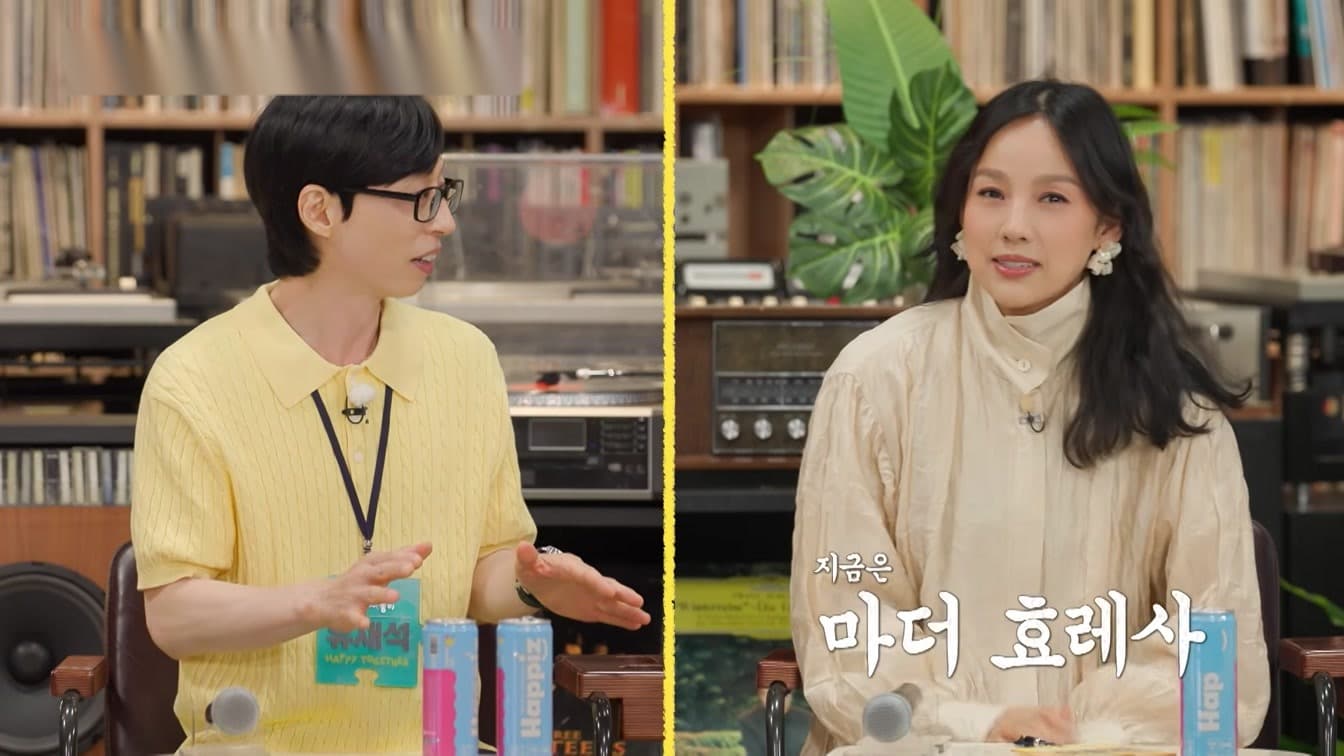
Lee Hyori turned a revived Korean variety classic into one of the most talked-about entertainment moments of the week when she grew emotional only seconds into a stage on KBS2's new Happy Together.
The July 10 premiere of Happy Together: I Like That I'm Not Alone brought the long-running KBS brand back after six years, this time as a storytelling music audition built around teams, families, friends, and collaborators. Yoo Jae-suk, Yoon Jong-shin, and director Jang Hang-jun led the judging panel, while Lee Hyori joined the first episode as a special MC with deep history attached to the franchise.
What pushed the show into Google Trends KR was not only the return of a familiar title. It was the sight of Lee Hyori, one of Korean entertainment's most famously candid stars, reacting in real time to the emotional force of songs tied to the late singer Wheesung and to Korea's 2000s pop memory.
A Familiar Show Returns With A New Emotional Engine
Happy Together was one of KBS's signature entertainment programs from 2001 to 2020, and its comeback arrived with a markedly different format. Instead of a talk-show room built around celebrity guests, the new version asks teams to sing together and explain the relationships, histories, and private reasons that brought them to the stage.
The basic rule is simple: contestants cannot perform alone. Duos, trios, groups, families, and longtime collaborators are all eligible, and the judges select 12 teams for the final stage. The winner receives 30 million won in activity support, but the first episode made clear that the show is less interested in vocal competition alone than in the stories that give a performance weight.
That emphasis suited the premiere's first lineup. The episode included a chorus team called Fill in the Blank, a pair of friends who met through school-parent circles, the first-generation idol band Click-B reuniting after 11 years, singer Bang Yedam performing with his parents, and a mother-son team whose story will continue into the next broadcast.
It also gave Lee Hyori a natural role. She is not just another celebrity guest on the reboot. She is associated with the earlier era of Happy Together, and her appearance alongside Yoo Jae-suk and Yoon Jong-shin also carried nostalgia for viewers who remember their variety chemistry from past programs. On air, she joked about not being made a fixed MC and said she had thought she was coming to chat rather than to judge an audition, a remark that set the tone for a warmer, looser kind of judging panel.
The Three-Second Moment That Put Lee Hyori In Tears
The emotional center of the premiere came when Fill in the Blank took the stage. The group was built around Big Mama's Shin Youn-ah, hit composer Lee Hyun-jung, and veteran chorus singer Kim Hyo-soo, musicians whose voices and creative work helped shape familiar K-pop and Korean ballad records while often remaining outside the spotlight.
The team explained that years of work behind other artists had left them with a wish to be known by name. Their performance was designed around that idea, turning songs associated with other singers into a showcase for the people who had helped build the sound around them.
When they began a medley that included Wheesung's "Can't It Be," Gummy's "If You Come Back," Park Hwayobi's "Such a Thing," and other 2000s favorites, Lee Hyori's reaction changed almost immediately. Korean reports described her eyes welling up only a few seconds into the performance, and the broadcast showed her wiping away tears as the familiar melodies moved through the studio.
Her explanation afterward made the moment resonate beyond a simple celebrity reaction shot. Lee said the songs had comforted her during difficult romantic periods in her life, adding with her usual self-deprecating humor that each song seemed to carry a memory of someone. The comment drew laughter from the panel, but the mood stayed tender because the songs also connected the room to Wheesung, who died in March 2025 at age 43.
Yoo Jae-suk and Yoon Jong-shin added that those songs, along with the chorus work behind them, had been meaningful to Lee during a more unstable time. The exchange turned a judging segment into a small act of remembrance, especially for viewers who grew up with Wheesung's voice as part of the Korean R&B and ballad boom of the early 2000s.
Why The Premiere's Numbers Matter
The episode also gave KBS a measurable start. According to Nielsen Korea figures cited by Korean outlets, the first broadcast recorded 3.0 percent nationwide and reached a peak of 4.8 percent. Reports described the result as KBS's strongest variety-program opening score of 2026, a useful signal for a reboot trying to prove that a legacy title can still find attention in a fragmented television market.
The rating matters because the new Happy Together is asking viewers to accept a familiar name in an unfamiliar format. A classic title can draw curiosity, but curiosity does not always survive the first episode. By centering ordinary relationships, veteran musicians, idol nostalgia, and celebrity judges who react openly, the program created several entry points for different audiences.
Click-B's appearance supplied another nostalgia hook. The group returned as a full lineup after 11 years and discussed the distance, misunderstandings, and personal changes that had shaped their time apart. Lee Hyori, who shares the first-generation idol era with them, responded warmly to their continued love of music and encouraged them to keep that passion alive.
Bang Yedam's family stage added a different kind of intergenerational story. His father Bang Dae-sik and mother Jung Mi-young are veteran voices behind commercial songs and children's animation music familiar to many Korean households. Their appearance reframed Bang Yedam not simply as a young singer, but as part of a musical family whose work had quietly lived in public memory for decades.
Those layers explain why the show trended around Lee Hyori rather than only around the title. She gave viewers a face for the program's promise: a star who arrived with jokes, history, and skepticism, then ended up visibly moved by a performance that connected hidden musicians, late-era pop memory, and her own personal past.
What Comes Next For Happy Together
The premiere ended by pointing toward more reunion-driven storytelling. A preview for the next episode teased the return of Togeworl, the duo of Kim Yerim and Do Dae-yoon, after 13 years, with Yoon Jong-shin shown greeting them with visible surprise and affection. That suggests the series will continue mining Korean pop memory while pairing it with stories of friendship, family, and second chances.
For Lee Hyori, the first episode reinforced why she remains such a powerful variety presence. She can tease the hosts about not giving her a permanent seat, undercut solemnity with a joke, and still let a vulnerable reaction sit onscreen without turning it into performance. That combination is rare, and it is exactly the kind of unscripted emotional texture a reboot needs if it wants to feel alive rather than merely familiar.
The bigger question is whether Happy Together can keep that balance after the first-week nostalgia fades. The initial response shows that Korean viewers are still willing to follow a legacy variety brand when it offers a clear new reason to exist. If future episodes continue to pair recognizable stars with stories that reveal the people behind familiar songs, the show's comeback may become more than a one-night trend.
For now, the viral image is simple: Lee Hyori sitting in a music-filled studio, moved almost instantly by a song from another era. In a reboot built on the idea that no one should have to stand alone, that reaction gave Happy Together exactly the kind of human signal it needed on night one.
How do you feel about this article?
저작권자 © KEnterHub 무단전재 및 재배포 금지
K-Drama & TV Correspondent · KEnterHub
Television and drama correspondent covering Korean series from first script reading to finale. Baek Seoyun tracks casting news, OTT release strategies, and the creative teams behind Korea's biggest shows, with a particular interest in how K-dramas travel to global audiences.
Comments
Please log in to comment