Why Mojamussa Is Netflix Korea #1 — Ko Yoon-jung Explains It
Park Hae-young's new drama about creative failure and emotional wounds has found its audience — and Ko Yoon-jung's performance is why
 By Park Chulwon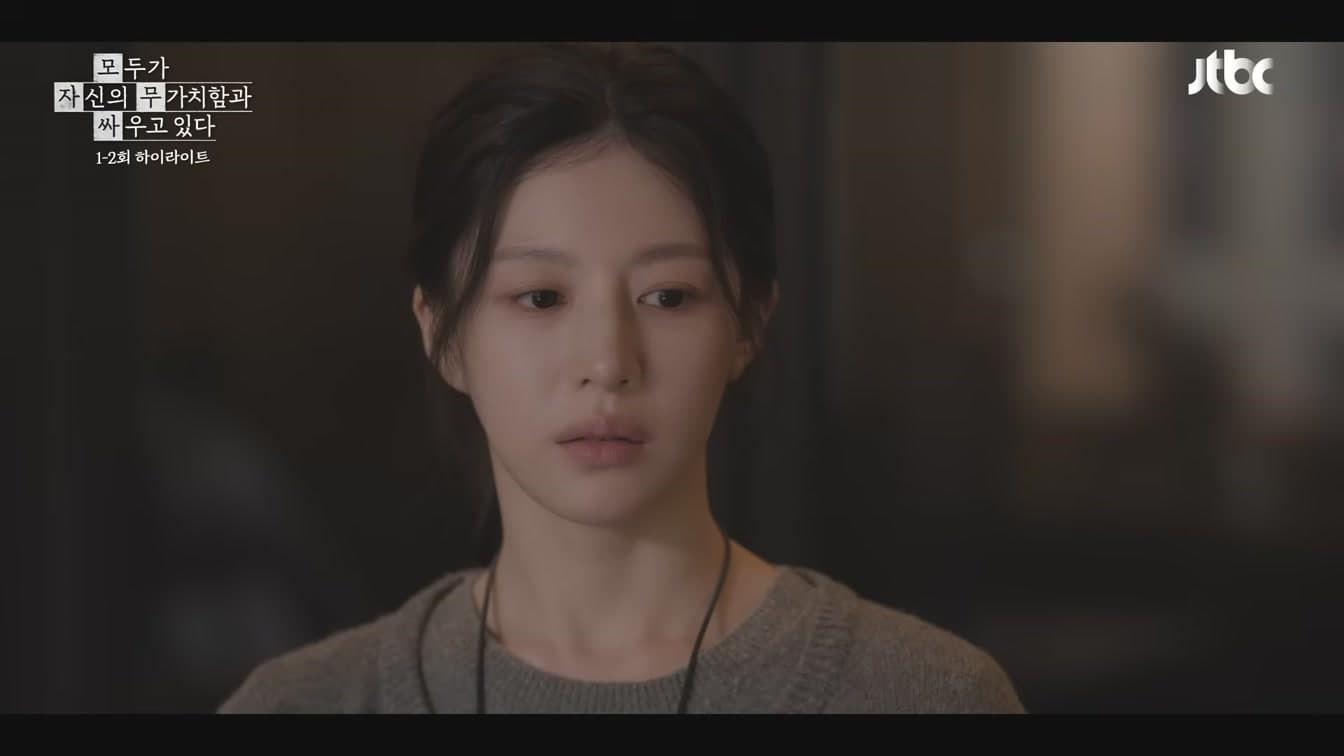
A drama about creative failure, social envy, and the struggle to find meaning has become one of Netflix Korea's biggest hits of the year — and Ko Yoon-jung's performance is a significant reason why. "Mojamussa" (short for the full Korean title, which translates roughly as "Everyone Is Fighting Their Own Sense of Worthlessness") has claimed the #1 spot in Netflix Korea's Top 10 series ranking and continues to hold strong as it crosses its midpoint.
The JTBC drama, written by acclaimed screenwriter Park Hae-young and directed by Cha Young-hoon, stars Koo Kyo-hwan as a struggling film director who hasn't been able to make his debut feature in 20 years, Ko Yoon-jung as a sharp-tongued but deeply wounded planning PD, and Han Sun-hwa as a top actress hiding her own fractures behind a polished public image. It's a portrait of three people colliding under the weight of ambition, resentment, and grief — and the chemistry between its leads has made it unmissable viewing.
Ko Yoon-jung's Character and Why Fans Are Reacting
Ko Yoon-jung plays Byeon Eun-a, a planning PD who outwardly presents as the most put-together person in any room. She's direct, capable, and sharp — the kind of character who could easily read as simply "competent and cold." What makes Eun-a compelling, and what Ko Yoon-jung brings out in the performance, is the trauma running beneath that competence.
At the age of nine, Eun-a was abandoned by her mother — left behind in a way that created a deep fear of being unwanted that she has spent decades managing, not healing. The drama is now at its halfway point, and the central question in this second half is whether Eun-a can begin to face that wound rather than work around it. For many viewers, that specific kind of trauma — the kind that surfaces not in dramatic breakdowns but in the way someone holds themselves slightly apart from connection — has resonated with unusual directness.
Ko Yoon-jung has spoken carefully about approaching Eun-a's emotional landscape. The physical manifestation of her stress — nosebleeds that appear under extreme pressure, a body-based signal of what her mind won't admit — is a detail that has become one of the show's most discussed narrative choices. It's the kind of specific, unsentimental writing that Park Hae-young is known for.
For fans of Ko Yoon-jung specifically, "Mojamussa" represents a career-defining role — an opportunity to demonstrate range well beyond the roles she was initially known for. After her prominent turn opposite Kim Seon-ho in the Netflix romantic comedy "Is It Love?" earlier this year, the dramatic pivot into Eun-a's territory has been watched closely. The consensus from critics and viewers appears to be that she's delivering.
The Writer and the World of the Show
Park Hae-young's name carries significant weight in Korean television. She's the writer behind "My Mister" — one of the most critically acclaimed Korean dramas of the past decade — and her work is known for its commitment to portraying unglamorous emotional realities with uncommon precision. Characters in her dramas tend to be failed by systems, damaged by proximity to other people's pain, and stubbornly, quietly determined to find small dignities anyway.
"Mojamussa" fits within that framework while applying it to a milieu — the Korean film and entertainment industry — that Park Hae-young hasn't directly explored before. The backdrop of creative ambition, marketplace rejection, and the specific cruelty of watching people around you succeed while you stagnate gives the drama its distinctive texture. Koo Kyo-hwan's character, Hwang Dong-man, is a character study in what twenty years of accumulated failure looks like from the inside.
The drama's full Korean title — "Modu-ga Jasin-ui Mugachi-hamgwa Ssaugo Itda" — is deliberately ungainly in translation. That awkwardness is part of the point: the feeling the show describes doesn't compress neatly into a satisfying phrase. The abbreviated nickname "Mojamussa," which Korean viewers coined organically, reflects the affectionate relationship the audience has developed with a show that refuses easy comfort.
Chart Performance and Critical Reception
The ratings picture for "Mojamussa" illustrates a gap that has become increasingly common in Korean television. Linear JTBC viewership sits at approximately 2.9% (Nielsen Korea) — respectable but not spectacular by traditional standards. On Netflix, however, the story is different. The drama reached #1 in Netflix Korea's Top 10 Series ranking and has maintained that position with consistent momentum through its first half.
It also holds three consecutive weeks at #2 on television topic indexes — a metric that measures social media discussion, search volume, and broader cultural conversation around a show. That sustained presence in public conversation reflects a drama that people are actually thinking about between episodes, not just watching and forgetting.
Critical responses have largely positioned the show as one of the stronger offerings in Korean drama this year. The performances from all three leads — Koo Kyo-hwan, Ko Yoon-jung, and Han Sun-hwa — have been highlighted repeatedly, as has Park Hae-young's dialogue, which the Ize culture outlet described as writing "where you don't want to waste a single line."
Where the Drama Goes From Here
With the midpoint now behind it, "Mojamussa" enters its more consequential second half. The groundwork the show has laid — Dong-man's accidental redemption arc, Eun-a's slow confrontation with her abandonment wound, Miran's (Han Sun-hwa) collision with her own carefully constructed mythology — now needs to pay off in ways that satisfy without resolving too neatly.
Park Hae-young's track record suggests she won't take the easy exits. What made "My Mister" so enduring was its refusal to deliver conventional catharsis — the healing in that show was partial, contextual, and real in the way that actual healing tends to be. Viewers approaching "Mojamussa" with similar expectations should be prepared for a second half that complicates rather than simplifies.
For Ko Yoon-jung's Eun-a specifically, the question of whether she can move past the mother wound without the drama reducing that complexity to a single breakthrough moment will likely define how the show is ultimately remembered. Based on what we've seen so far, both the writing and the performance are treating that question with the seriousness it deserves.
"Mojamussa" airs on JTBC and is available to stream on Netflix. New episodes are released weekly.
How do you feel about this article?
저작권자 © KEnterHub 무단전재 및 재배포 금지
Entertainment Journalist · KEnterHub
Entertainment journalist focused on Korean music, film, and the global K-Wave. Reports on industry trends, celebrity profiles, and the intersection of Korean pop culture and international audiences.
Comments
Please log in to comment