Why Na Hong-jin's HOPE Is Already Turning Heads
 By Park Chulwon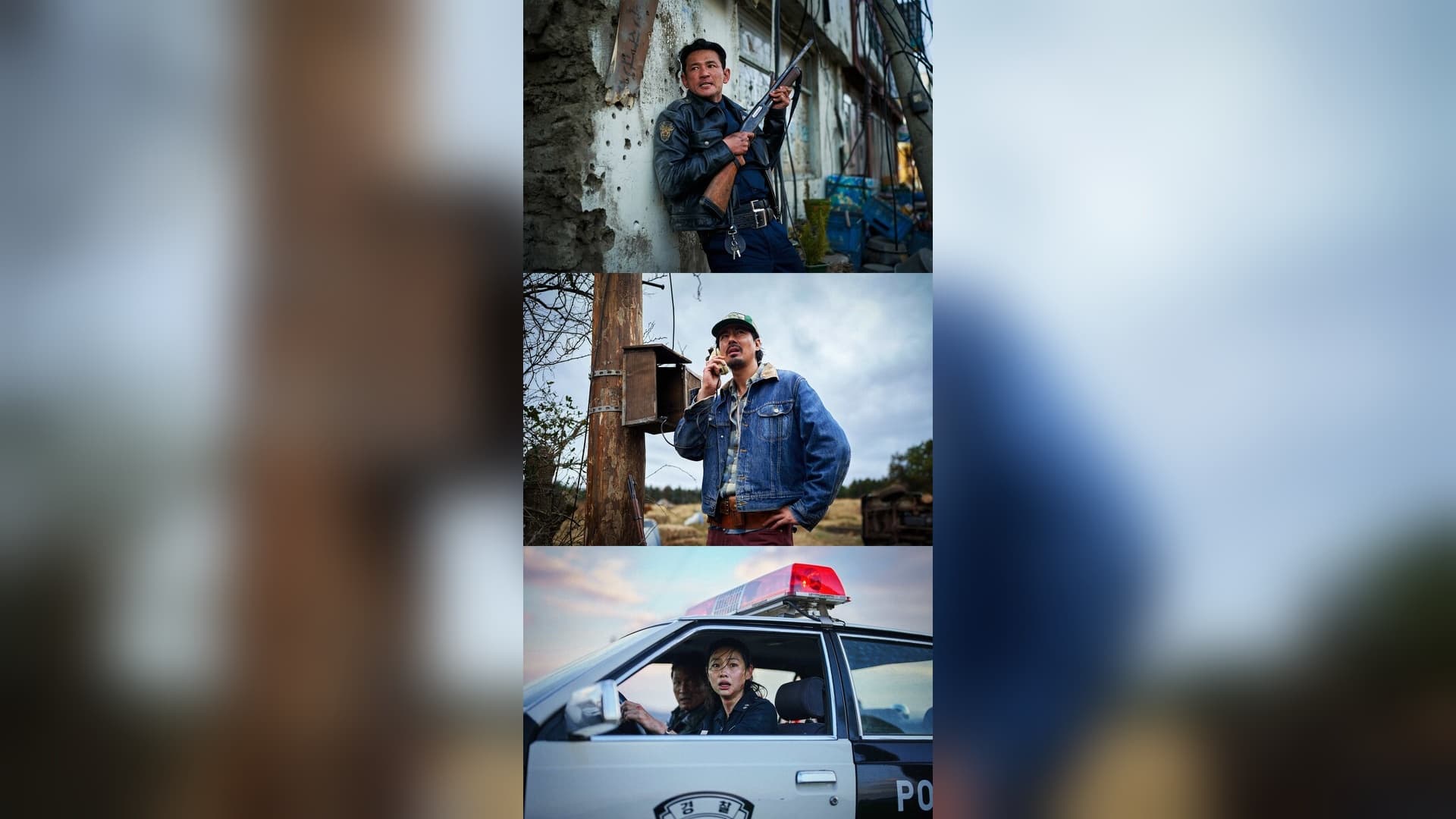
Na Hong-jin's long-awaited film HOPE is sharpening its pre-release momentum with new character posters that put Hwang Jung-min, Zo In-sung, and Jung Ho-yeon at the center of a tense survival story. The July 15 theatrical release matters because the film arrives not only as a major Korean genre title, but also as a Cannes competition invitee with one of the most international casts attached to a Korean commercial release this year.
The latest materials show six poster images split between in-character scenes and behind-the-scenes-style portraits taken during production. For casual global viewers, the appeal is easy to understand: a remote village, a reported tiger sighting, a communications breakdown, and a cast built from Korean box-office veterans, global drama faces, and Hollywood names.
A Korean Genre Film Built Around Scale
HOPE is written and directed by Na Hong-jin, the filmmaker best known internationally for the dark force of The Chaser, The Yellow Sea, and The Wailing. His new film is set around Hopohang, a village near the Demilitarized Zone, where the local branch office chief hears from young residents that a tiger has appeared nearby. What begins like a rural alarm soon grows into a larger crisis as the village is forced to confront a reality it can barely explain.
The official setup places Hwang Jung-min as Beom-seok, the local official trying to protect residents when the area falls into emergency. Jung Ho-yeon plays Sung-ae, a police officer drawn into the confrontation, while Zo In-sung plays Sung-gi, a young man who heads into the mountain with others after the creature. The supporting cast also includes Eum Moon-suk, while the international lineup features Taylor Russell, Cameron Britton, Alicia Vikander, and Michael Fassbender.
That combination gives HOPE a rare profile. It is rooted in Korean geography and social tension, yet its cast and festival route make it visible to moviegoers who may follow Korean cinema through streaming hits, global film festivals, or actors who move between Korean and international projects. The film's running time has been reported at 156 minutes, and its domestic rating is 15 and over.
The Cannes connection adds another layer. Korean outlets have described HOPE as an official selection in the competition section of the 79th Cannes Film Festival, a distinction that immediately raises expectations for craft, ambition, and conversation beyond the local box office. For Na, whose films often turn fear into moral pressure, the festival positioning suggests that HOPE is being framed as more than a creature thriller.
Posters That Sell Fear Without Giving Away the Mystery
The newly released poster set leans heavily on atmosphere. Three of the images are character posters that place the main figures inside urgent moments: Beom-seok stands as someone responsible for keeping villagers alive, Sung-ae points a gun toward an unseen threat, and Sung-gi is associated with the group heading into the mountains. Instead of explaining the creature, the posters emphasize what each person has to do when the crisis reaches them.
The other three posters use production-style images credited in Korean reports to cinematographer Hong Kyung-pyo. That detail is notable because Hong is one of Korea's most internationally recognized cinematographers, with a filmography associated with meticulous lighting, texture, and spatial tension. By using images connected to the shoot itself, the campaign invites viewers to look at performance and filmmaking craft at the same time.
Jung Ho-yeon's image is especially important for global audiences. Many viewers outside Korea first discovered her through Squid Game, but HOPE places her in a very different register: not as a survival-game contestant, but as a rural police officer facing a threat in a cut-off community. The poster of her inside a police car, visibly alarmed, makes the character readable even without prior knowledge of the plot.
Hwang Jung-min brings a different kind of weight. He is one of Korean cinema's most reliable leading actors, known for moving between crime dramas, thrillers, and broad commercial hits. In HOPE, the early materials present him less as a glamorous star and more as a public official trapped in a situation that demands immediate decisions. That grounded image helps sell the story's danger as local and physical rather than abstract.
Zo In-sung's role appears to extend the film's action beyond the village center and into the mountain. Korean descriptions connect his character and the young men around him with a pursuit that turns unstable, suggesting a reversal in which hunters become the hunted. For a film campaign, that is a useful hook: it gives audiences a clean emotional path from curiosity to dread without revealing the creature or the full scale of the threat.
From Press Buzz to Audience Contact
The release plan is also unusually active. Reports say HOPE has confirmed stage greetings from opening day through its third week, beginning July 15 and continuing across dates including July 17, 18, 19, 25, 26, 29, 30, 31, August 1, and August 2. The schedule includes major theaters in Seoul and the surrounding area, followed by stops that extend to Busan and Daegu.
Na Hong-jin, Hwang Jung-min, Zo In-sung, Jung Ho-yeon, and Eum Moon-suk are listed for several of the early stage-greeting appearances, though exact participation varies by date. The point is clear: the distributor is treating the film as an event release, not a quiet prestige title. In Korea, stage greetings can significantly shape opening-week word of mouth because audiences see the cast and director directly after the screening, often turning a ticket purchase into a fan experience.
The marketing also arrives after the cast appeared in lighter entertainment settings to discuss the film. A recent online variety appearance brought Hwang Jung-min, Zo In-sung, and Jung Ho-yeon together, giving the campaign a more approachable face before the darker theatrical materials took over. That contrast can be useful: viewers meet the actors as people first, then encounter the film as a high-pressure genre experience.
The film's premise has a strong Discover-friendly mix because it contains a clear visual question. What is really threatening Hopohang? Why are communication lines and outside support limited? How does a village near the DMZ become the stage for a crisis that seems to grow beyond ordinary explanation? Those questions are broad enough for international readers, even if they do not know the cast's full histories.
Why HOPE Could Travel Beyond Korea
Several factors make HOPE one of the Korean films to watch this summer. The first is Na Hong-jin's reputation for stories where violence is never just spectacle; it usually exposes fear, superstition, institutional weakness, and the mistakes people make under pressure. The reported synopsis, which frames ignorance and differing positions as seeds of a larger tragedy, fits that pattern.
The second is the cast bridge. Hwang Jung-min and Zo In-sung give the film strong domestic recognition. Jung Ho-yeon gives it global fan curiosity. Taylor Russell, Alicia Vikander, Michael Fassbender, and Cameron Britton widen the international conversation and make the project easier to notice for audiences who follow festival cinema or English-language screen performers.
The third is timing. A July 15 opening places HOPE in the middle of South Korea's competitive summer movie season, when genre films, star-led releases, and event screenings fight for attention. The three-week stage-greeting plan suggests confidence that audience response will matter after the first weekend, especially if the film's mystery and visual design generate discussion online.
For now, the posters do what strong genre marketing should do: they show enough to create an image in the viewer's mind, but not enough to settle the central mystery. Hwang Jung-min with a weapon near a battered wall, Zo In-sung by a rural telephone pole, and Jung Ho-yeon in a police car under emergency light all point to different corners of the same panic. Together, they make HOPE feel like a film built on pressure from every direction.
Whether that pressure becomes a local box-office breakout or a broader international talking point will depend on how the film lands with early audiences after July 15. But with Cannes prestige, a 156-minute canvas, a star-heavy cast, and imagery that already communicates danger across language barriers, HOPE has the ingredients of a Korean release designed to travel.
How do you feel about this article?
저작권자 © KEnterHub 무단전재 및 재배포 금지
Entertainment Journalist · KEnterHub
Entertainment journalist focused on Korean music, film, and the global K-Wave. Reports on industry trends, celebrity profiles, and the intersection of Korean pop culture and international audiences.
Comments
Please log in to comment