Why Perfect Crown's Finale Has Fans Talking
 By Park Chulwon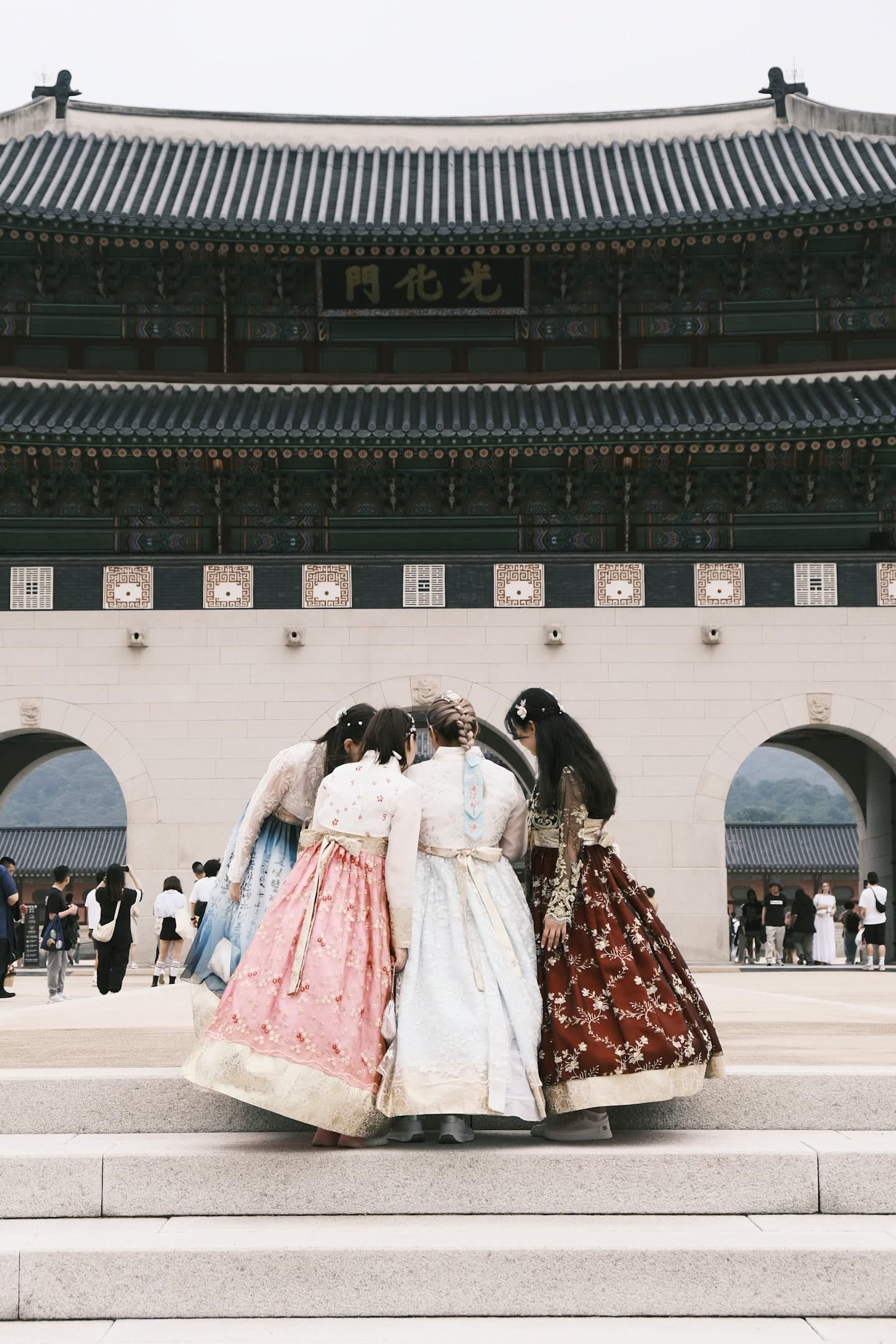
According to HanCinema, director Park Joon-hwa has shared his thoughts after completing MBC's Perfect Crown, closing the run with a message of thanks to viewers who followed the drama through its final stretch. The timing matters because the series did not end as just another period romance: it became a conversation piece around IU and Byeon Woo-seok's on-screen pairing, the drama's carefully modernized hanbok, and the way Korean historical imagery can travel to global viewers.
For international fans who may have encountered the show through clips, stills, or costume-focused discussion rather than weekly domestic broadcasts, Perfect Crown is notable for the way it packages palace romance as both emotional drama and visual spectacle. Its appeal rests not only on who appears in front of the camera, but also on how the production uses clothing, color, and character entrances to make palace politics and romance immediately legible.
A Finale Message With Fan Weight
Park Joon-hwa's post-finale remarks arrive after a period in which the drama continued to draw attention from viewers invested in its central relationship. Related coverage highlighted how IU and Byeon Woo-seok's off-screen chemistry made fans even more attached to Perfect Crown, a sign that the show's audience was not only following plot developments but also reading interviews, promotional appearances, and behind-the-scenes moments as part of the experience.
That kind of attachment is especially valuable for a historical drama. Period settings can sometimes create distance for casual overseas viewers who do not immediately recognize court ranks, clothing codes, or palace etiquette. Perfect Crown reduced that distance by giving fans a clear emotional center: a pair whose dynamic could be understood before every historical reference was decoded.
The director's gratitude therefore lands as more than a routine end-of-broadcast statement. It acknowledges an audience that stayed with the series through its romantic turns, visual choices, and final emotional payoffs. For a show built around royal image-making, the viewers' sustained attention became part of the crown itself.
There is also a wider industry context. Korean dramas now compete for attention in an environment where weekly clips, styling breakdowns, and actor chemistry can extend a show's life beyond its broadcast slot. Perfect Crown benefited from that ecosystem because its most shareable qualities were easy to identify: a star pairing, elegant historical styling, and emotionally heightened scenes designed for repeated viewing.
The Hanbok Became Part of the Story
One of the strongest pieces of supporting context around Perfect Crown came from costume designer Cho Sang-kyung, who discussed the drama's wardrobe in an interview with The Korea Times. Cho is not a minor production figure. Her body of work includes major Korean screen landmarks such as Oldboy, The Handmaiden, and Squid Game, which means her involvement immediately positioned the drama's clothing as a serious storytelling element rather than decoration.
Cho described the approach as a reinterpretation of hanbok through a refined, contemporary sensibility. Instead of treating traditional clothing as museum reproduction, the drama used silhouette, fabric, and color to create something that could feel historically rooted while still reading as high fashion to modern viewers. That balance helps explain why Perfect Crown could attract attention from audiences who might first notice the styling before fully entering the plot.
The designer's comments about I-an's first appearance are especially revealing. The script called for the character to arrive in a cheollik, a military robe, after coming from the hunting grounds. Cho noted that wearing that garment in a banquet context carried an intentionally improper energy, signaling threat, defiance, and a willingness to disrupt court expectations. In other words, the costume told viewers who the character was before the dialogue had to spell it out.
That is the kind of visual shorthand that makes a period drama more accessible internationally. A viewer may not know the formal rules around court dress, but they can understand a character entering a ceremonial space in a way that feels too relaxed, too sharp, or too provocative. The clothing becomes a translation layer between Korean historical detail and universal character language.
Color carried similar weight. Cho discussed working with traditional Korean color systems such as obangsaek and ogansaek while adjusting tones to suit both the actors and the screen. She singled out the teal used for I-an's ceremonial sash on promotional imagery, explaining that the shade had to avoid looking either too cold or too distracting. The result was a color choice that made the actor stand out while still feeling connected to Korean visual tradition.
Why the Visual Strategy Matters Globally
For global viewers, Korean historical dramas often function as introductions to hanbok, palace architecture, ceremonial language, and courtly conflict. When those details are handled carefully, they do not require a lecture. They create atmosphere, hierarchy, and emotion at once. Perfect Crown appears to have understood that the best way to make tradition travel is not to simplify it, but to make its purpose clear through the frame.
Cho's discussion of selective historical borrowing also points to a broader strength in recent K-drama production. The goal is not always strict reconstruction. Sometimes it is to choose from history in a way that protects the emotional truth of a scene. In Perfect Crown, that meant preserving traditional lines when a scene required them, while allowing materials such as lace, sequins, or modern collar variations to make the wardrobe feel alive on screen.
The wedding scene between Hee-joo and I-an was one of the moments Cho said she hoped would remain in viewers' memories. That detail matters because wedding imagery in a royal romance is never only about beauty. It is a public ritual, a relationship milestone, and a visual statement about power. If viewers remember the scene, they remember the relationship through fabric, color, and ceremony as much as through dialogue.
This is where the drama's fan response and costume strategy meet. Fans who become attached to a couple often preserve the relationship through screenshots, edits, and repeated discussion of specific scenes. A strong costume moment gives that attachment a visual anchor. It turns a romantic beat into an image people can recognize instantly.
The show's competition also helps explain why these details mattered. Related Korean entertainment coverage described other dramas airing in the same competitive window as heavyweight rivals, with Perfect Crown among the titles commanding attention. In that kind of crowded field, a drama needs more than a basic premise. It needs instantly identifiable emotional and visual signatures.
IU, Byeon Woo-seok, and the Afterlife of a Drama
IU and Byeon Woo-seok's names gave Perfect Crown a strong first signal for fans, but the drama's post-finale discussion suggests the production succeeded in building around that star power. The audience response centered not only on casting curiosity but on chemistry, styling, and the sense that the show had created a world worth revisiting.
That afterlife is increasingly important for K-dramas. A series may end its broadcast run, but its scenes continue to circulate through social platforms, fan communities, subtitled clips, and costume analysis. The director's closing thanks marks the formal end of production, yet the conversation around the drama can continue wherever fans are still debating favorite moments or discovering the series late.
For English-language readers, the key takeaway is that Perfect Crown is not just being remembered as a title that finished airing. It is being remembered through the relationship viewers responded to, the director's closing acknowledgment, and a design language that treated hanbok as a living part of the drama's emotional architecture.
That combination is why Park Joon-hwa's simple message of gratitude carries more weight than a standard finale note. It closes the chapter on a production whose strongest assets were not isolated: performance drew viewers in, costume gave the story a recognizable shape, and fan attention kept the drama visible after the final episode.
As K-dramas continue to reach viewers who may never watch them in their original broadcast context, Perfect Crown offers a useful example of how period romance can travel. The story gives fans a couple to follow, the styling gives them images to remember, and the post-finale conversation gives the drama one more reason to stay in the feed.
How do you feel about this article?
저작권자 © KEnterHub 무단전재 및 재배포 금지
Entertainment Journalist · KEnterHub
Entertainment journalist focused on Korean music, film, and the global K-Wave. Reports on industry trends, celebrity profiles, and the intersection of Korean pop culture and international audiences.
Comments
Please log in to comment