Why South Korea Declared a Disaster Alert for a Concert
The government response to BTS's Gwanghwamun event marks a turning point for live entertainment safety in Korea
 By Jang Hojin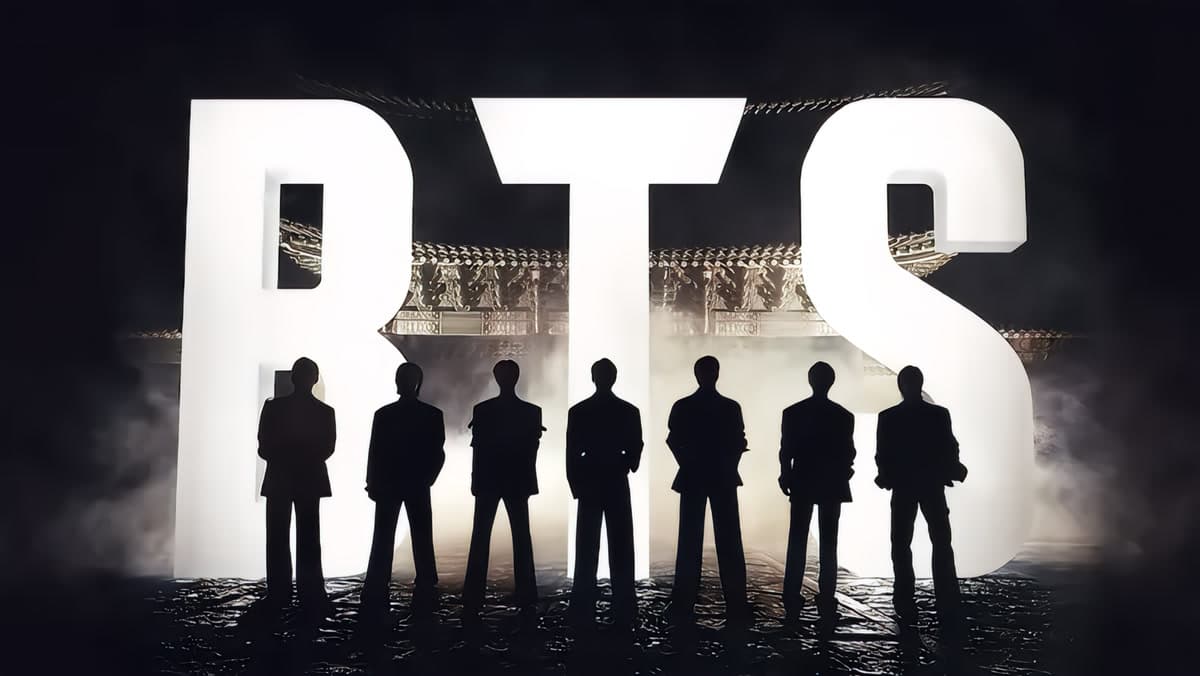
On March 20, 2026, South Korea's Ministry of Culture, Sports and Tourism activated a concert venue disaster alert for the first time in the nation's history. The trigger was not a structural failure or a security threat. It was a crowd projection: between 170,000 and 260,000 people were expected to converge on a single square in central Seoul for a free concert the following evening.
The event in question is BTS THE COMEBACK LIVE | ARIRANG, a free outdoor performance at Gwanghwamun Square scheduled for March 21. Only 22,000 people hold official admission passes. The remaining quarter-million are expected to simply show up — drawn by what Netflix Vice President Brandon Riegg reportedly described as potentially "the biggest mass culture event" the streaming platform has hosted. That gap between 22,000 ticketed and 260,000 projected represents something Korean event management has never had to reckon with before.
The Mechanics of a Concert Disaster Alert
The alert, classified at the "caution" level under Korea's performance venue disaster management system, set in motion a response framework that borrows more from emergency management than entertainment logistics. Culture Minister Choi Hwi-young personally inspected the Gwanghwamun site on March 20, and a situation command center was established inside the National Museum of Korean Contemporary History — a government building pressed into service as a real-time crowd monitoring hub.
The operational scope reveals just how far beyond a typical concert this extends. Road closures around Gwanghwamun began at 9 PM on March 20 — a full 23 hours before the 8 PM showtime. Several subway stations along Line 5 were designated for potential non-stop operation to prevent platform crushes. Gyeonggi Province Governor Kim Dong-yeon issued a separate province-wide directive covering five domains: traffic management, fire response, emergency medical services, accommodation capacity, and public guidance systems.
This is fundamentally different from managing a sold-out stadium. A 50,000-seat arena has defined entrances, assigned seating, and a fixed headcount. Gwanghwamun Square is an open urban space surrounded by government buildings, subway exits, and narrow side streets. The challenge is not capacity management but crowd dynamics in an environment never designed for a quarter-million simultaneous occupants.
The Precedent Problem: Why Korea Had No Playbook
Korea's concert safety infrastructure was built for a different era. The largest previous benchmark for a free K-pop event in Seoul was PSY's Gangnam Style celebration at Seoul City Hall in October 2012, which drew an estimated 80,000 to 100,000 people. That event predated the Itaewon crowd crush of October 2022, which killed 159 people in a narrow entertainment district and fundamentally reshaped how Korean authorities think about crowd density in urban spaces.
The Itaewon tragedy created political urgency around crowd management that did not previously exist. New legislation, stricter safety assessments, and lower thresholds for intervention followed. But those frameworks were designed primarily for festivals, nightlife districts, and holiday gatherings — not for a single-artist concert that could generate a crowd larger than the entire population of some Korean cities.
BTS's Gwanghwamun event forced regulators to improvise. The disaster alert mechanism, which existed in law but had never been applied to a concert, became the available tool. Whether it proves adequate — or whether it exposes gaps in Korea's event management framework — will become clearer after March 21.
The Netflix Factor: When Global Demand Creates Local Pressure
A critical dimension of this crowd projection is the Netflix livestream. The concert will be broadcast simultaneously to subscribers in over 190 countries — Netflix's first-ever live event streamed from South Korea. This global visibility transforms what might otherwise be a domestic logistics challenge into an international stage where crowd management failures would be broadcast in real time to a worldwide audience.
The economic structure amplifies the pressure. The concert is free, which means no ticket-based crowd cap exists. BTS's label HYBE and Netflix have constructed a model where the concert itself is a marketing vehicle for adjacent revenue streams: the ARIRANG album released on March 20, an 82-date world tour launching April 9 with all shows already sold out, and a Netflix documentary premiering March 27. The free concert is the funnel. The crowd it generates is the byproduct — and managing that byproduct now requires the Korean government.
Minister Choi's public characterization of ticket scalping as "fraud" underscored the paradox: demand is so extreme that even free admission generates a black market. When BTS leader RM posted a public thank-you to police, fire services, and government agencies on March 19, it acknowledged what everyone already understood — this event had crossed from entertainment into civic infrastructure.
What March 21 Will Test
The Gwanghwamun concert will serve as a stress test for Korean live entertainment policy. If the multi-agency response succeeds in managing 260,000 people safely, it will establish a template for future mega-events — a formalized pathway for when a cultural phenomenon outgrows the entertainment industry's capacity to contain it.
If gaps emerge, the fallout will accelerate already-ongoing debates about whether Korea needs dedicated large-scale event legislation, permanent crowd management infrastructure in major urban gathering points, and clearer trigger thresholds for government intervention in private-sector events.
Either way, March 21 marks the moment when K-pop's scale forced a structural reckoning. The question is no longer whether Korean artists can draw massive crowds. It is whether Korea's institutions can keep pace with the demand those artists create.
How do you feel about this article?
저작권자 © KEnterHub 무단전재 및 재배포 금지
Entertainment Journalist · KEnterHub
Entertainment journalist specializing in K-Pop, K-Drama, and Korean celebrity news. Covers artist comebacks, drama premieres, award shows, and fan culture with in-depth reporting and analysis.
Comments
Please log in to comment