Why Spooky in Love Could Redefine the K-Drama Remake
tvN's Park Eun-bin and Yang Se-jong drama turns a 3-million-admission film into a 12-episode test of Korean IP strategy.
 By Jang Hojin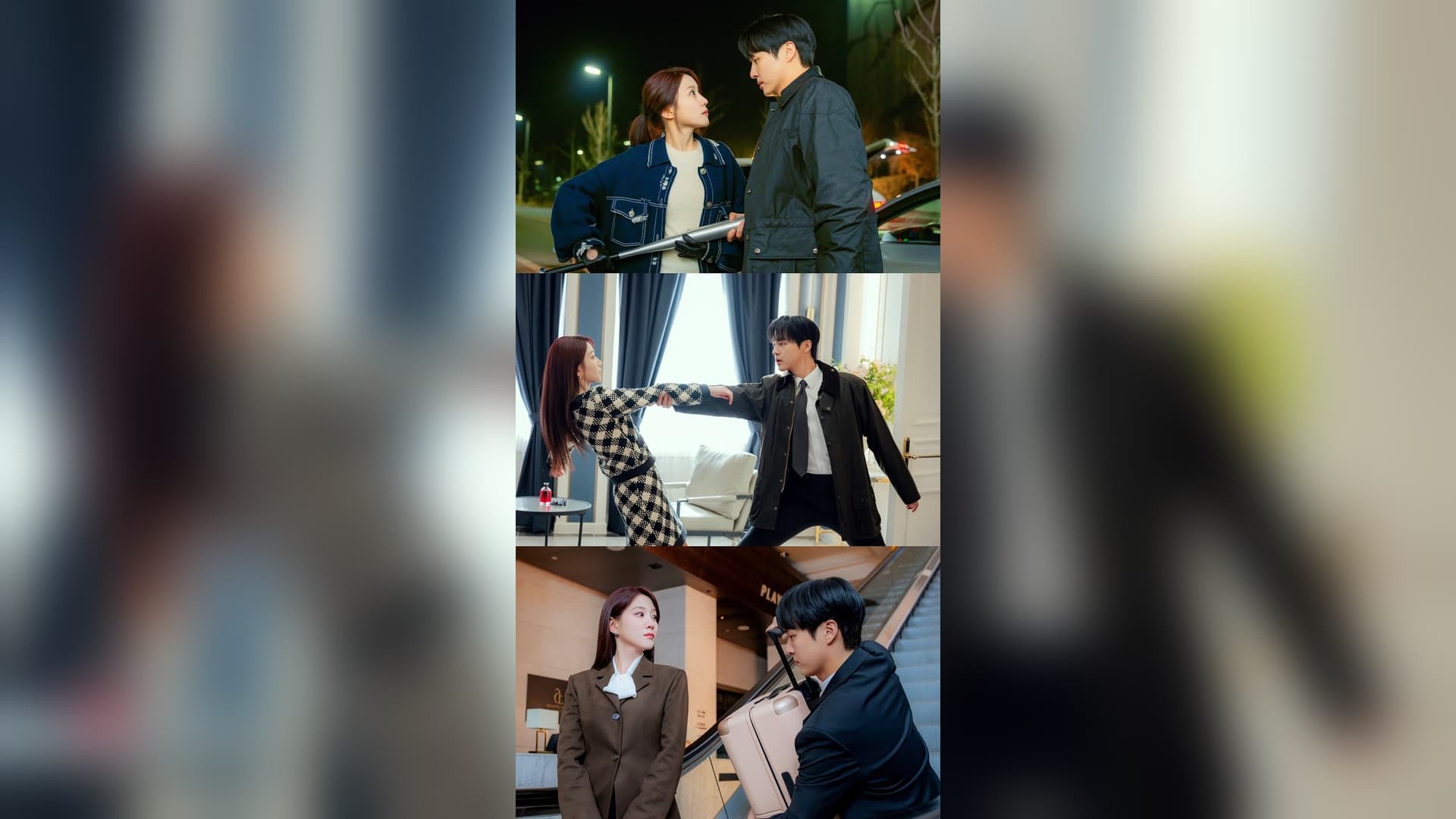
Spooky in Love will test whether a proven Korean film can become a broader prime-time drama engine. tvN has scheduled the occult romance for July 18 at 9:10 p.m. KST, with Park Eun-bin, Yang Se-jong and Ong Seong-wu leading a 12-episode adaptation of the 2011 film Spellbound. The headline fact is simple. A story once built for a two-hour cinema romance is being expanded into a weekend series at a moment when Korean studios are treating familiar intellectual property as both a safety net and a creative risk.
That is why this project matters beyond casting news. The drama is not only selling ghosts, romance and star power; it is asking whether a compact hit can support weekly character arcs, platform promotion and global fandom conversation. For tvN, the bet is clear: keep the audience's memory of the original film, then give viewers enough new structure to make the remake feel necessary.
From Screen Hit to Serial Story
The original Spellbound had a clean commercial credential. Korean Film Council-linked data and later box-office summaries list the 2011 film at just over 3.0 million admissions, with the commonly cited total at 3,009,356. That number matters because horror romance is not usually sold as mass comfort viewing. The film worked because it made fear intimate, using supernatural isolation as the barrier between two people who wanted connection.
The drama keeps the most valuable emotional device: a woman who sees ghosts and carries that ability as a social burden. But the television version changes the machinery around her. Park Eun-bin's Cheon Yeo-ri is described as a hotel heiress, while Yang Se-jong's Ma Kang-wook is a prosecutor who fears ghosts but chases unresolved cases. Ong Seong-wu's Kang Min-hwan adds a more overt triangle of ambition and desire. So what? The remake is not merely stretching a plot. It is replacing the film's magician-centered romance with a procedural and power-world framework that can produce weekly conflict.
That expansion is important because a 12-episode drama needs more than nostalgia. It needs repeatable engines: a case, a secret, a relationship reversal and a visual hook that audiences can discuss between episodes. The newly released posters and short-form teasers focus on hands, contact and the moment another person may begin seeing ghosts. That is smart marketing. It turns a supernatural rule into a simple image.
The move from film to series also changes the meaning of loneliness in the story. In a movie, Yeo-ri's isolation can be explained quickly and resolved through one romantic arc. In a weekly drama, isolation has to become a world. Viewers need to see how a strange ability affects work, family reputation, public image and the basic act of trusting another person. That wider field gives the remake a chance to make its fantasy more socially grounded.
It also lets the drama reassign genre weight. The 2011 film could swing from fright gag to romantic confession because its running time compressed the emotional logic. A series has to pace those swings more carefully. If each episode uses a case or ghost story to reveal another layer of Cheon Yeo-ri's guarded life, the adaptation can build cumulative sympathy instead of relying on one central secret. That is the difference between remaking a premise and rebuilding a narrative system.
But a strong premise still has to survive comparison with its own source material.
Why the Numbers Raise Expectations
The available benchmarks explain why expectations are unusually high. The original movie's 3.0 million-plus admissions give the show an identifiable fan-memory base. Park Eun-bin also arrives with recent television credibility: Extraordinary Attorney Woo finished at 17.5 percent nationwide ratings according to Nielsen Korea reports, while the current source coverage points to Stove League reaching 19.1 percent. Those numbers should not be read as a promise that Spooky in Love will reproduce the same result. They show the scale of audience trust attached to its lead.
That distinction matters. Ratings history is useful only when it explains audience behavior. Park's record suggests that viewers have accepted her in stories built around unusual professional worlds and emotionally precise outsiders. The new drama gives her another character whose difference shapes every relationship around her. Yang, meanwhile, has often been used for sincerity and restraint, which can balance the broader comic fear built into a ghost romance.
The chart is deliberately cautious because the figures measure different things. Admissions and television ratings cannot be treated as the same market unit. Still, the comparison clarifies the strategic logic: tvN is combining a remembered film title with performers tied to proven audience reach. The creative challenge is making those credentials feel like pressure inside the drama, not just decoration around it.
There is another reason those numbers matter. Korean drama audiences have become more selective about star vehicles. A famous title and a respected lead can create sampling, but they cannot guarantee completion. Viewers now weigh whether a drama justifies its episode count, especially when global platforms make it easy to wait for word of mouth. That means Spooky in Love must convert curiosity into trust by the second or third week.
Park's presence gives the show a strong opening advantage because her best-known recent roles have been defined by discipline rather than spectacle. She often anchors heightened premises by making the character's rules feel emotionally exact. Here, the rule is literal touch. If she plays Cheon Yeo-ri as someone who is not cold but carefully self-protective, the supernatural hook can become a believable human boundary. That would make the romance feel earned.
Yang's role is just as important because fear can easily turn into caricature. A prosecutor who is terrified of ghosts is funny on paper, but the character must still have professional weight. The drama's long-term appeal may depend on whether Ma Kang-wook remains credible when the comedy fades and the mystery takes over. In other words, the male lead cannot simply be the person who reacts. He has to test the heroine's isolation in ways that advance the story.
That pressure becomes clearer when the project is placed inside a wider industry pattern.
The IP Strategy Behind the Remake
Spooky in Love is part of a broader Korean content movement toward cross-format IP. Recent Korean coverage has pointed to film-based series such as Scandal and other adaptations as evidence that studios are extending stories across platforms rather than treating each title as a single-use property. The reason is not mysterious. A known title lowers the marketing burden, gives press coverage an immediate reference point and helps international audiences understand the concept quickly.
But the strategy has a weak point. Familiar IP can make a series feel pre-sold before it has earned emotional loyalty. If the remake leans too heavily on the film's memory, viewers may treat it as a padded version of a story they already know. If it moves too far away, the title becomes a brand label with little narrative value. The best version sits between those extremes: recognizable enough to invite older fans, changed enough to reward weekly viewing.
The hand motif suggests the production understands that balance. In the film, ghost-seeing was an interior curse that made romance difficult. In the drama's promotional language, physical contact becomes a social and supernatural trigger. That gives the series an easily repeatable visual grammar. Every hand extended, refused or grabbed can carry plot meaning. So what? The drama can use romance blocking as genre storytelling, which is exactly what a serialized remake needs.
The most important question is not whether the drama is faithful, but whether its changes create new weekly suspense.
That is also where Park, Yang and Ong become more than high-recognition casting. Their characters represent three different responses to contact: avoidance, courage and possession. If the writing keeps those responses active, the triangle can function as a thematic system rather than a conventional rivalry.
The IP question also reflects a production-side reality. Original scripts still define the long-term health of Korean drama, but adaptation offers a different form of efficiency. It starts with a tested emotional hook, then asks writers and producers to find unexplored space around it. That can be creatively productive when the adaptation has a clear reason to exist. It becomes weaker when the new version only repeats famous beats with different costumes and longer running time.
Spooky in Love has at least two reasons to exist as a series. First, the prosecutor setup can connect supernatural romance to unresolved cases, giving the drama episodic motion. Second, the hotel-heiress identity introduces public status and inheritance pressure, making the heroine's secret more dangerous than private embarrassment. Those changes are not minor surface edits. They create institutions around the romance, which is exactly what serial storytelling needs.
Ong Seong-wu's character may be the variable that decides whether the triangle feels functional. If Kang Min-hwan is only a possessive rival, the drama risks flattening him into a familiar obstacle. If his ambition is tied to the hotel world, family power or control over Yeo-ri's public image, he can embody the social forces that make touch and trust risky. That would give the romance a sharper dramatic edge.
The same promotional clarity will shape audience reaction before premiere week.
Fan Reaction and Market Timing
The early reaction cycle is already visible. Korean entertainment outlets covered the character posters, the short-form "apartment game" teaser and the July 18 premiere date in quick succession. That clustering matters because pre-release drama marketing now lives across short clips, still images and character slogans before it becomes a ratings story. Viewers are being trained to understand the show through one tactile rule: touch can change what someone sees.
For fans, the appeal is layered. Park Eun-bin brings prestige and trust. Yang Se-jong brings a contrasting romantic energy. Ong Seong-wu adds idol-to-actor familiarity and a more openly ambitious role. The combination gives the drama several entry points without requiring every viewer to know the 2011 film. That is a practical advantage for global K-drama audiences, many of whom discover older Korean films only after a new series sends them searching.
The timing is also useful for tvN. A summer weekend slot can reward genre hybrids that feel lighter than a prestige thriller but sharper than a routine romantic comedy. Horror romance fits that middle space. It offers visual stakes, emotional warmth and enough mystery to sustain conversation. The risk is tonal control. If the comedy undercuts the ghosts too often, suspense disappears. If the horror becomes too heavy, the romance may lose its charm.
The short-form teaser strategy is therefore more than decoration. It is a stress test for the concept. The "apartment game" setup works because it takes a familiar social game and interrupts it with a visual shock. That is the whole promise of the drama in miniature: ordinary intimacy becomes frightening the moment another hand appears. For casual viewers, the teaser explains the rule faster than a synopsis can.
Still, the campaign will need more than repeated shock images. As premiere approaches, the most useful marketing would clarify the emotional stakes: why Yeo-ri has built walls, why Kang-wook chooses to cross them and what Min-hwan wants beyond possession. K-drama fans are highly responsive to chemistry, but they are also quick to identify when a series has only one idea. The promotional arc should show that the ghost rule leads to character decisions, not just spooky set pieces.
That balance will determine whether the remake becomes a smart IP extension or just another familiar title in a crowded slate.
What Comes Next
The next test will be whether Spooky in Love can turn its promotional hook into episode structure. The premiere on July 18 will likely draw curiosity because of the cast, the original film and tvN's clear genre pitch. Sustained momentum will depend on how quickly the drama proves that the new prosecutor, hotel and triangle elements deepen the story rather than merely lengthen it.
The strongest path is not to chase the film's exact emotional memory. It is to identify what the film made audiences feel, then create television situations that renew that feeling. The old appeal was the paradox of wanting closeness while fearing the harm closeness might bring. The new version can make that paradox larger by placing it inside work, wealth, investigation and public expectation.
If early episodes establish that every act of contact carries both romantic possibility and narrative cost, the show will have a clear engine. If the cases reveal the heroine rather than distracting from her, the procedural layer can support the romance. And if the love triangle is built around competing definitions of care, courage and control, the remake can move beyond nostalgia into its own identity.
If it succeeds, the lesson for the industry will be bigger than one drama. It will show that Korean film IP can be revived most effectively when adaptation is treated as redesign, not repetition. For viewers, that means the familiar chill of Spellbound could become something more durable: a weekly romance built around the frightening cost of reaching for another person's hand.
How do you feel about this article?
저작권자 © KEnterHub 무단전재 및 재배포 금지
Entertainment Journalist · KEnterHub
Entertainment journalist specializing in K-Pop, K-Drama, and Korean celebrity news. Covers artist comebacks, drama premieres, award shows, and fan culture with in-depth reporting and analysis.
Comments
Please log in to comment