Why Sung Si Kyung Couldn't Talk to aespa on a Plane
The ballad king's candid confession about the anxiety of approaching younger idols went viral — and it resonated with fans in ways nobody expected
 By Jang Hojin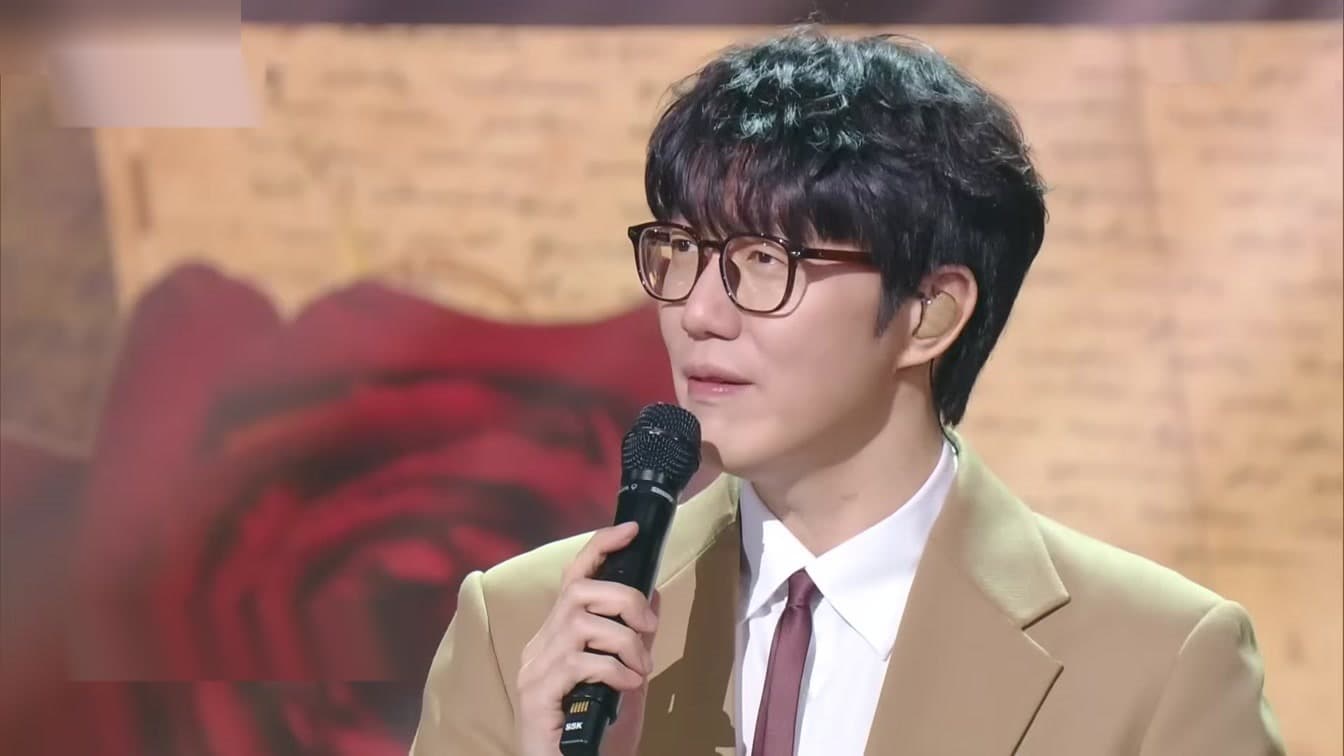
It takes a certain level of self-awareness to admit, on national television, that you were intimidated by a group of younger performers. Sung Si-kyung — one of South Korea's most celebrated ballad singers, with a career stretching back more than two decades — did exactly that on the May 8 episode of KBS2's The Seasons — Sung Si-kyung's Eardrum Boyfriend, and the moment quickly resonated far beyond the show's regular audience.
"I was on the same flight as aespa recently," Sung Si-kyung told the audience, "but I just watched from afar. I couldn't bring myself to say anything." The admission — delivered with characteristic self-deprecating charm — immediately sparked a wave of responses online. Fans who have spent years watching Sung Si-kyung as the confident, warm-voiced host of one of Korean television's most beloved music programs were surprised to hear him describe himself as someone who freezes up in the presence of younger stars.
The story itself is funny, relatable, and completely human. But it also opened a window into a broader conversation about generational dynamics in the Korean entertainment industry — one that the episode's other guests helped illuminate in unexpected ways.
Kim Jong-kook's 30 Years: A Night Built Around a Legend
The May 8 episode was structured around a milestone. Kim Jong-kook, the veteran singer and variety personality best known internationally for his longtime role on SBS's Running Man, was celebrating his 30th debut anniversary — or close enough. He entered the studio with a disclaimer: technically, the anniversary fell last year, but he hadn't been able to prepare an album in time, so he was counting from the calendar year. The audience laughed, because it was exactly the kind of honest and slightly absurd explanation that makes Kim Jong-kook so well-liked.
What followed was one of the episode's most praised segments. Kim Jong-kook performed "별, 바람, 햇살 그리고 사랑" ("Stars, Wind, Sunshine and Love"), his 2005 recording, as the opening to a full musical time-travel through his career. He then moved into Turbo's "회상" ("Reminiscence") — the group he debuted with in the mid-1990s — sending much of the audience into immediate nostalgia. "Let's take a time machine tonight," he said, before the music started, and that is more or less what happened.
The episode's most talked-about Kim Jong-kook moment came courtesy of a legendary piece of performance history. Twenty-two years ago, he had taken the stage for the very first performance of "한 남자" ("A Man") — the song that, by his own account, changed his life overnight. Sung Si-kyung proposed they recreate that original stage, including its most famous detail: the slippers. Kim Jong-kook had famously performed in house slippers the first time, and he did it again, to the delight of a studio audience that erupted at the sight of them. "The next day, everything was different," Kim Jong-kook said of that original performance, and the recreation gave it a second moment of joy.
He also performed a Turbo medley with Mighty Mouth's Shorry, collaborated with Sung Si-kyung on a duet of AKMU's "어떻게 이별까지 사랑하겠어, 널 사랑하는 거지" ("How Can I Love the Heartbreak, You're the One I Love"), and in one of the episode's warmest moments, sang "이 사람이다" ("This Is the One") live as an impromptu wedding gift after a bride-to-be's engagement story was shared during the broadcast. Online reaction to that segment: near-universal warmth.
He also made a bold on-air request. Turning to Sung Si-kyung, he said he needed a song finished before August and asked his friend publicly if he could contribute one. Sung Si-kyung, clearly amused, did not commit on the spot.
Choi Yuri's Songwriting Confession and a Very Long Silence
The episode's duet segment, which Sung Si-kyung calls "두 사람" ("Two People"), featured Choi Yuri — a singer-songwriter whose vocal work has increasingly earned her wider recognition. What made her appearance particularly compelling was her backstory: she revealed that her original ambition was not to be a performer at all, but a composer. Performance came later.
Her writing credits gave the audience some sense of the path she has traveled. She has written for Kim Bum-soo, for Davichi, and for Seventeen's Seungkwan — a range of projects that spans genres, decades, and very different artistic sensibilities. The conversation took an unexpectedly funny turn when she disclosed that she had, at some point, sent a song to Sung Si-kyung himself — and then received no response. The studio audience laughed. Sung Si-kyung, caught slightly off-guard, explained: it wasn't that the song was bad; it was that he had concluded he was not the right artist for it. Whether Choi Yuri fully accepted that explanation remained the subject of considerable online debate after the broadcast.
The two then performed together — a duet called "Romeo N Juliet" that showcased an easy, complementary chemistry between two artists who clearly enjoy working with each other despite the story of the unanswered message.
Lee Chang-sub's Apology DM and the Lesson About Senior-Junior Dynamics
Lee Chang-sub of BTOB — the K-pop group from Cube Entertainment that debuted in 2012 — had covered Sung Si-kyung's "그 자리에, 그 시간에" ("In That Place, At That Time") as a remake, and the performance had been well-received. What had not happened, according to Sung Si-kyung, was a follow-up message. He expressed some low-key hurt about the silence, in the gently pointed way that senior figures in the Korean entertainment industry sometimes do.
Lee Chang-sub responded to this on air in the most entertaining way possible: he produced the apology DM he had apparently written and read it out loud in the studio. The audience erupted. The message was sincere in content but the delivery — reading a private message out loud on a live music program — was comedy gold, and it landed exactly the way it was intended to.
Sung Si-kyung used the moment as a springboard for a broader reflection. "It's actually harder for a senior to approach a junior," he said. "People assume it goes the other way." He described the unspoken awkwardness that exists across generational gaps in an industry where hierarchy is deeply embedded, even when warmth and mutual respect exist on both sides. And that reflection is what led directly to the aespa anecdote — the admission that he had been on the same flight as one of K-pop's biggest fourth-generation acts and had simply not been able to make himself walk over and say hello.
The comment about aespa was brief and offhand, but it traveled. Social media picked it up almost immediately. Sung Si-kyung's expression of uncertainty around approaching younger idols — from someone with his experience and his reputation — felt unexpectedly relatable, and it sparked its own strand of conversation about how those dynamics actually work between generations of performers who exist in the same industry but in very different cultural moments.
Fan Reactions and What the Episode Got Right
Online response to the episode was strong across multiple fronts. "Kim Jong-kook in full pro mode was insane," was one of the more frequently quoted reactions, referring to the performance segments. "The Turbo medley made me go on a full nostalgia trip" came up repeatedly. Kim Jong-kook's impromptu wedding song for the proposed-to audience member was called "too sweet" in multiple posts — a compliment, not a criticism.
The Choi Yuri segment generated its own thread of discussion around songwriting and what it looks like to build a career through work that often goes unrecognized by the people consuming it. Lee Chang-sub's public apology was widely described as one of the funniest moments of recent variety television. And the aespa confession — the one that started circulating almost the moment the show ended — was discussed as something many people felt but rarely say out loud: that admiration and familiarity are not the same thing, and that even experienced performers can feel genuinely nervous about crossing a generational divide.
The Seasons — Sung Si-kyung's Eardrum Boyfriend airs every Friday at 11:10 PM KST on KBS2. The May 8 episode is available for streaming through KBS's official platforms for viewers inside Korea.
How do you feel about this article?
저작권자 © KEnterHub 무단전재 및 재배포 금지
Entertainment Journalist · KEnterHub
Entertainment journalist specializing in K-Pop, K-Drama, and Korean celebrity news. Covers artist comebacks, drama premieres, award shows, and fan culture with in-depth reporting and analysis.
Comments
Please log in to comment