Why Tazza: The Song of Beelzebub Matters For Korean Cinema
The fourth Tazza film enters a recovering box office with a franchise history that is both powerful and risky.
 By Noh Yechan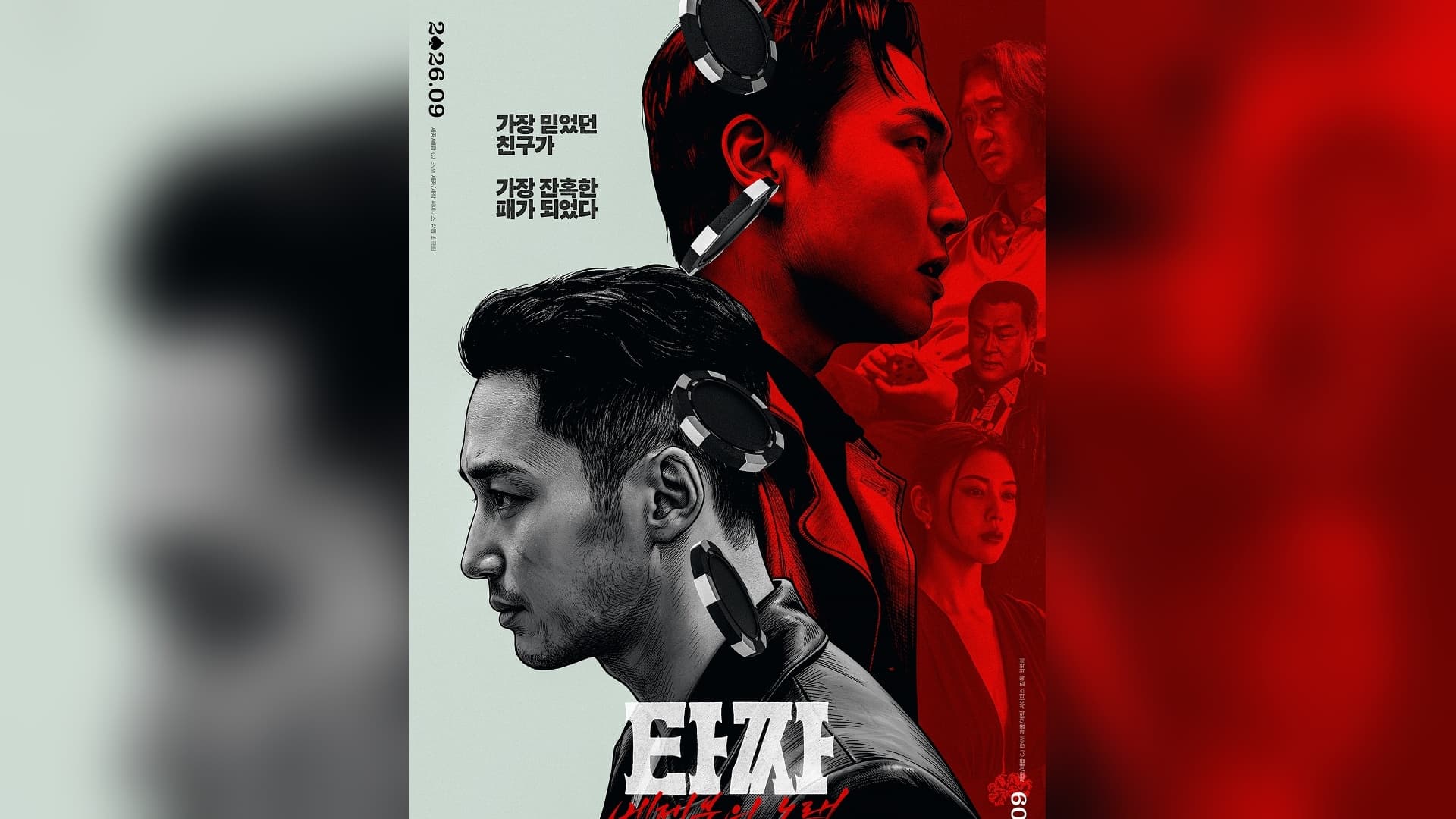
Tazza: The Song of Beelzebub is not just reviving a famous Korean crime brand.
It is testing whether a once-dominant adult franchise can still work in a theatrical market that has changed dramatically since the first Tazza became a Chuseok phenomenon. The fourth film, directed by Choi Gook-hee and led by Byun Yo-han, Roh Jae-won, Kim Min-ho, Lim Se-mi and Moon Ji-hoon, was introduced at a production presentation in Seoul on August 18, 2026, ahead of a September 23 theatrical release. That timing matters. Chuseok is traditionally one of Korea's most competitive movie corridors, and Tazza built much of its mythology there.
This article analyzes how the new film uses a familiar IP at a moment when Korean cinema is recovering, but audiences are more selective about sequels than they were a decade ago.
The Franchise Enters With A Heavy Scorecard
The first Tazza, released in 2006, became a rare adult-rated breakout. Yonhap's 2019 box-office summary put the original at 5.68 million admissions, while Korean Film Biz Zone's 2019 retrospective cited 6.85 million viewers for the same 2006 hit. The two figures reflect different reporting frames, so the safer domestic comparison is the Yonhap/KOFIC-style admissions line: 5.68 million for the 2006 title, 4.01 million for Tazza: The Hidden Card in 2014, and 2.22 million for Tazza: One Eyed Jack in 2019, as repeated in later Korean coverage including Chosun's July 2024 report.
That trajectory is the central business problem for Beelzebub. The brand still has name recognition, but each sequel reached fewer ticket buyers than the one before it. The decline does not mean the IP is exhausted. It means the fourth installment has to sell a sharper reason to return.
A Sequel Strategy Built On Distance, Not Continuity
But legacy alone does not explain the new positioning. The production presentation described The Song of Beelzebub as sharing the franchise universe while telling an independent story around online casino power, betrayal and revenge. That is a practical pivot. A direct continuation would force the film to compete with viewers' memories of iconic characters such as Goni, Madam Jung and Agwi; a standalone entry can borrow the Tazza mood without being trapped by old plot obligations.
The casting points in the same direction. Byun Yo-han gives the film a recognizable lead for prestige crime drama viewers, while Roh Jae-won, Lim Se-mi and Kim Min-ho broaden the ensemble beyond nostalgia. Moon Ji-hoon's participation also gives the project a pop-culture hook, although the film cannot depend on novelty casting alone. The franchise's strongest asset has always been pressure: characters who think they are reading the table, only to discover that the real game is emotional.
That is why the online-casino premise is more than a cosmetic update. It moves the gambling world from smoky rooms and private tables into a digital economy where scale, anonymity and platform power change the stakes. If the film uses that shift only as set dressing, it risks feeling late. If it turns the shift into conflict, the franchise gains a modern reason to exist.
The Numbers Show The Size Of The Challenge
The clearest comparison is the franchise's admissions curve. The first film drew 5.68 million admissions in 2006, according to Yonhap's September 21, 2019 report; The Hidden Card drew 4.01 million in 2014; and One Eyed Jack finished at about 2.22 million, a figure cited in 2024 and 2026 Korean franchise coverage. That is a drop of roughly 60.9 percent from the first film to the third, and it reframes the fourth entry as a recovery attempt rather than a routine sequel.
Bar chart comparing Korean admissions for Tazza in 2006, Tazza: The Hidden Card in 2014, and Tazza: One Eyed Jack in 2019. 0M 1M 2M 3M 4M 5.68M 4.01M 2.22M Tazza Hidden Card One Eyed Jack Admissions, Korea; sources: Yonhap/Korean press summaries
The time-series comparison is blunt: Tazza moved from 5.68 million admissions in 2006 to 4.01 million in 2014 and then 2.22 million in 2019, turning an eight-year sequel interval into a 29.4 percent drop, followed by a five-year interval that produced another 44.6 percent decline. In practical terms, Beelzebub does not need to match the first film to succeed. It needs to reverse the sense that every new Tazza chapter is smaller than the last.
There is one encouraging market signal. According to KOFIC figures reported by Korea JoongAng Daily on July 13, 2026, Korean-film admissions in the first half of 2026 rose to 37.37 million from 21.36 million a year earlier, while revenue increased to 370.2 billion won from 203.7 billion won. That 74.9 percent admissions rebound gives a recognizable local franchise a better environment than it would have had in a weaker year. Still, recovery does not guarantee trust. Audiences are returning, but they are rewarding films that feel event-sized.
Why The Chuseok Window Raises The Stakes
The September 23 release date places the film in the symbolic space where Korean distributors often ask audiences to treat a local title as a family-season event. That does not mean Beelzebub is a family film. It means the campaign is asking for scale: premium screens, group outings and enough urgency to compete with other holiday options. For an adult crime franchise, that is a delicate bet. The audience has to feel that the movie is large enough for the season, but specific enough not to disappear inside generic holiday noise.
The first Tazza benefited from exactly that balance. It was a stylish genre picture, but it was also a star vehicle and a conversation piece. The later films were still visible, yet their admissions curve suggests that visibility became less efficient over time. A fourth chapter therefore cannot simply say that the table is open again. It has to explain why this table is different from the one viewers left in 2019.
One way to do that is through the film's social texture. Online casino culture offers a sharper metaphor than traditional gambling rooms because it makes greed feel networked, scalable and harder to localize. The conflict is no longer only about who can read a hand. It is about who controls access, data, money flow and reputation. That is a useful contemporary frame for Korean cinema, where crime stories increasingly need a systemic pressure point rather than a single villain with a dramatic scar.
The other path is emotional. The production presentation's focus on two men with the same name gives the film an immediately readable rivalry. Same-name doubling can be a gimmick, but it can also create a clean dramatic question: what happens when one person's success feels like another person's stolen life? If the film keeps that question close to the gambling mechanics, the franchise can update itself without losing the intimate betrayals that made earlier installments sticky.
What The Cast Signals About A New Audience
Byun Yo-han's presence is important because he bridges two audience groups. He is familiar enough for mainstream viewers, but his screen identity is not locked to one commercial formula. That gives Beelzebub room to sell a lead character who can be charming, reckless and morally unstable without feeling like a recycled version of a previous Tazza hero. In a franchise where comparison is unavoidable, that flexibility is valuable.
Roh Jae-won's role may be just as important. A revenge story built around old friends requires the antagonist or rival to feel like more than an obstacle. The admissions decline from 5.68 million in 2006 to 2.22 million in 2019 shows that brand familiarity alone no longer carries the series. Performance chemistry has to do heavier work. Viewers need a conflict they can remember after the card-table iconography fades.
The wider ensemble also suggests that the film wants to look more contemporary than reverent. Lim Se-mi and Kim Min-ho bring television and film visibility, while Moon Ji-hoon's casting creates curiosity beyond standard film audiences. That mix can help the marketing conversation, but it also raises expectations. If the film only treats the ensemble as decoration, the campaign's freshness will not survive word of mouth. If each supporting role represents a different pressure inside the gambling ecosystem, the movie can feel denser and more rewatchable.
This is where Beelzebub has to be careful with nostalgia. A franchise finale can honor the past through rhythm, design and moral tension, not only through callbacks. Too many explicit reminders would make the fourth film look dependent. A cleaner strategy is to preserve the sensation of Tazza: the pleasure of watching confidence collapse when the rules are revealed to be rigged from the start.
The Market Recovery Is Real, But Uneven
The 2026 box-office rebound creates an opening, not a guarantee. KOFIC's first-half figures reported on July 13, 2026 showed Korean-film admissions at 37.37 million, up from 21.36 million in the first half of 2025, and Korean-film revenue at 370.2 billion won, up from 203.7 billion won. Those numbers show that local films regained momentum after a weaker period. They also imply a more competitive field, because distributors will read the same recovery signal and push bigger titles into high-value windows.
For Tazza, the useful interpretation is not that the whole market is healthy. It is that audiences are again willing to leave home for Korean films when the proposition is clear. That places responsibility on the campaign. The poster, trailer and press messaging have to tell viewers whether this is a gritty crime thriller, a stylish franchise finale, a character revenge story or a market-updated gambling film. Ideally, it is all four. But marketing has to establish a hierarchy, because confused positioning can make even familiar IP feel optional.
The admissions chart also gives the distributor a realistic target. Matching 5.68 million would require a cultural wave, not just solid execution. Moving decisively above the 2.22 million line from 2019 would be a more meaningful first measure, because it would interrupt the downward sequence. A result between the second and third films would still be read as stabilization. A result closer to the original would reposition the franchise as newly potent.
That distinction matters for Korean cinema's broader IP strategy. Local studios have often been cautious with long-running film brands compared with Hollywood franchise machinery. Tazza offers a different model: fewer entries, longer gaps and a stronger dependence on director, cast and tone. If Beelzebub performs, it may encourage producers to revisit mature Korean IP without forcing it into annualized sequel logic.
The Creative Risk Behind The Final-Chapter Label
Calling a film the final chapter is useful marketing because it creates scarcity. It tells casual viewers that this is the last chance to engage with the brand on a large theatrical canvas. But scarcity only works when audiences believe the ending has weight. If the story feels like another episodic conflict, the label becomes packaging. If the movie treats finality as a moral endpoint, the phrase can become a genuine selling point.
The title helps because The Song of Beelzebub carries mythic texture. The production explanation links the name to card symbolism and demonic hierarchy, but the more important effect is tonal. It suggests temptation, performance and a wager bigger than money. That tone suits a franchise built around people who believe skill can protect them from desire. In Tazza, the punishment usually begins when confidence turns into appetite.
The online-casino setting can extend that idea by removing some of the romanticism from gambling. Physical card rooms make cheating tactile and cinematic; digital systems can make cheating invisible. The film therefore has to solve a visual problem. It must make screens, transactions and platform control feel dangerous on screen, while still preserving the human faces that sell betrayal. That is not easy. It is also the reason the premise is worth attempting.
If Choi Gook-hee finds that balance, Beelzebub can do more than close a series. It can show how Korean genre cinema uses old brands to talk about newer forms of power. If he does not, the fourth film may confirm the admissions decline as a sign that the franchise's strongest hand was played years ago. The stakes, then, are not abstract. They are written directly into the numbers already attached to the name.
Reaction Will Depend On Whether The Film Feels Like An Event
The early press response has focused on the Chuseok release window, the final-chapter framing and the refreshed cast. Those are useful signals because they give the campaign a clear shape: this is not an anonymous sequel; it is a closing statement. The challenge is that franchise finales can sound important before they prove why they are necessary.
For fans, the central question is tone. Tazza works when charisma and danger sit in the same frame. Too much polish makes the gambling world feel decorative; too much darkness can flatten the mischievous energy that made the first film endure. The production's emphasis on betrayal between two Tae-young characters suggests a more intimate rivalry, which could help. A personal duel is easier to market than a sprawling mythology lesson.
What The Fourth Film Has To Prove
The Song of Beelzebub arrives with a brand that still means something, a market that is warmer than last year, and a release window designed for high visibility. Its risk is equally clear. The series' admissions history shows that recognition has weakened over time, and the fourth film must turn nostalgia into urgency.
The best outcome would not simply be a bigger opening weekend. It would be a perception shift: from Tazza as a remembered franchise to Tazza as a format that can still explain ambition, debt and betrayal in contemporary Korea. If Choi Gook-hee's film makes the online casino world feel emotionally dangerous rather than merely topical, the final chapter may become less like an ending and more like proof that old IP can still find a new table.
How do you feel about this article?
저작권자 © KEnterHub 무단전재 및 재배포 금지
Film & Global Culture Reporter · KEnterHub
Film and culture reporter following Korean cinema from Chungmuro to Cannes. Noh Yechan covers theatrical releases, festival circuits and award season, and writes about how Korean entertainment reshapes global pop culture.
Comments
Please log in to comment