Why The WONDERfools Is Winning Over K-Drama Fans
Park Eun-bin and Cha Eun-woo's Netflix superhero comedy works best when its flawed heroes find heart in the chaos.
 By Park Chulwon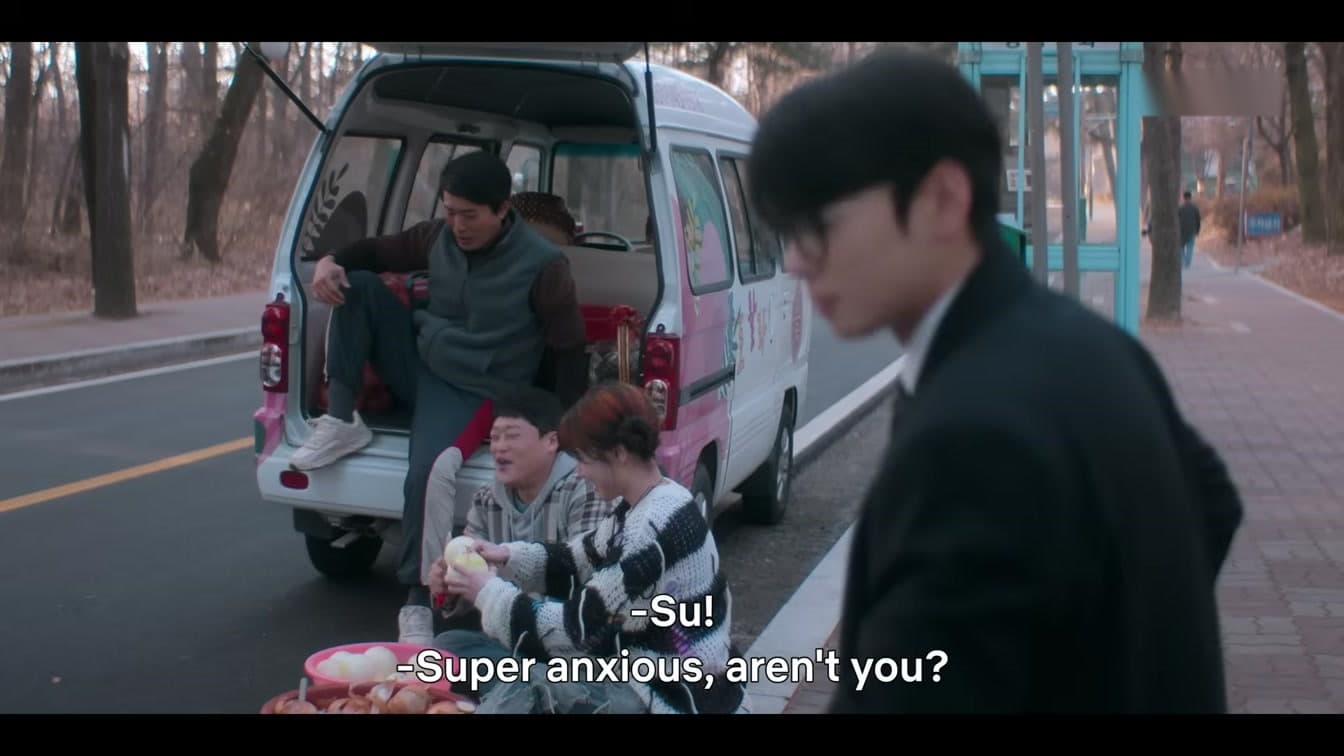
Netflix's The WONDERfools is finding its clearest appeal in a place superhero stories often overlook: the people who are bad at being heroes. The Korean fantasy comedy, led by Park Eun-bin and Cha Eun-woo, has drawn fresh attention after a Korean review praised its offbeat team of accidental superpowered misfits and the warmer message underneath its chaotic action.
The series matters because it arrives at a time when K-dramas are expanding well beyond romance, revenge and office melodrama. The WONDERfools uses superpowers, villains and retro small-town chaos, but its central hook is easy to understand even for viewers who rarely watch superhero stories. It is about overlooked people discovering that their flaws may also be the beginning of their strength.
A Superhero Story About People on the Outside
The WONDERfools follows residents of Haeseong City who unexpectedly gain strange abilities after an accident. Eun Chae-ni, played by Park Eun-bin, Son Gyeong-hun, played by Choi Dae-hoon, and Kang Ro-bin, played by Im Sung-jae, are introduced as local outsiders rather than polished heroes. They are awkward, difficult, lonely or dismissed by the people around them.
That setup gives the drama a different flavor from many superhero titles. The characters are not admired figures hiding secret powers. They are people who already struggle to fit into ordinary life, then become even stranger when their abilities appear. The powers are unstable, oddly triggered and often more embarrassing than empowering at first.
According to the Korean review, Chae-ni is physically frail and emotionally prickly, Gyeong-hun is a habitual complaint-maker at city hall, and Ro-bin is too gentle for his own good. None of them begins as an obvious savior. That is the point. The series gets comedy from their poor planning and clashing personalities, but it also uses those weaknesses to build a story about gradual connection.
Cha Eun-woo's character, Lee Un-jeong, adds a more mysterious layer. He enters the story as another superpowered figure while the city faces unknown villains and larger danger. The review noted that his tone does not always blend smoothly with the lighter trio, but that tension also reflects the drama's main experiment: mixing comedy, action, mystery and emotional recovery inside one unusual team story.
Why the Cast Raises the Stakes
The casting is a major reason global viewers are paying attention. Park Eun-bin remains one of the most trusted Korean actresses for roles that require precise emotional control, especially after Extraordinary Attorney Woo brought her wide international recognition. Cha Eun-woo, known both as an ASTRO member and an actor from dramas such as True Beauty, gives the series strong crossover appeal for K-drama and K-pop audiences.
Netflix Tudum has positioned the series around that pairing, describing The WONDERfools as a Korean superhero drama in which Park Eun-bin and Cha Eun-woo team up. That combination matters because the show needs both sincerity and spectacle. Park can ground a strange premise in emotional detail, while Cha brings the polished mystery and star power expected from a larger Netflix genre project.
The supporting cast also gives the drama room to move beyond a two-star vehicle. Kim Hae-sook, Choi Dae-hoon, Im Sung-jae and Son Hyun-joo broaden the ensemble, while the story's small-town frame gives each character a social role instead of leaving them as generic sidekicks. For a show built around flawed powers, the ensemble format is essential.
Time's 2026 K-drama preview described the series as a superpowered action comedy set near the turn of the millennium, specifically 1999. That period setting is more than decoration. It gives the drama a retro texture and lets the story play with anxieties about change, uncertainty and possible disaster as the year 2000 approaches.
The Comedy Works Best When It Serves the Message
The Korean review found The WONDERfools most effective when its comedy comes from character rather than noise. The trio's failed plans, awkward experiments and accidental teamwork create a sitcom-like rhythm. Their powers may be bizarre, but the situations stay relatable because the characters are really trying to understand themselves.
That is where the show separates itself from darker superhero stories. The review compared the genre's usual interest in outsiders to familiar mutant narratives, but argued that The WONDERfools takes a warmer route. Instead of focusing only on fear or persecution, it watches people who already felt useless or unwelcome slowly realize they can still protect others.
The drama is not presented as flawless. The same review pointed out that some scenes seem too eager to chase laughs, and that certain character combinations can feel tonally uneven. Those criticisms are useful because they show the risk of the format. A superhero comedy has to stay funny without making the emotional stakes feel cheap.
Still, the review's overall read is positive. The WONDERfools appears strongest when it turns small victories into meaningful ones: people who have rarely been welcomed by their neighbors choosing to step forward when the town is in danger. That kind of humanism can carry a genre story even when the comedy occasionally stumbles.
Netflix Gives the Story a Global Runway
Netflix's involvement gives The WONDERfools a broader runway than a domestic-only fantasy comedy might have had. What's on Netflix reported that the series was part of Netflix's 2026 Korean slate and set for a Q2 release window, while later coverage identified May 15, 2026, as the premiere date. For international viewers, that means the show enters a global catalog where K-dramas can find audiences quickly if the concept is clear.
The concept is clear enough to travel. Ordinary town residents get powers they cannot control, then face villains while learning to become a team. The difference is in the emotional angle. The WONDERfools is not selling perfect heroes. It is selling the idea that even clumsy, wounded and socially awkward people may have something useful inside them.
That theme also fits the recent global appetite for Korean genre hybrids. K-dramas have become especially good at blending tones: romance with legal drama, horror with school stories, revenge with family melodrama. The WONDERfools adds superhero comedy to that list, but keeps a familiar K-drama engine underneath: community, healing and characters learning to let other people in.
For Park Eun-bin and Cha Eun-woo, the series also offers a useful shift. Park gets a role that is more physically comic and genre-driven than the precise professional dramas many global fans know her for. Cha gets a mysterious character inside a show that can soften his image through ensemble comedy rather than relying only on visual polish.
What Viewers Should Watch Next
The next question is whether The WONDERfools can keep its balance across a full season. Its strongest ingredients are already visible: a high-profile cast, a 1999 setting, a team of defective superhumans and a message about overlooked people finding their own way to shine. The challenge is making the comedy, action and emotion support one another instead of competing for attention.
If the series can refine the uneven spots identified in early Korean commentary, it has the pieces to become more than a novelty. The odd powers can provide visual fun, the villains can raise the stakes, and the neighborhood can give the story a reason to matter. But the emotional center must remain the misfits themselves.
That is why the latest review has value. It points viewers toward the drama's real selling point: not the superpowers, but the people who do not know what to do with them. The WONDERfools is most interesting when it lets its heroes be foolish first, then slowly shows why foolish people can still be brave.
For K-drama fans looking for a lighter genre series with real heart, that may be enough reason to start watching. The WONDERfools does not need to reinvent the superhero story. It only needs to make its accidental heroes feel human, and so far, that is exactly where the show seems to bloom.
How do you feel about this article?
저작권자 © KEnterHub 무단전재 및 재배포 금지
Entertainment Journalist · KEnterHub
Entertainment journalist focused on Korean music, film, and the global K-Wave. Reports on industry trends, celebrity profiles, and the intersection of Korean pop culture and international audiences.
Comments
Please log in to comment