William Hammington's Ice Hockey Dream Is Taking Over the Internet
Sam Hammington's eldest son, once the beloved baby of Return of Superman, is now a talented teenage ice hockey player drawing attention from Australia's national team
 By Jang Hojin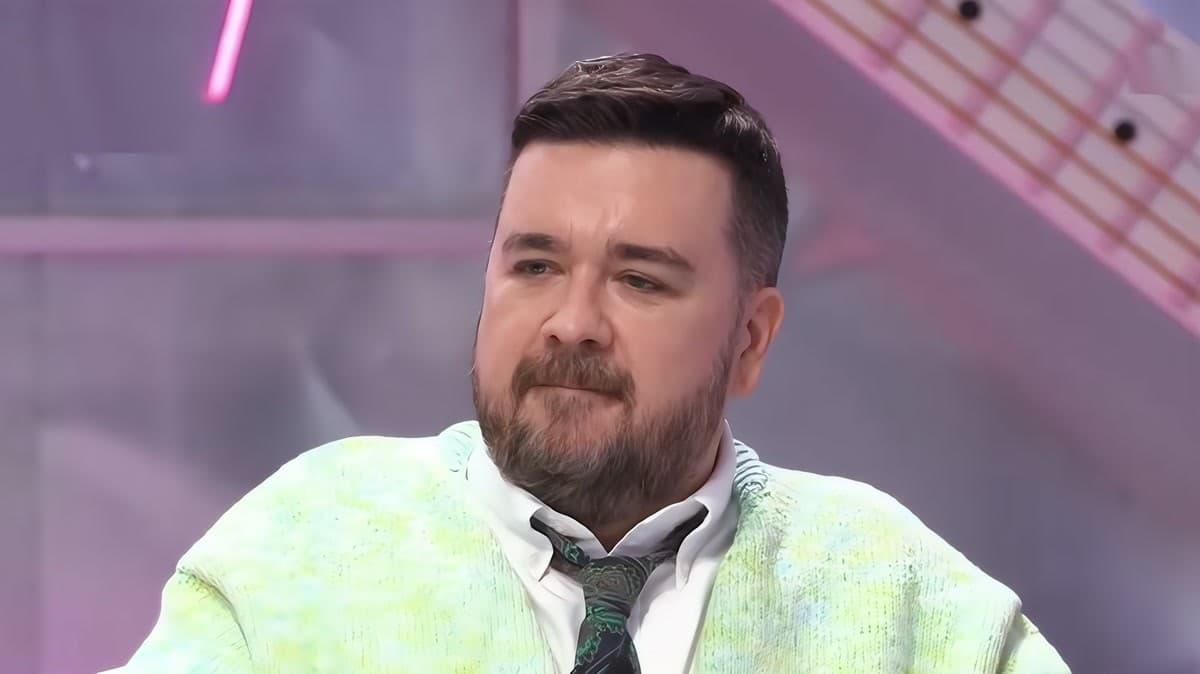
If you watched KBS2's beloved family reality show The Return of Superman in the 2010s, you almost certainly have a soft spot for William Hammington. The older son of Australian-Korean comedian and television personality Sam Hammington, William grew up in front of Korean cameras — a dimple-cheeked toddler whose relationship with his younger brother Bentley generated some of the show's most memorable and widely-shared moments. He was, for millions of Korean viewers, the definitive television child: adorable, expressive, and utterly unaware of how famous he was.
On April 5, 2026, Sam Hammington posted a message on his social media that stopped fans in their tracks. Accompanying what appeared to be a photo of William in full ice hockey gear — teenage, tall, focused — was a message written in Korean: "이제 시작이다. 앞으로 더 열심히 더 성실하게 더 겸손하게 더 신속하게 더 강력하게." Translated: "This is just the beginning. Going forward, harder, more diligently, more humbly, more swiftly, more powerfully." The words, which could as easily have come from a professional athlete's post-game interview as from a proud father, reflect something that fans of the Hammington family have been watching unfold with quiet awe: William has become seriously, authentically good at ice hockey.
From Television Baby to Ice Hockey Prodigy
The trajectory from toddler television star to teenage ice hockey prospect is not one anyone could have predicted in the years when William Hammington was making Korean audiences collectively gasp at his bilingual vocabulary and his fraternal protectiveness of Bentley. The Return of Superman ran for years as one of KBS2's signature variety programs, and the Hammington family became one of its most beloved recurring features. Sam, who has lived in South Korea since 2000 and speaks Korean fluently, raised his sons in a bicultural household that made for compelling, warm television.
As William grew older, the family's public appearances naturally became less frequent — growing children deserve privacy, and the Hammington boys had given enormously to public entertainment during their early years. But when William's ice hockey journey began to develop traction, Sam found himself sharing updates that resonated deeply with a generation of viewers who had watched this young man's entire childhood.
Ice hockey is a sport with a complex relationship to Korean culture. The national team achieved its greatest moment of prominence during the 2018 PyeongChang Winter Olympics, when a historic unified Korean team competed under a single flag — a moment that captured global attention. Since then, investment in the sport has grown, and a small but dedicated community of Korean ice hockey players has developed at various competitive levels. For a bicultural athlete like William Hammington — Korean by upbringing and culture, Australian by citizenship and heritage — the sport offers an interesting intersection of identities.
Reports indicate that William has been performing at a level that has attracted attention from Australian national team scouts. The precise nature of that interest has not been detailed publicly, but the implication is significant: this is not a hobbyist pursuing a passion, but a young athlete who is developing toward competitive seriousness. Sam's April 5 post carries the emotional weight of a parent who has watched his child move from playground enthusiasm to genuine athletic promise — and who wants to mark that transition publicly for the community that watched William grow up.
Sam Hammington's Role: Supporting Father, Public Witness
Sam Hammington's place in Korean entertainment is singular. He arrived in South Korea as a young Australian with a deep interest in Korean culture, built a career in comedy and variety television over more than two decades, and raised a family that became, by accident of his profession, part of the national cultural fabric. His work spans stand-up, sketch comedy, hosting, and acting — but it is arguably his role as a father on The Return of Superman that cemented his place in the hearts of a specific generation of Korean viewers.
The April 5 social media post is characteristic of how Sam has navigated his sons' growing need for privacy while still acknowledging the genuine emotional investment of the fans who watched them grow up. He does not overshare, does not monetize his children's achievements in the way that some celebrity parents do. But when a milestone worth noting arrives — a tournament result, a new step in the journey — he acknowledges it with the directness and warmth that his audiences have come to associate with him.
The specific language he chose is worth noting. "더 열심히 더 성실하게 더 겸손하게 더 신속하게 더 강력하게" — harder, more diligently, more humbly, more swiftly, more powerfully — reads like a personal code rather than a casual social media caption. These are not the words of someone coasting on a child's natural talent. They are the words of a family that has internalized the ethics of athletic development: that talent is merely the starting point, and that the qualities which determine whether talent becomes achievement are character traits rather than physical gifts.
For the Korean entertainment community and the generation of viewers who grew up watching The Return of Superman, Sam's post functions as both a personal update and a kind of communal marker. We watched this child take his first steps on television. Now he's lacing up ice skates in a competitive arena. Time has passed in a way that is simultaneously obvious and startling.
The Cultural Resonance of Growing Up on Camera
William Hammington belongs to a very specific category of Korean media figure: the child who grew up on reality television and is now, as a young adult, navigating the complex relationship between a public persona established in childhood and the private person they are becoming. Korean entertainment has produced several such figures over the years, and the public's relationship with them is nuanced in ways that don't map neatly onto Western celebrity culture.
There is a protective quality to how Korean fans engage with children who appeared on programs like The Return of Superman. The show's premise — celebrity fathers taking sole charge of their children while mothers take a break — created an unusually intimate window into family life that felt genuine precisely because the children were too young to perform for the camera. What audiences saw was real: real sleepiness, real frustration, real joy, real love. That authenticity created a bond that, for many viewers, persists even as the children age out of childhood and into adolescence and young adulthood.
William Hammington's ice hockey journey becomes, in this context, more than just a sports story. It is a story about the passage of time, about the relationship between public love and private becoming, about what it means to support someone across the decades from baby steps to competitive athletics. When Korean fans react with emotion to Sam's social media posts about William's hockey achievements, they are not just responding to a sports update — they are experiencing a form of collective memory and collective investment that has no clean equivalent in most other media cultures.
What Comes Next for William Hammington
If the reported interest from Australian national team scouts is substantive, William Hammington's athletic career could take him in directions that would have seemed fantastical during his Return of Superman years. International competitive ice hockey represents the upper tier of the sport outside the NHL, and for a bicultural athlete who could legitimately represent Australia — the country of his citizenship and his father's birth — the prospect is genuinely exciting.
Sam's message that "this is just the beginning" suggests that the family sees current achievements not as a destination but as a foundation. The competitive timeline for ice hockey at the international level typically involves several more years of development, club competition, and national selection processes before anything definitive can be said about World Championship or Olympic prospects. But the direction of travel appears clear.
For now, William Hammington remains something rarer and more interesting than simply a sports prospect: he is a young person who is discovering what he is capable of, in a pursuit entirely his own, watched at a distance by a country that has followed him since birth. Sam Hammington's social media post from April 5, 2026, said it simply and exactly right: this is just the beginning.
How do you feel about this article?
저작권자 © KEnterHub 무단전재 및 재배포 금지
Entertainment Journalist · KEnterHub
Entertainment journalist specializing in K-Pop, K-Drama, and Korean celebrity news. Covers artist comebacks, drama premieres, award shows, and fan culture with in-depth reporting and analysis.
Comments
Please log in to comment