WING Went Viral With 45M Views. Then G-Dragon Called.
How a Single Beatbox Track Bypassed the K-Entertainment System
 By Jang Hojin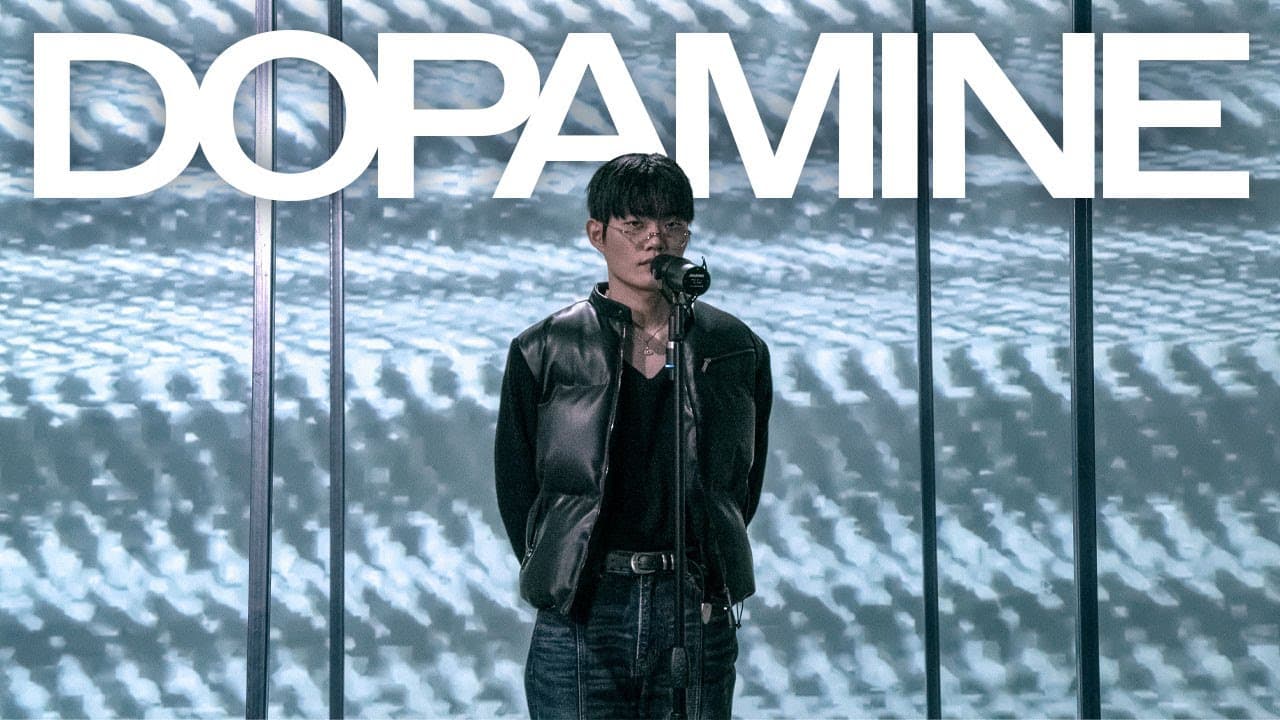
A video titled "Dopamine" uploaded to YouTube in early 2025 by a Korean beatboxer named WING did not simply go viral — it broke the algorithm. The track, built entirely from sounds produced by a single human mouth, surpassed 45 million views and claimed the top spot on YouTube's global trending chart. No label backing. No idol training system. No K-pop machinery. Just WING, a microphone, and a level of sonic control that left viewers genuinely uncertain whether they were hearing a beatboxer or a fully produced electronic track.
That one video is now reshaping how Korean entertainment discovers and elevates talent outside the traditional idol pipeline. When G-Dragon — the architect of modern K-pop, freshly returned from military service — personally selected WING to join his Übermensch World Tour, the industry took notice. On April 15, 2026, WING made his first appearance on MBC's Radio Star, bringing his story to primetime Korean television for the very first time and confirming that his crossover from niche community champion to mainstream entertainment figure was complete.
This is the story of how a beatboxer upended the Korean entertainment system — and what it means for the industry's future.
From Backyard Battles to Asia's Finest
Kim Geonho (28), who performs as WING, started beatboxing at age 12 after his cousin refused to teach him the skill. That early defiance turned into a decade-long competitive career built on technical rigor rather than viral ambition. By 2017, he had won the Korean Beatbox Championship — the competition's most significant domestic milestone — and in 2018 became the first Korean beatboxer to claim the Asia Beatbox Championship title in Taipei, Taiwan.
The same year, WING won the Beatbox Legends Championship, defeating American competitor Audical in the final. His technical range — from drum-machine precision to bass-heavy drops that rattle speakers — earned him a reputation in the global beatbox community long before mainstream Korea paid attention. At the Grand Beatbox Battle, the sport's most prestigious international competition, WING reached 2nd place in the solo category: the highest individual finish for any Korean competitor at that level.
But competitive beatboxing remained niche. Most Koreans had never heard the name WING. Then, on February 12, 2025, everything changed.
The Viral Mechanics Behind 45 Million Views
"Dopamine" changed the landscape not because beatboxing had never been viral before, but because this track sounded like nothing the average listener expected a single human to produce. WING constructed an entire electronic soundscape — layered bass, syncopated rhythms, melodic accents — using only his voice and breathing control. The effect was immediate: confusion first, then disbelief, then compulsive sharing. Viewers kept replaying the track asking the same question: Is that really just his mouth?
The amplification mechanism that pushed "Dopamine" past 45 million views was as important as the original clip itself. When Julius Treike — known as Chezame, a five-time beatbox world champion with over 7 million TikTok followers and 2 million YouTube subscribers — posted a reaction video, that single upload accumulated over 9 million views on its own. Each wave of reaction content pulled entirely new audiences back to WING's original track, creating a self-reinforcing viral cycle that most label-backed releases never achieve.
This viral architecture — original track (45M) amplified by reaction content (9M+ from one creator alone, plus dozens of smaller reaction channels) — represents something structurally new in Korean entertainment. Traditional idol debuts require years of trainee investment, coordinated media rollouts, and synchronized fan community activation. WING bypassed every layer of that system. His "launch event" was a single upload.
What makes this an industry story rather than merely a feel-good internet moment is the speed of mainstream adoption that followed. Within weeks of "Dopamine's" explosion, advertising agencies, performance organizers, and television bookers moved aggressively. WING was fielding commercial campaign inquiries and live performance requests at a volume that typically takes idol acts two or three comeback cycles to build. The Korean entertainment ecosystem's ability to absorb and capitalize on viral figures is not new — but rarely has the transition from niche community champion to primetime booking happened this rapidly or decisively.
G-Dragon's Pick — and What It Means
G-Dragon's decision to include WING in the Übermensch World Tour was the moment that converted WING's viral momentum into industry legitimacy. GD does not give away stage time casually. His tours are curated productions; guest performers are selected because they serve the artistic vision of a show, not because a booking agent made a call. WING performed a remix of "Heartbreaker" alongside the Beatpella House collective at Gocheok Sky Dome in Seoul — in front of a sold-out crowd of tens of thousands who, eighteen months earlier, likely had no idea who he was.
The implications run deeper than a single guest appearance. GD's endorsement signals to the broader K-entertainment infrastructure — management companies, brand partners, venue operators, television producers — that WING is a validated talent worth investment. In an industry that moves on consensus, having G-Dragon's public seal of approval carries more commercial weight than any algorithmic view count.
The Park Bogeom connection, which WING revealed on Radio Star, adds yet another strand to a growing network inside the Korean entertainment world. WING's military service narrative also resonated: he reportedly continued developing his craft during service, earning the nickname "beatbox soldier" from fellow troops — a detail that maps neatly onto the Korean public's admiration for artists who maintain discipline through mandatory service rather than simply pausing careers.
What WING's Rise Tells Us About K-Entertainment in 2026
The conventional route into Korean entertainment runs through one of several narrow gates: idol training systems, acting academies, comedy competition programs, or hip-hop survival shows. WING entered through none of them. His credential is a competitive beatbox career built over twelve years in venues most Korean television viewers have never heard of, culminating in a 45-million-view YouTube moment that the industry then rushed to claim.
That sequence — underground mastery, viral breakthrough, mainstream adoption — is not entirely unprecedented. K-hip-hop figures have traced similar arcs over the past decade. But WING's case moves faster and from a more obscure starting point than almost any predecessor. Beatboxing as a discipline sits even further from the K-entertainment mainstream than underground rap did in 2012.
What this suggests about the industry's current state is significant. The gatekeeping infrastructure that once controlled who got to be a Korean entertainment figure — the audition system, the training company, the record label — is increasingly one pathway among several. A sufficiently powerful viral moment can now bypass that infrastructure entirely and deliver a figure directly into primetime. The system's response is not to resist but to absorb: Radio Star books him, GD puts him on stage, advertisers call.
WING's trajectory now points toward a K-entertainment category that the industry's standard classifications struggle to contain. He is not an idol, not a rapper, not a variety personality with a party trick. He is a world-class competitor whose craft translated — unexpectedly, completely, irreversibly — to mass popular taste. Whether "Dopamine" proves to be a moment or a launching pad will depend on what WING and the industry build together in the months ahead. Either way, 45 million people already know his name. The rest of Korean entertainment is catching up fast.
How do you feel about this article?
저작권자 © KEnterHub 무단전재 및 재배포 금지
Entertainment Journalist · KEnterHub
Entertainment journalist specializing in K-Pop, K-Drama, and Korean celebrity news. Covers artist comebacks, drama premieres, award shows, and fan culture with in-depth reporting and analysis.
Comments
Please log in to comment