yonglee & the DOLTANG Win Germany's Biggest Jazz Prize for Debut Album
The Seoul jazz ensemble wins International Debut Album of the Year at the 2026 Deutscher Jazzpreis for Invisible Worker
 By Park Chulwon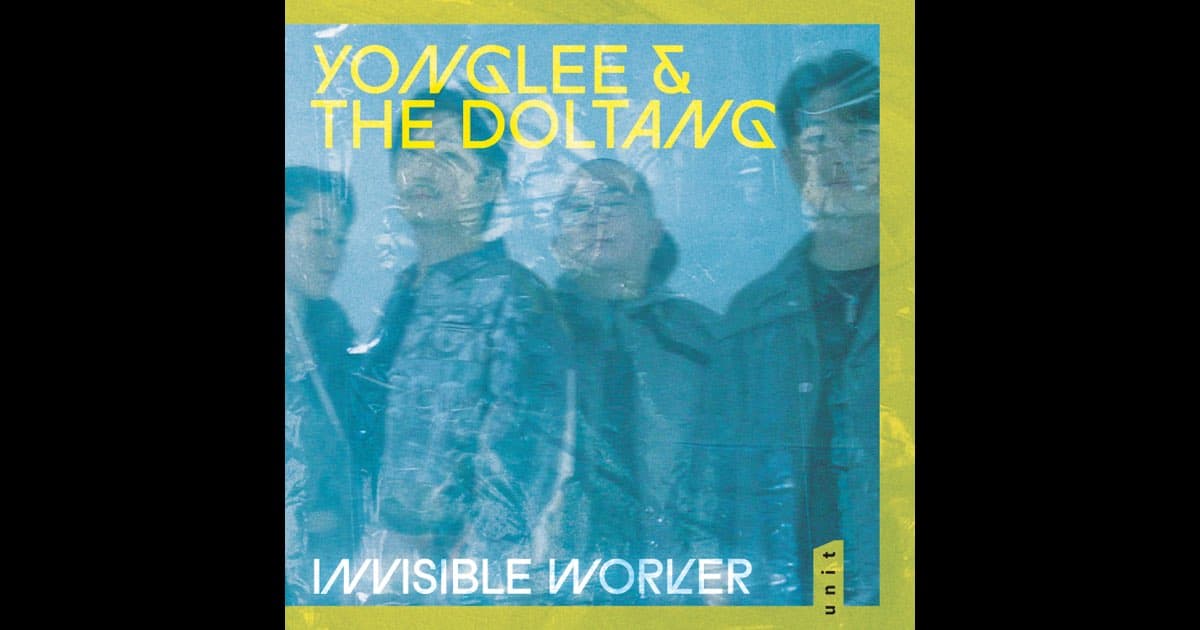
A Korean jazz band that hadn't released a single when they first appeared on Europe's biggest jazz stage has now gone one better. yonglee & the DOLTANG — a Seoul-based progressive jazz ensemble — won the International Debut Album of the Year at the 2026 Deutscher Jazzpreis (German Jazz Prize) for their debut album "Invisible Worker." The prize ceremony took place on April 25 in Bremen, during the 20th anniversary celebration of Jazzahead!, Europe's leading annual jazz trade fair. Along with the award came a monetary prize of €12,000, and the recognition marks a significant moment for Korean jazz on the international stage.
The win places yonglee & the DOLTANG in rare company. The International Debut Album category at the Deutscher Jazzpreis is fully global in scope, with submissions from jazz acts across Europe, Asia, the Americas, and beyond. For a band from Seoul to claim the prize — in competition with debut releases from established jazz markets — is not a routine outcome. It is also, given the band's unusual path to this moment, a kind of vindication.
The Band Behind the Record
yonglee & the DOLTANG takes its name from the Korean phrase 돌아온 탕자들, which translates as "returning prodigals" — a reference to the biblical parable of the prodigal son. The name is not incidental. The band's entire identity is built around the idea of outsiders who have been away from where they are supposed to be, returning on their own terms. In music, that translates into a deliberate rejection of genre boundaries and a willingness to push improvised jazz into territory that most jazz audiences wouldn't expect.
Led by musician Yong Lee (용리), the group builds its sound on a jazz foundation but weaves in rock, progressive metal, and electronic textures — often within the same composition. Complex, shifting time signatures are central to their approach. Yet despite the structural ambition, the performances maintain the spontaneous feel of live improvisation rather than the locked-in precision of composed music. Critics have compared the band's technical command to that of progressive metal group Dream Theater, while noting that the emotional intuition running through the performances is entirely their own.
The concept behind "Invisible Worker" is the experience of unacknowledged labor. The album gives voice to people whose contributions sustain systems and organizations but who go unseen — a theme that resonates far beyond any single industry or culture. Jazz has historically been a music of social witness, and yonglee & the DOLTANG have found a way to make that tradition speak to a contemporary Korean context without losing the thread that makes it universal.
What Germany Heard in 'Invisible Worker'
The selection committee's written evaluation of "Invisible Worker" for the Deutscher Jazzpreis was pointed. Juror Choi Seung-in wrote that the album "combines jazz with rock, progressive, and electronic sounds in a way that, despite its constant cross-genre composition, never loses sonic coherence — the accumulated experience of the musicians creates a unified, densely woven flow."
That sentence does a lot of work. It identifies exactly what makes the album unusual: cross-genre music that doesn't lose its center. Genre-blending in jazz has been attempted many times, often with results that serve multiple audiences without fully satisfying any of them. "Invisible Worker" apparently threads that needle. The judges heard a record that stretched in multiple directions simultaneously and remained coherent throughout.
The Deutscher Jazzpreis is administered by Initiative Musik, a German federal government agency that promotes German and international music. While "German" is in the title, the prize is genuinely international: the International Debut Album of the Year category accepts submissions from anywhere in the world. Winning it means winning against jazz debuts from markets that have been producing internationally recognized jazz for generations. That context makes the achievement harder to dismiss as a regional milestone.
"Invisible Worker" had also received recognition closer to home. Earlier in 2026, the album was nominated for Best Jazz Performance Album at the 23rd Korean Popular Music Awards (한국대중음악상), the country's most respected independent music prize. That nomination did not result in a win, but the pairing of Korean and European recognition in the same year signals that "Invisible Worker" is connecting with informed listeners across very different musical cultures.
How the Band Built an International Audience Without a Label
The 2026 Deutschen Jazzpreis win didn't emerge from nowhere. yonglee & the DOLTANG spent the years before their album's release building exactly the kind of sustained international presence that makes an award like this possible — and they did it without the infrastructure that usually supports that kind of career trajectory.
In 2024, the band was invited to perform at Jazzahead! in Bremen — as the only Asian act in the Showcase program that year. The invitation came before "Invisible Worker" had been released, before the band had singles, before they had much of a recorded catalog to speak of. The invitation was based entirely on the strength of what the Jazzahead! selection committee heard in the band's live sets and demo materials. They made the trip, played the showcase, and left with a new European audience.
That same year, they performed at the Jarasum International Jazz Festival in South Korea — one of Asia's largest jazz events — and then toured Germany, Austria, and Hungary. In 2025, the touring expanded to the Netherlands, the United Kingdom, and Poland. By the time "Invisible Worker" was officially released, yonglee & the DOLTANG had already cultivated real listeners across the continent — not just industry buzz, but audiences who had seen them in rooms.
It is the kind of deliberate, long-game approach to international music that Korean acts have rarely been able to execute in the jazz space. K-pop has global infrastructure and label support. K-drama has streaming platforms. Independent jazz from Seoul doesn't have either. yonglee & the DOLTANG built their European presence one show at a time.
What Comes Next
For 2026, the touring schedule continues at the same pace that has defined the band's international campaign. Upcoming confirmed dates include the Nattjazz Festival in Bergen, Norway; Jazzfest Budapest in Hungary; and further performances in Spain and Germany. The momentum is real, and the Deutscher Jazzpreis win will open doors that previously required a full cold-start introduction.
In a statement following the award announcement, band leader Yong Lee addressed both the personal and the broader cultural significance of the recognition. "Near a year since the album's release, it still sounds fresh every time I listen back," he said. "From preparing the album to the release tour and now this award — the entire journey has been a blessing."
He then turned to the wider context. "I hope this award can help Korean jazz gain just a little more international recognition," he said. It was a measured statement from someone who has spent years working without that recognition — and who now has a piece of evidence that it is beginning to arrive.
The K-wave has spent the past decade rewriting international perceptions of Korean popular culture. K-pop redefined what a Korean music export could look like at scale. Korean cinema reached global audiences through prestige festival circuits. Korean television earned its own dedicated streaming audiences worldwide. Jazz has been the persistent outlier — a genre with deep roots in Korean cultural life that has not found the same international crossover. yonglee & the DOLTANG's 2026 Deutscher Jazzpreis may not close that gap on its own. But it is a meaningful data point that the gap is getting smaller.
How do you feel about this article?
저작권자 © KEnterHub 무단전재 및 재배포 금지
Entertainment Journalist · KEnterHub
Entertainment journalist focused on Korean music, film, and the global K-Wave. Reports on industry trends, celebrity profiles, and the intersection of Korean pop culture and international audiences.
Comments
Please log in to comment