Yoo Young-woo Turns Radio Star Into a Vocal Showcase
 By Seung Jung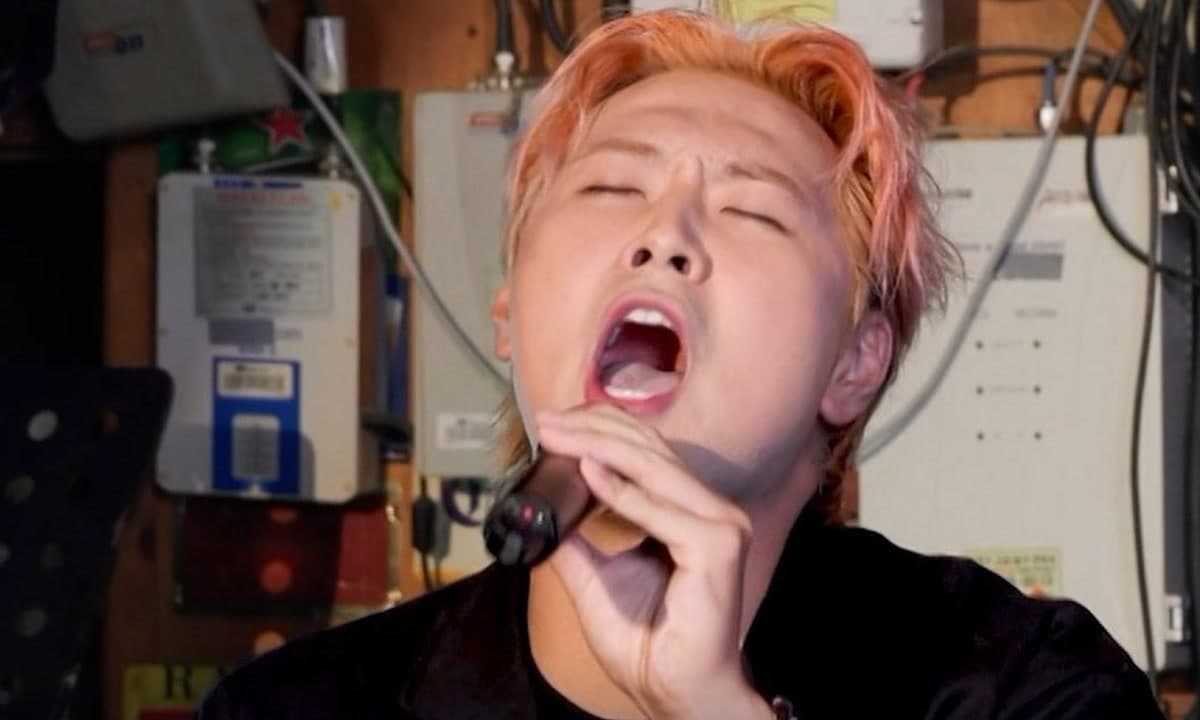
MBC Entertainment's official YouTube channel has turned one of summer's liveliest Radio Star moments into a highlight package, spotlighting comedian Yoo Young-woo as a variety performer whose singing has become part of his comic identity.
The 1,000-second video, uploaded on September 22, 2026, draws from MBC's August 26 broadcast of the Radio Star "HOPE ATTACK" special. The episode brought together Hwang Seok-jung, Lee Jun-hyuk, BTOB's Seo Eunkwang and Yoo Young-woo, but the newly released playlist-style clip places Yoo's vocal turns at the center. For viewers who missed the broadcast, the official edit works like a compact performance reel: ballad snippets, comic impressions, a perfect-pitch check, improvised music-making and a high-note contest opposite a respected K-pop main vocalist.
That combination gives the clip a clear K-entertainment hook. Korean variety shows have long rewarded guests who can cross the line between talent and self-parody, and Yoo's appearance fits that tradition neatly. He is introduced not as a singer trying to rebrand, but as a comedian willing to make his vocal ability part of the joke while still sounding good enough to surprise the room.
An official highlight built around a variety-show surprise
According to MBC Entertainment's official YouTube channel, the highlight includes performances connected to songs originally associated with M.C the MAX, DK of December, Naul, Toy, Park Jae-jung and Jung Joon-il. The selection matters because these are not throwaway choices. Many are Korean ballads that require control, range and dramatic confidence, which makes them ideal for a variety segment where a comedian can both impress the studio and undercut himself with timing.
The source video also lists a high-note battle with Seo Eunkwang, a perfect-pitch test and a section built around improvised composition. In a standard music program, those beats might be judged as technique. On Radio Star, they become character work. Yoo can sing, but the point of the segment is not simply that a comedian has a strong voice. The entertainment value comes from the gap between his comic persona and the sincerity required by the songs.
That gap is why the official upload feels more substantial than a routine clip dump. It packages the broadcast around a single idea: Yoo Young-woo's voice is funny because it is unexpectedly competent, and it is impressive because he never lets the comedy disappear. For a show built on quick exchanges and guest chemistry, that is useful material. The viewer gets the payoff of live-room surprise without needing to follow the full episode from start to finish.
The edit also gives international K-entertainment fans a simple entry point into a very Korean variety rhythm. Radio Star is known for interviews that can turn a guest's anecdote, habit or small embarrassment into a performance beat. In this case, singing becomes the shared language. Even without understanding every studio aside, viewers can read the structure: a comedian steps up, the room tests how far the bit can go, and the joke lands harder because the singing is not a bluff.
Seo Eunkwang gives the segment a K-pop anchor
Seo Eunkwang's presence gives the highlight its strongest K-pop connection. Reports ahead of the episode noted that the BTOB member was making his first Radio Star appearance about 14 years after the group's 2012 debut. That detail adds its own layer of curiosity. Seo has been familiar to fans as BTOB's leader and main vocalist, and he has also built a reputation as an idol who understands variety television's demand for flexibility.
During the broadcast cycle, Korean outlets reported that Seo discussed why he had taken so long to appear on the program and reflected on the things he had done to survive in entertainment shows. The image that emerged was less of a polished idol guarding his mystique and more of a veteran performer who knows that variety work often requires immediate commitment. He reportedly revisited fan-loved aegyo bits, talked about saying yes to gags and explained how he became known as someone who would try whatever the set asked of him.
That context changes the Yoo-SEO vocal contest from a simple novelty into a meeting of two entertainment types. Seo represents the trained idol vocalist who has learned variety's pace over many years. Yoo represents the comedian whose musical skill becomes sharper when it is placed inside a comic frame. The point is not that one side defeats the other. The point is that both understand the assignment: deliver enough real ability to make the segment credible, then let the studio play with the tension.
Seo's own career update added more musical weight to the episode. Reports connected his appearance to his role as Wolha in the musical Gwanghwamun Sonata, a gender-free character he was preparing to interpret in his own style. For readers outside Korea, that is a useful reminder that idol vocalists often move across pop, musicals, television and variety rather than staying in one lane. Seo's Radio Star turn sat at the intersection of all those roles.
Yoo Young-woo uses music without abandoning comedy
Yoo Young-woo's side of the story is equally important because the highlight is ultimately framed around him. MyDaily reported that he made his first appearance on the program during the "HOPE ATTACK" special and leaned into his lower public profile with a self-aware entrance gag involving a T-shirt identifying him as a Radio Star cast member. That is the kind of detail Korean variety often rewards: the guest arrives with a small prop, turns insecurity into a joke and lets the hosts build from there.
He also reportedly shared a story involving girl group RESCENE, describing himself in comic terms as someone who had noticed the group early. In the same episode, he performed impressions and used a singing persona connected to Jung Joon-il's ballad style. Those details explain why the official YouTube highlight can move so naturally between music and jokes. Yoo's singing is not treated as a separate talent-show intermission. It is part of the same performance vocabulary as impressions, wordplay and self-deprecation.
That may be the clip's most interesting entertainment lesson. In K-variety, a surprise skill rarely stands alone. A comedian who sings well still has to make the room laugh. A singer who appears on a talk show still has to reveal something more spontaneous than a stage performance. Yoo's reported comment that he wants to be funnier than he is musical captures that balance. He can accept praise for his voice, but the comic priority remains intact.
The playlist format helps reinforce that balance. By gathering multiple singing moments into one official video, MBC gives Yoo a clearer identity for casual viewers: not just "the funny guest from that episode," but the comedian whose voice kept turning bits into miniature performances. It also makes the clip easier to share among fans who follow variety through short highlights rather than full broadcasts.
Why the clip works beyond the original broadcast
The timing of the upload is also notable. More than three weeks after the August 26 broadcast, MBC's September 22 highlight gives the segment a second life on YouTube. That is now a common strategy for Korean broadcasters, whose variety moments often travel farther as official clips than they do as linear television scenes. A strong segment can be rediscovered through search, fan edits, recommendation feeds and idol fandom communities long after the episode airs.
For BTOB fans, Seo Eunkwang's involvement gives the video a reason to click. For comedy viewers, Yoo Young-woo's performance offers a compact showcase of his appeal. For general K-entertainment audiences, the clip captures a familiar but still effective formula: respected vocalist meets unexpected challenger, the studio reacts in real time, and the guest turns skill into personality.
The fact that the upload comes from MBC Entertainment's official channel is important as well. It gives viewers a clean way to revisit the segment, avoiding the fan-cam or unofficial clip problem that often surrounds viral variety moments. The official source also lets the video function as a reference point for the episode's best-known musical beats, from the high-note contest to the improvised-song section.
As a news item, the highlight is not a comeback announcement or a chart record. Its value is softer but still real: it shows how Korean variety continues to create discoverable moments by mixing idol credibility, comic vulnerability and broadcast editing. Yoo Young-woo benefits because the clip gives his first Radio Star appearance a memorable afterlife. Seo Eunkwang benefits because the segment reinforces his dual strength as a vocalist and variety-ready idol. MBC benefits because the official upload turns a studio exchange into searchable K-entertainment content.
The result is a cheerful reminder of why Radio Star remains useful to performers across generations. A guest can arrive with a story, a voice, a nervous bit or a half-joking rivalry, and the show can still build a moment that feels made for replay. In Yoo Young-woo's case, the replay now has a home on MBC Entertainment's YouTube channel, where the punchline and the high note can keep working together.
How do you feel about this article?
저작권자 © KEnterHub 무단전재 및 재배포 금지
Senior Entertainment Correspondent · KEnterHub
Senior entertainment correspondent with a wide-angle view of Korean show business. Seung Jung covers celebrity news, variety television and award season, and writes the interviews and features that connect individual stories to the larger currents of Korean entertainment.
Comments
Please log in to comment