Yoon Eun Hye Opened Up About Social Media Depression — Her Answer Is What Every Fan Needed to Hear
The Baby V.O.X idol-turned-actress shares how she overcame comparison culture and found peace
 By Jang Hojin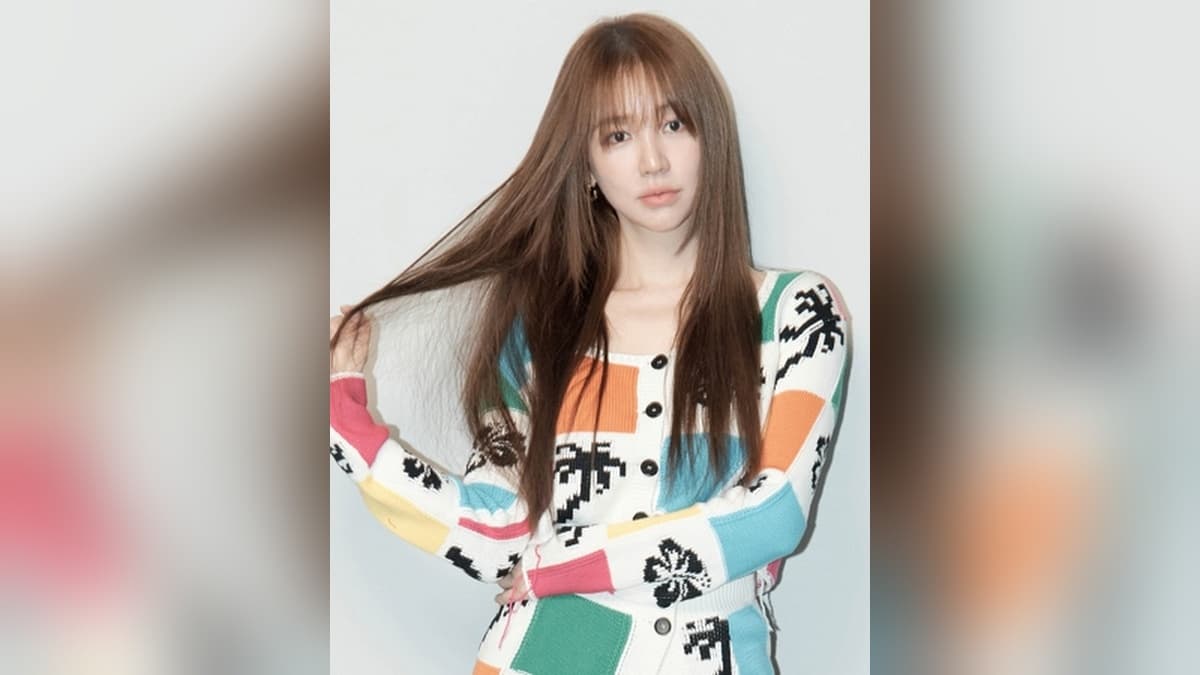
Yoon Eun Hye has been a familiar face in Korean entertainment for nearly three decades — first as a member of first-generation idol group Baby V.O.X, then as one of the most recognized actresses of the K-drama boom era, with Princess Hours and Coffee Prince cementing her status as a household name. But in a recent YouTube video, she stepped away from the polished surface that celebrity tends to require and talked honestly about something a lot of people feel but rarely admit: how social media made her feel small.
The conversation started with a fan. Someone had written to Yoon Eun Hye about the pain of comparing themselves to others online — the endless scroll of glamorous lives, peak moments, and curated success that makes your own ordinary Tuesday feel inadequate by comparison. Yoon Eun Hye's response was to share that she hadn't been immune to it either. Not even close.
What She Actually Said
"When I saw other celebrities at their peak on social media," she shared, "I felt small. I felt like I had lost my influence, like I had less than I used to." It's a disarmingly direct thing for someone in her position to say. K-pop and Korean drama culture are built substantially on the projection of confidence and image — the idea that stars occupy a different and more elevated category of existence. Yoon Eun Hye was saying something different: that the same apps everyone else scrolls through had the same effect on her that they have on everyone else.
The specifics matter here. She wasn't describing a vague sense of unease or a fleeting bad day. She was describing depression — a period of genuine unhappiness brought on by the accumulation of comparison, the sense that her own life and career were somehow diminishing against the backdrop of other people's highlighted reels. For someone who spent years as one of the most recognized women in Korean entertainment, that kind of vulnerability is striking.
It's also, of course, exactly why the video resonated as strongly as it did. Fans don't respond to celebrities admitting to what celebrity is supposed to protect you from because it's surprising in an abstract way. They respond because it confirms something they already suspected: that the gap between how lives look on screens and how they feel in practice is universal, regardless of how many cameras have been pointed at you.
How She Found Her Way Out
Yoon Eun Hye didn't just describe the problem — she talked about how she moved through it. The shift, as she framed it, came from a change in perspective rather than a change in circumstance. She stopped measuring her current life against the high-water marks of others' most successful moments, and started paying attention to what was actually in front of her.
Gratitude is a concept that can sound like a wellness platitude when deployed carelessly, but the way Yoon Eun Hye described it was more concrete. She talked about finding a sense of ease in her current life — an appreciation for things that weren't necessarily dramatic or impressive but were genuinely hers. The career at its most visible was exciting and had its rewards, but it also came with pressures and performances of self that were exhausting in ways she didn't fully recognize until they were no longer constant.
The quieter life she has now, in contrast, offers something different: the ability to define what a good day looks like on her own terms rather than against an external benchmark. That realization — that you get to decide what you're measuring against — is simple in its articulation and genuinely hard to internalize. But it's what she offered to the fan who asked, and it's what the broader audience watching seemed to receive.
Yoon Eun Hye's Career in Context
To understand why this moment carries the weight it does, it helps to know where Yoon Eun Hye has been. Baby V.O.X, the group she debuted with in the late 1990s, is considered one of the foundational acts of the first generation of K-pop — a group that helped establish the template for idol culture that would eventually scale into a global phenomenon. She was part of something that mattered historically before she knew it would matter historically.
Her transition into acting brought a different kind of recognition. Princess Hours, the 2006 romantic fantasy drama in which she played the lead, became a cultural touchstone of the mid-2000s Korean Wave. Coffee Prince, which followed in 2007, cemented her status as a leading actress capable of carrying a drama on her presence alone. Both shows remain beloved by fans who discovered them during the first wave of international K-drama viewership, and they introduced Yoon Eun Hye to audiences far beyond South Korea.
That arc — idol to top-tier actress during the most formative period of Korean entertainment's global expansion — means that Yoon Eun Hye's career is woven into the history of the industry itself. Which makes her willingness to sit with a YouTube camera and talk about feeling diminished by Instagram all the more significant. She is not someone who needed the sympathy. She chose to offer something more useful instead.
The Larger Conversation About Comparison Culture
Yoon Eun Hye's video lands in the middle of an ongoing and intensifying conversation about social media and mental health — one that is particularly acute in Korean entertainment, where the pressures on public figures are extreme and the culture of performance has historically left little room for visible vulnerability.
In recent years, more Korean celebrities have begun speaking openly about anxiety, depression, panic disorders, and the psychological toll of sustained public life. Each time someone with name recognition and real cultural weight adds their voice to that conversation, it shifts the terms slightly — makes it a little harder to dismiss mental health struggles as personal weakness and a little easier for fans to seek help or simply feel less alone in their own experiences.
Yoon Eun Hye's particular framing — that social media comparison is something she has experienced and that the path through it involves reorienting toward your own life rather than measuring against others' — is useful advice precisely because it's grounded in something specific. She's not recommending a program or a philosophy. She's describing what worked for her, in honest and practical terms, in response to a fan who was struggling.
That kind of honest, direct, personal exchange is increasingly what fans come to celebrity YouTube channels looking for. Not behind-the-scenes access to a glamorous life, but confirmation that the person on the other side of the screen is navigating the same basic human challenges — and finding their way through.
From what she shared, Yoon Eun Hye has found hers. And she seems genuinely at ease saying so.
How do you feel about this article?
저작권자 © KEnterHub 무단전재 및 재배포 금지
Entertainment Journalist · KEnterHub
Entertainment journalist specializing in K-Pop, K-Drama, and Korean celebrity news. Covers artist comebacks, drama premieres, award shows, and fan culture with in-depth reporting and analysis.
Comments
Please log in to comment