YoonA's 'The Tyrant's Chef' and the Formula Behind K-Drama's Latest Prestige Hit
 By Jang Hojin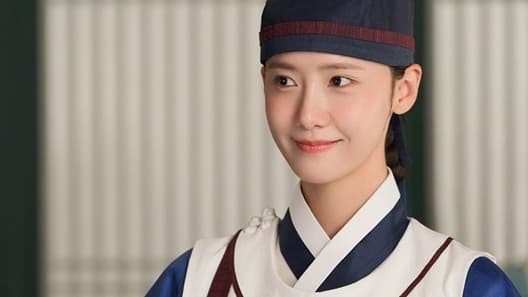
YoonA made a calculated risk with The Tyrant's Chef that paid off spectacularly. The tvN drama, which premiered August 23, 2025, paired the Girls' Generation member with a time-travel premise and a Joseon-era kitchen — an unlikely combination that drew 17% peak ratings and became Netflix's most-streamed K-drama in over 20 countries. But in the first week of August, as production wrapped and promotional materials began circulating, the show's trajectory was anything but predictable.
Also known by its international title Bon Appétit, Your Majesty, the drama stars YoonA as Yeon Ji-yeong, a French-trained chef who wins a prestigious culinary competition before unexpectedly time-traveling to the Joseon dynasty. There she encounters King Lee Heon, played by Lee Chae-min — a ruler notorious both for his refined palate and his tyrannical reputation. What follows is a blend of culinary drama, palace intrigue, and cross-temporal romance that the show's creators gambled audiences were ready for.
YoonA's Strategic Pivot from Music to Drama
YoonA has maintained a parallel career in acting since her Girls' Generation days, but her choices have sharpened considerably in recent years. Her 2023 drama The King's Affection demonstrated range; her 2024 film work built credibility in dramatic roles. The Tyrant's Chef represented a third move: into the prestige hybrid genre that Korean streaming had been developing since Mr. Queen proved audiences would accept historical comedies with modern sensibilities.
The production was simultaneously broadcast on tvN and streamed on Netflix and Tving — a triple-platform approach that had become standard for high-budget Korean productions but still carried risk. Traditional broadcast dramas measured success in overnight ratings; streaming-first audiences measured it in global viewership hours. Achieving strong numbers across both metrics required a show that could satisfy distinctly different viewing habits, and not every production managed both.
The Tyrant's Chef managed both. The 17% peak rating on traditional cable television was exceptional for the period, surpassing most competing dramas. The Netflix global performance, with simultaneous top-10 placements in markets ranging from Thailand to Mexico, reflected the show's intuitive appeal to international viewers who had already built an appetite for Korean historical fiction through shows like Under the Queen's Umbrella and Mr. Queen.
The Culinary Drama Formula
Food has always carried symbolic weight in Korean drama, but The Tyrant's Chef used it architecturally. Each episode's culinary centerpiece — a particular dish, preparation method, or feast — served as the episode's emotional metaphor. When Ji-yeong prepares a simple rice porridge for the king during his illness, the scene functions simultaneously as plot advancement, character revelation, and cultural commentary on the relationship between nourishment and power.
This integration was not accidental. The production team reportedly worked with food historians and culinary consultants to ensure that the dishes depicted in the Joseon setting were period-accurate while remaining visually appealing for contemporary audiences. The modern kitchen scenes, set in Ji-yeong's competition-era life, featured contemporary Korean-French fusion techniques. The contrast between the two cooking environments became a visual metaphor for the show's central tension: the distance between where Ji-yeong came from and where she found herself.
The culinary drama subgenre had proven viable in Korean content before, with shows like Chocolate and Paik's Spirit establishing food-as-narrative precedent. But The Tyrant's Chef elevated the formula by combining it with the fish-out-of-water time-travel structure that Korean audiences had consistently rewarded with strong viewership.
Lee Chae-min's Breakout Moment
While YoonA provided the marquee name, The Tyrant's Chef served as a career-defining moment for Lee Chae-min, whose portrayal of King Lee Heon drew comparisons to Kim Jung-hyun's acclaimed performance in Mr. Queen. The role required simultaneous comedic timing and emotional depth — a combination that younger actors frequently struggle to balance in period dramas, where the formal constraints of historical language and court protocols add additional performance layers.
Lee Chae-min's approach to the king's dual nature — genuinely tyrannical in court settings, unexpectedly vulnerable when confronted with Ji-yeong's modern directness — gave the show its emotional core. The audience could believe simultaneously that this king was dangerous and that he was capable of change. Without that balance, the romance premise would have collapsed into either comedy or tragedy rather than occupying the productive middle space where Korean drama excels.
Impact and Global Context
By early August, as the first promotional trailers circulated ahead of the August 23 premiere, industry analysts were noting that the summer 2025 K-drama slate was unusually strong. Competition from domestic productions had intensified across all major streaming platforms, and the pressure on individual shows to differentiate through concept rather than budget had risen accordingly.
The Tyrant's Chef differentiated through specificity: a clearly defined concept (culinary time-travel romance), a star with pre-existing global recognition (YoonA), and a visual identity rooted in the contrast between historical and contemporary Korean aesthetics. The summer 2025 drama season, as it unfolded, would demonstrate that this combination of elements remained reliable — provided the execution matched the ambition.
Future Outlook
The show's success confirmed what its August promotional rollout suggested: Korean dramas with strong conceptual hooks and dual-market appeal were increasingly dominant globally. YoonA's performance earned significant award season attention at end-of-year ceremonies, and Lee Chae-min's career trajectory changed fundamentally in the months following the broadcast finale.
The Tyrant's Chef also proved a key data point in an ongoing industry debate about traditional broadcast ratings versus streaming metrics. Its ability to score both simultaneously suggested the two audience bases were less separate than analysts assumed. Productions with the right concept could serve both — reaching a truly cross-generational, cross-geographic audience that neither broadcast nor streaming alone could deliver. In the long arc of Korean drama's global expansion, this was the lesson that summer 2025 wrote most clearly.
How do you feel about this article?
저작권자 © KEnterHub 무단전재 및 재배포 금지
Entertainment Journalist · KEnterHub
Entertainment journalist specializing in K-Pop, K-Drama, and Korean celebrity news. Covers artist comebacks, drama premieres, award shows, and fan culture with in-depth reporting and analysis.
Comments
Please log in to comment