Yuqi's One-Year Chart Reign in China Proves K-Pop's Solo Economy Has a New Blueprint
52 consecutive weeks in Tencent Music's Top 10, a Woman of the Year title, and (G)I-DLE's Taipei Dome first — Yuqi's 2025-2026 run is rewriting what's possible for K-pop soloists in China
 By Jang Hojin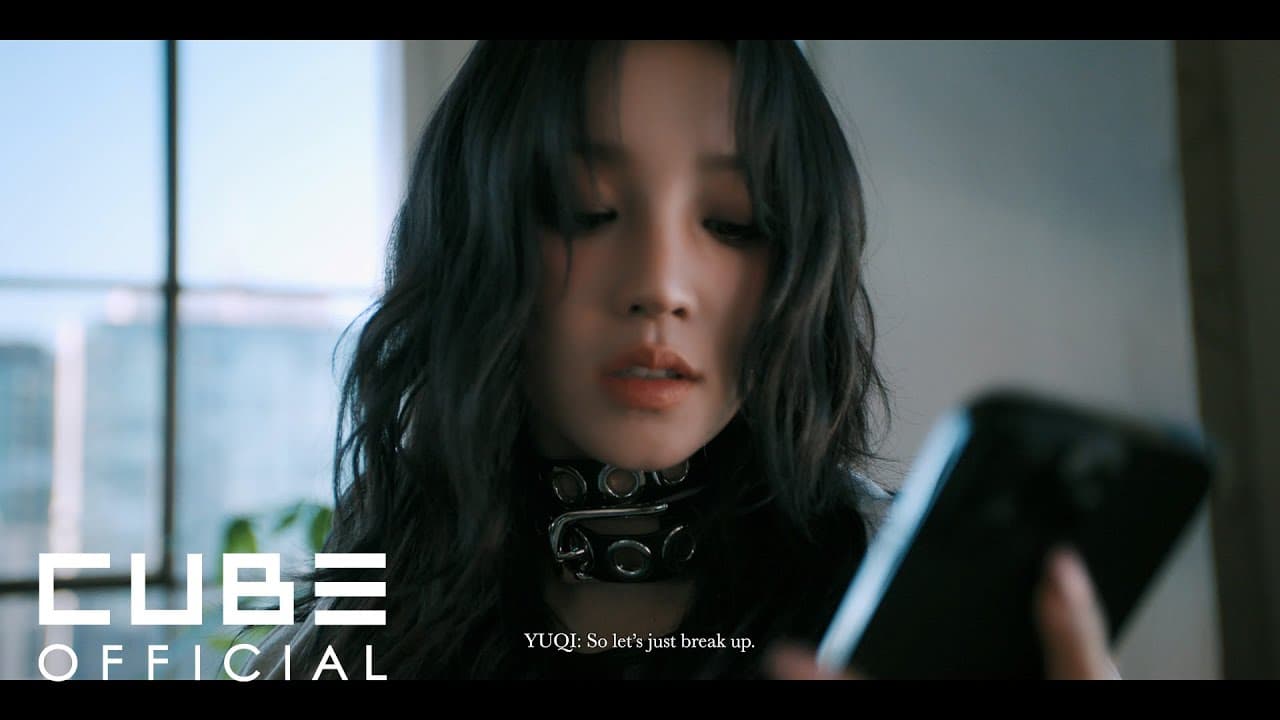
A single track, released quietly as a digital single last March, has now spent an entire year inside the Top 10 of China's largest music platform — and its creator isn't slowing down. As of March 23, 2026, Yuqi's self-composed "Radio (Dum-Dum)" has charted for 52 consecutive weeks in the Top 10 of Tencent Music Entertainment's Korea Chart, a longevity record that no other K-pop soloist has matched on the platform. For a song built on boom-bap rhythms and a metaphor about tuning into a lost lover like a radio frequency, the durability is remarkable. For the artist behind it, it's just one data point in a much larger story about how a Chinese-born K-pop idol became the most commercially dominant female soloist in the world's second-largest music market.
52 Weeks and Counting: What "Radio (Dum-Dum)" Tells Us About Yuqi's China Strategy
The song's origin story matters. Yuqi first performed "Radio (Dum-Dum)" during (G)I-DLE's 2024 world tour as a solo stage piece — a self-written track that she chose to hold back from the group's I SWAY album because she wanted it for herself. When it finally arrived as a digital single on March 17, 2025, the response in China was immediate: number one on QQ Music's bestseller album charts in both daily and weekly categories. But first-week spikes are common in K-pop. What followed was not.
Week after week, "Radio (Dum-Dum)" held its position. By summer 2025, it had passed 30 weeks in the Top 10. By autumn, it crossed 40. The song earned a Tencent Music Gold certification — denoting 500,000 equivalent sales across downloads and streams — and then kept climbing. The 52-week milestone, reached this week, means the track has been a Top 10 fixture for a full calendar year without interruption. In a streaming landscape where songs typically cycle through charts in weeks rather than months, this kind of persistence signals something beyond a hit: it signals a permanent audience.
The Numbers Behind Tencent's "Woman of the Year"
On March 8, 2026 — International Women's Day — Tencent Music named Yuqi one of its "Women of the Year in Music 2026" under the theme "Where she is, there is light." The honor wasn't ceremonial. It was backed by a statistical profile that reads like a case study in platform dominance.
Across 2025, Yuqi entered the Tencent Music Korea Chart 147 times. She reached the Top 20 on 122 of those occasions. She swept the platform's year-end awards: Singer of the Year, Solo Singer of the Year, Song of the Year for "FREAK," and EP/Single of the Year for her September 2025 release Motivation. Both "Radio (Dum-Dum)" and "FREAK" earned Gold certifications — each representing 500,000 equivalent sales. These are not vanity metrics. They represent sustained commercial activity on a platform with over 800 million users.
The keyword Tencent chose to define Yuqi was "vitality" (元气) — a nod to both the energy of her performances and the relentlessness of her commercial output. In a single calendar year, she released a debut EP (YUQ1, which sold 550,170 copies in its first week — the highest debut-EP first-week sales by a female K-pop soloist), a digital single, and a follow-up single album, while maintaining solo stages on a world tour. The pace would be aggressive for any artist. For one simultaneously promoting as part of a five-member group, it's exceptional.
Why China, and Why It Matters for K-Pop's Solo Economy
Yuqi's dominance in China is not accidental — she was born in Beijing, is a native Mandarin speaker, and has cultivated her Chinese audience with deliberate precision. But the strategic significance extends beyond her personal biography. China represents the largest untapped market for K-pop solo artists, and Yuqi's numbers demonstrate what's possible when an idol builds a genuine domestic presence rather than relying on the reflected glow of group activities.
Consider the landscape. Most K-pop groups treat China as a touring market — they perform concerts, sell merchandise, and return to Seoul. Individual members with Chinese heritage occasionally appear on Chinese variety shows. But sustained, chart-topping solo music careers in China remain extraordinarily rare for K-pop idols. Yuqi has built one. Her recent selection to perform "Magic Together," the 10th-anniversary theme song for Shanghai Disneyland, signals that her Chinese profile has expanded beyond the music charts into mainstream cultural visibility.
This matters for the broader K-pop industry because the solo economy is increasingly where growth lives. As groups mature and members pursue individual careers, the ability to build standalone commercial power in major markets becomes a competitive differentiator. Yuqi's China playbook — self-composed music, platform-specific engagement, brand partnerships, and cultural integration — offers a template that other Chinese-heritage K-pop idols will inevitably study.
From Solo Stages to Stadium Floors: (G)I-DLE's Parallel Momentum
Yuqi's solo ascendance hasn't come at the expense of her group. On March 7, just weeks before the 52-week chart milestone, (G)I-DLE performed at Taipei Dome — becoming the first K-pop girl group in history to headline the venue. The concert drew 36,000 fans to a show that sold out immediately upon ticket release. For context, Taipei Dome is a venue that has hosted baseball championships and international concerts; filling it with a single-artist K-pop audience is a statement about the group's regional power.
The Taipei show was the first international stop on (G)I-DLE's 2026 "Syncopation" world tour, following two sold-out dates at Seoul's KSPO DOME in February. The tour continues through Bangkok, Melbourne, Sydney, Singapore, Yokohama, and Hong Kong — where the group will perform at the 50,000-capacity Kai Tak Stadium. The trajectory is upward at every level: bigger venues, faster sellouts, broader geographic reach.
What makes this parallel momentum notable is how it feeds back into Yuqi's solo brand. Every group concert introduces her to audiences who then discover her solo catalog. Every solo chart record raises the group's collective profile. The symbiosis is rare in K-pop, where solo activities frequently strain group dynamics. For (G)I-DLE, the opposite appears true — individual success amplifies collective power.
The Year Ahead: KOMCA, Disney, and the Question of a Solo Album
In January 2026, the Korea Music Copyright Association (KOMCA) announced Yuqi's promotion to full membership — a recognition of her body of work as a songwriter and composer. For an idol who composed and wrote every track on her debut EP, the membership validates what her chart numbers already proved: Yuqi is an author, not just a performer.
With her Shanghai Disneyland collaboration, her Tencent Music Woman of the Year title, and a world tour that shows no signs of decelerating, the question hovering over 2026 is whether Yuqi will release a full-length solo album. Her releases to date — an EP, two digital singles, and a single album — have been deliberately paced, each one building on the last. A full album would be the logical next step, and the Chinese market appetite is clearly there.
But the deeper story isn't about what comes next. It's about what 52 consecutive weeks in the Top 10 already proves. In the attention economy of modern music, where songs are consumed and discarded at streaming speed, Yuqi's "Radio (Dum-Dum)" has done something almost anachronistic — it has endured. Not through algorithmic manipulation or promotional spending, but through the simplest mechanism in music: people kept listening. For a self-composed track by a K-pop idol on a Chinese streaming platform, that kind of organic longevity doesn't just set a record. It sets a precedent.
How do you feel about this article?
저작권자 © KEnterHub 무단전재 및 재배포 금지
Entertainment Journalist · KEnterHub
Entertainment journalist specializing in K-Pop, K-Drama, and Korean celebrity news. Covers artist comebacks, drama premieres, award shows, and fan culture with in-depth reporting and analysis.
Comments
Please log in to comment