Can Kim Hye Yoon Give Showbox a Third 2026 Hit?
Salmokji arrives after Showbox turned If We Were and A Man Who Lives with the King into the year's two biggest local hits.
 By Park Chulwon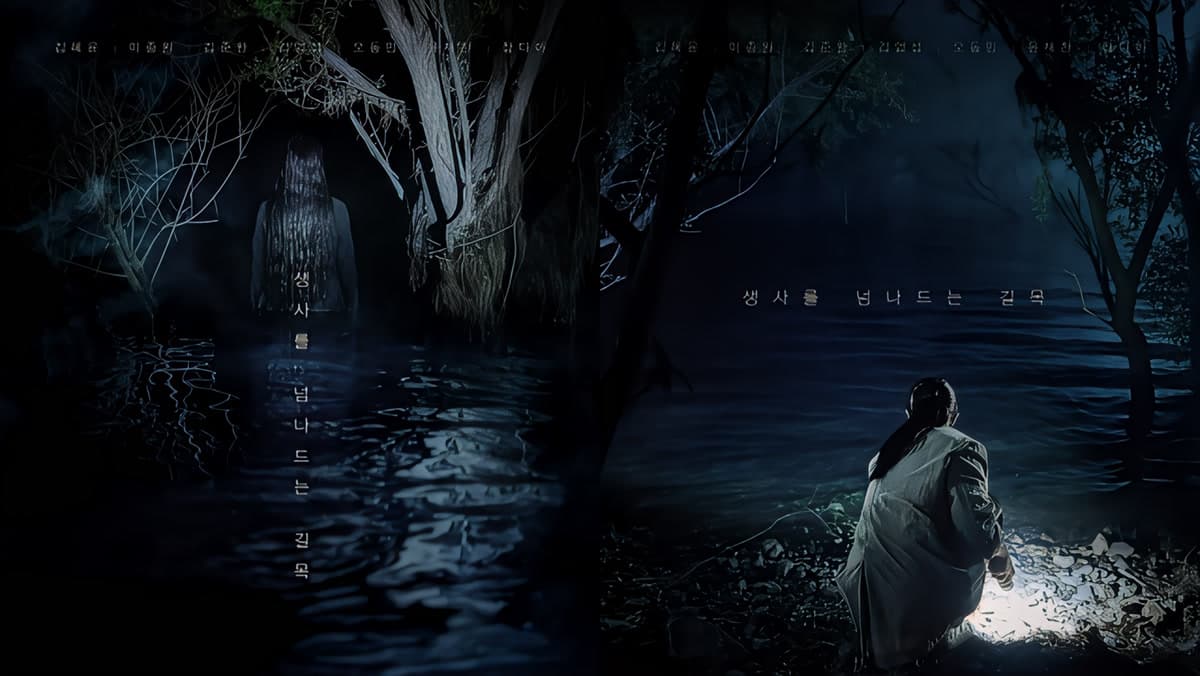
Showbox was supposed to spend 2026 rebuilding after a weak year at the Korean box office. Instead, the distributor has become the story of the season, riding two hits in a row and now lining up a third swing with Salmokji, a Kim Hye Yoon-led horror film set for April 8. In a market that has spent years asking whether local theaters can still create must-see events, Showbox has suddenly become the clearest argument that they can.
The company’s momentum is not built on one breakout title alone. It comes from a carefully staggered run that started with the romance If We Were, accelerated with the period drama A Man Who Lives with the King, and now turns toward an immersive supernatural thriller aimed at younger moviegoers. That genre spread matters because it suggests Showbox is not just benefiting from one lucky release window. It is testing whether different kinds of Korean films can still mobilize audiences when the hook is strong enough.
That is why Salmokji has become more than a simple April release. It now carries the weight of a bigger question: can Showbox turn one strong quarter into a genuine comeback, and can Kim Hye Yoon help lead the next phase of that run?
How Showbox Built Its Surprise Run
The numbers explain why the industry is paying attention. According to Korean reports published in mid-March, Showbox’s two early 2026 releases, If We Were and A Man Who Lives with the King, had already drawn a combined 16.19 million admissions by March 18, giving the company a market share of 56.5 percent for the year at that point. In a fragmented theatrical environment, that kind of concentration is rare. It means one distributor has effectively shaped what much of the domestic audience is choosing to watch.
If We Were, a romance anchored in memories of first love, reportedly drew about 2.47 million viewers and generated ticket revenue of roughly 24.4 billion won. Korean coverage said the film’s production cost was about 3 billion won, a reminder that a mid-budget title can still outperform expectations if the emotional pitch is clear and the target audience shows up. Audience reaction reportedly spilled onto social media, where viewers shared their own breakup stories and nostalgia for the film’s early-2000s mood and soundtrack.
The larger phenomenon, though, has been A Man Who Lives with the King. On March 20, local reports said the film had passed 14 million admissions, pushing it above Avengers: Endgame in Korea’s all-time box office rankings and making it the most-watched Korean film released after the COVID-19 pandemic. Another Korean report said the film’s cumulative revenue had reached about 142.5 billion won, while an earlier March 18 industry piece put its market haul above 132.4 billion won. The exact total kept rising because the film kept holding.
That staying power matters as much as the raw score. Showbox told Korean media that the film’s cross-generational message, its focus on the exiled life of the deposed young king Danjong, and the cast’s direct contact with audiences through stage greetings all helped turn early interest into sustained word of mouth. In other words, the distributor did not just open the film well. It found a way to keep the conversation alive.
English-language coverage underlined that the success was not limited to Korea. A March 13 report said A Man Who Lives with the King had passed 12 million admissions on its 36th day and was still No. 1 in its fifth week. The same report said its North American release had grossed $1.79 million as of March 9 and expanded to about 150 theaters across the United States and Canada, a notable footprint for a Korean film. For Showbox, that kind of overseas extension adds something that domestic market-share headlines do not capture: the sense that one title can strengthen the distributor’s global profile while it is still dominating at home.
The hit also gave Showbox a milestone of its own. Korean media described A Man Who Lives with the King as the company’s seventh 10-million-admission title, following major commercial landmarks such as Taegukgi, The Host, The Thieves, Assassination, Taxi Driver, and Exhuma. That history does not guarantee the next success, but it does show that Showbox still knows how to build event cinema when it has the right package.
Why Salmokji Is the Real Test
If the first two hits proved that viewers would return for romance and historical drama, Salmokji is asking whether the same audience energy can transfer into horror. The film follows a production crew that returns to a reservoir after a mysterious figure appears on road-view footage, only to confront something waiting in the dark water. The setup is easy to grasp even for international readers who do not track Korean genre films closely: a cursed location, a visual mystery, and a group of people who knowingly walk back into danger.
That simplicity is one reason the project looks commercially smart. Korean press coverage says the film was inspired by a well-known local ghost story tied to the Salmokji reservoir, giving it a built-in layer of folklore recognition. At the same time, director Lee Sang Min has framed the movie less as a conventional ghost tale than as an "experiential" horror piece designed to make viewers feel as if they are being lured in with the characters. Reports from the March 24 press screening said the film is also being positioned for ScreenX and 4DX, which fits that strategy. If the movie works, the venue itself becomes part of the sales pitch.
The casting also looks deliberate. Kim Hye Yoon, who expanded her reach with television roles before stepping into this darker material, gives the film an identifiable lead for younger viewers. Lee Jong Won, Kim Jun Han, Kim Young Sung, Oh Dong Min, Yoon Jae Chan, and Jang Da A round out the ensemble, giving the film a mix of rising and recognizable faces rather than betting everything on one star. That is often a useful way to sell a horror film, where atmosphere and group dynamics can matter as much as marquee power.
Press coverage from the screening gave a clearer sense of what the cast and director are selling. Kim Hye Yoon said she enjoys horror films and called the script exciting enough that she believed the role would become a valuable part of her career. Lee Sang Min said his goal was to make viewers feel as if they were being possessed by the water ghost themselves, using road-view imagery and distorted spatial perspective to create that sensation. He also said he wanted to find eerie images that only a water-ghost story could produce, rather than falling back on generic horror iconography.
Other details helped the project feel more tangible. Korean reports said Lee Jong Won spent three months training in water, practicing twice a week before filming key underwater scenes. Cast members described the real reservoir as physically unsettling, with black water, tangled branches, mud underfoot, and weak phone signals that seemed to return only near the water. Kim Jun Han even shared one of the production’s creepier stories, saying staff members believed they had seen a child pass through the set and later experienced lights switching on and off in their lodging. Whether audiences take that as folklore, marketing, or genuine set superstition, it feeds exactly the kind of atmosphere a horror campaign wants.
The online response described in Korean coverage points in the same direction. Reports said viewers were already adjusting trailer brightness, freezing frames, and trading theories about hidden figures and clues. That kind of behavior matters because it turns a trailer into a puzzle. Instead of passively receiving promotional material, fans begin doing free interpretive labor for the film, extending its life across communities before release day even arrives.
What This Means for the 2026 Box Office
There is also a wider industry angle here. Showbox told local media that the lesson of its rebound is simple: if the content is compelling, going to a theater can still feel attractive. That sounds obvious, but it is a meaningful statement in a market where distributors have spent years wondering whether audiences would only move for giant franchises, nostalgia-driven spectacles, or rare social phenomena. Showbox’s 2026 slate suggests another answer. A romance can work if it triggers memory. A period drama can work if it creates emotional afterglow and repeat viewings. A horror film can work if it promises a sensory experience people do not think they will get at home.
That is also why Salmokji feels like a strategic test rather than just the next title on a release calendar. Korean reports said the film was made for about 3 billion won, with break-even estimated at around 800,000 admissions. That is a far smaller mountain than the one A Man Who Lives with the King had to climb, but the symbolic value may be larger than the threshold itself. If Showbox can move from a romance to a period blockbuster to a medium-scale horror release without losing audience trust, the company will have shown that its recovery is structural, not accidental.
It also has more waiting in the wings. Korean media has already pointed to the May release of Yeon Sang Ho’s Gunche, which would mark Jun Ji Hyun’s return to the big screen, plus later titles such as Blizzard and the series Delusion. In that sense, Salmokji sits in the middle of a larger transition. A win would not just complete a three-film streak. It would build confidence heading into a broader slate that Showbox clearly hopes will restore profitability after last year’s slump.
For now, though, the immediate intrigue is narrower and more exciting. Can Kim Hye Yoon convert curiosity into ticket sales? Can a reservoir ghost story become the next communal theater experience? And can Showbox keep proving that the Korean box office is still willing to rally around local films when the concept, timing, and audience hook all line up?
Those questions will not be settled until Salmokji opens on April 8. But the conditions for a real test are already in place. Showbox has the market’s attention, A Man Who Lives with the King is still feeding its momentum, and Salmokji has arrived at exactly the moment when audiences may be most willing to believe that this distributor can do it again.
How do you feel about this article?
저작권자 © KEnterHub 무단전재 및 재배포 금지
Entertainment Journalist · KEnterHub
Entertainment journalist focused on Korean music, film, and the global K-Wave. Reports on industry trends, celebrity profiles, and the intersection of Korean pop culture and international audiences.
Comments
Please log in to comment