Park Hae-soo's Thriller Rises 41% in Just Two Episodes
 By Jang Hojin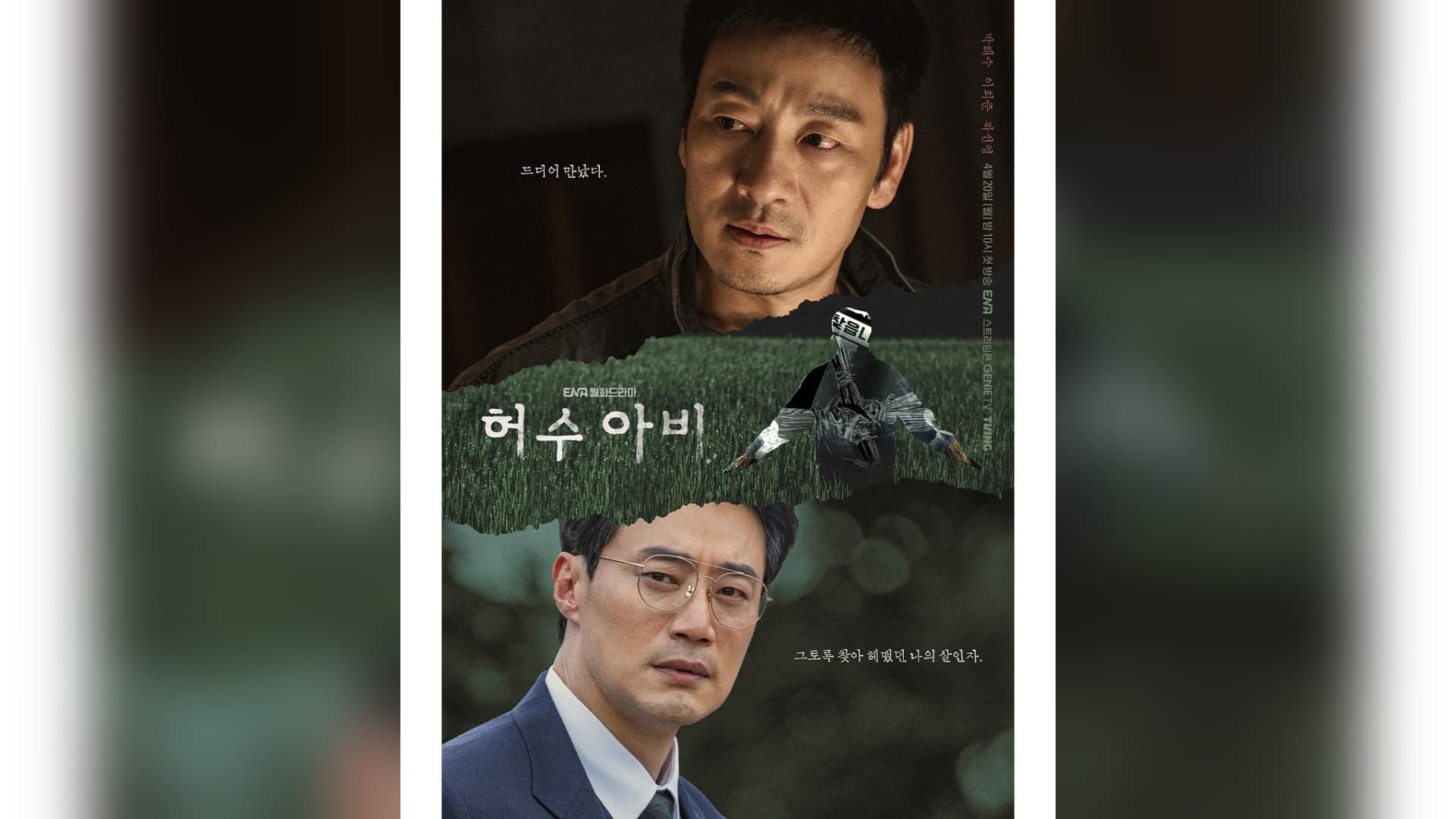
Two episodes in, and ENA's new crime thriller is already making a case for itself as one of the year's most promising genre dramas. Scarecrow — known in Korea as Heosuary — debuted on April 20 with a 2.9% nationwide rating (Nielsen Korea) before jumping to 4.1% in its second episode on April 21. That 41% week-over-week increase, achieved in a slot that has historically been one of Korean cable television's most competitive, caught the industry's attention quickly.
The second episode's metropolitan area figure was 4.2%, good enough for No. 1 among all Monday-Tuesday dramas by that measure. The show also topped the all-channel 2049 demographic ranking with a 1.5% share in the Seoul metropolitan area — meaning it beat out not just other cable dramas but all simultaneously airing free-to-air network programs among young-adult viewers. For a drama that debuted at 2.9%, those are significant early indicators of momentum.
What Makes Scarecrow Work
Park Hae-soo plays Kang Tae-joo, an elite detective from Seoul who has returned to his hometown of Gangseong — a fictional provincial city — and is assigned to a series of serial murder cases that initially appear unconnected. The drama's structure is procedural in its bones, but the execution has been praised for the density of its clue-laying and the deliberate management of viewer suspense across both episodes.
The premise draws on real criminal cases as source material, which the production has been transparent about from the outset. That decision has a double effect: it provides the narrative with a kind of factual weight that pure fiction sometimes struggles to achieve, while also creating an expectation among viewers that the resolution will be grounded rather than fantastical. The writing, by Lee Ji-hyun, has so far met that expectation with a script that critic reviews have consistently described as tightly constructed.
Co-starring Lee Hee-joon as Cha Si-young — a character whose past connection to Kang Tae-joo forms one of the drama's central tension threads — the show has positioned itself as fundamentally about two men with a complicated shared history being forced to work alongside each other in a case that quickly exceeds what either anticipated. The dynamic between the two leads has been a consistent point of praise in early viewer reactions, with the discomfort and unresolved history between the characters generating a texture that elevates the procedural elements.
Directed by Park Jun-woo and produced through Studio Anzahlen with backing from KT Studio Genie, Scarecrow has the production values of a substantially larger-budget project than its cable-drama status might suggest. The location work in the show's fictionalized provincial setting provides a visual identity distinct from the Seoul-centric dramas that dominate much of Korean television, and the cinematography — which leans into rural atmosphere and natural light — has been noted as a deliberate aesthetic choice that reinforces the story's tone.
Park Hae-soo After Squid Game
Park Hae-soo is, at this stage of his career, one of the few Korean actors whose name alone carries the kind of international recognition that changes the math around a project's global potential. His performance as Cho Sang-woo in Netflix's Squid Game and its second season brought him to audiences far beyond Korea's domestic viewership, and the anticipation around his Korean television work since then has been correspondingly elevated.
Scarecrow is a deliberate choice in that context. Kang Tae-joo is a character who requires sustained dramatic physicality — the detective's competence is established through action and instinct rather than dialogue — and the show places Park in material that plays to the intensity he demonstrated in Squid Game while working within a different genre framework. The early reception suggests the combination is landing as intended: the word-of-mouth around the first two episodes has outpaced what the premiere rating alone would typically generate.
Lee Hee-joon, meanwhile, brings his own considerable weight to the co-lead role. Known for memorable supporting turns in projects including Money Heist: Korea and Moving, his work here as Cha Si-young has been described by reviewers as one of the show's primary assets — a performance that resists easy categorization and keeps the character's moral positioning genuinely ambiguous across the first two episodes.
The Genre Landscape and Where Scarecrow Fits
Korean crime thriller drama has been a consistently productive genre category throughout 2025 and into 2026, with audiences demonstrating sustained appetite for procedural narratives built around serial crime investigations. What Scarecrow appears to be doing that the best entries in the category do — and that the weaker ones do not — is grounding the procedural mechanics in specific character psychology rather than treating the investigation as the primary point of interest.
Kang Tae-joo's return to Gangseong is not simply a professional assignment; it is a return to a place and a history that the drama is carefully parceling out across its episodes. The serial murder case is the present-tense engine of the plot, but the Gangseong setting and the relationship between the two lead characters carry the accumulated weight of a backstory that the show is in no hurry to fully reveal. That structural patience — the willingness to let meaning accumulate rather than front-load explanation — is what separates dramas that build genuine investment from those that lose their audience after the novelty of the premise wears off.
What the Early Numbers Mean Going Forward
A 41% rating increase from episode one to episode two is a meaningful signal, but it is also a starting point rather than a conclusion. The question that the industry and viewers alike are now watching is whether Scarecrow can sustain and build on the 4.1% floor it has established, or whether the second-episode bump reflects a one-time consolidation of the curious-viewer audience rather than the beginning of a longer upward trend.
The indicators that tend to predict sustained performance — strong 2049 numbers, positive critic reception, active viewer discussion in online communities — are all present for this show in its early going. The word-of-mouth quality of the drama's genre execution is being compared favorably to ENA's previous prestige thriller work, and the combination of Park Hae-soo's drawing power and a script that has earned early credibility gives Scarecrow a foundation that stronger premiering dramas have failed to build on and that weaker-opening ones have sometimes exceeded.
Monday and Tuesday at 9 PM KST on ENA, and available on streaming platforms for those who cannot watch in real time. Six more episodes are confirmed, and based on the trajectory of the first two, the audience paying attention to Korean genre drama in 2026 would be well advised to give this one their consideration.
How do you feel about this article?
저작권자 © KEnterHub 무단전재 및 재배포 금지
Entertainment Journalist · KEnterHub
Entertainment journalist specializing in K-Pop, K-Drama, and Korean celebrity news. Covers artist comebacks, drama premieres, award shows, and fan culture with in-depth reporting and analysis.
Comments
Please log in to comment