Park Joo-hee Was Broke While Turning Down 20 Gigs a Day
The Korean trot singer opens up about financial hardship at fame's peak — and the friendship that brought her back
 By Jang Hojin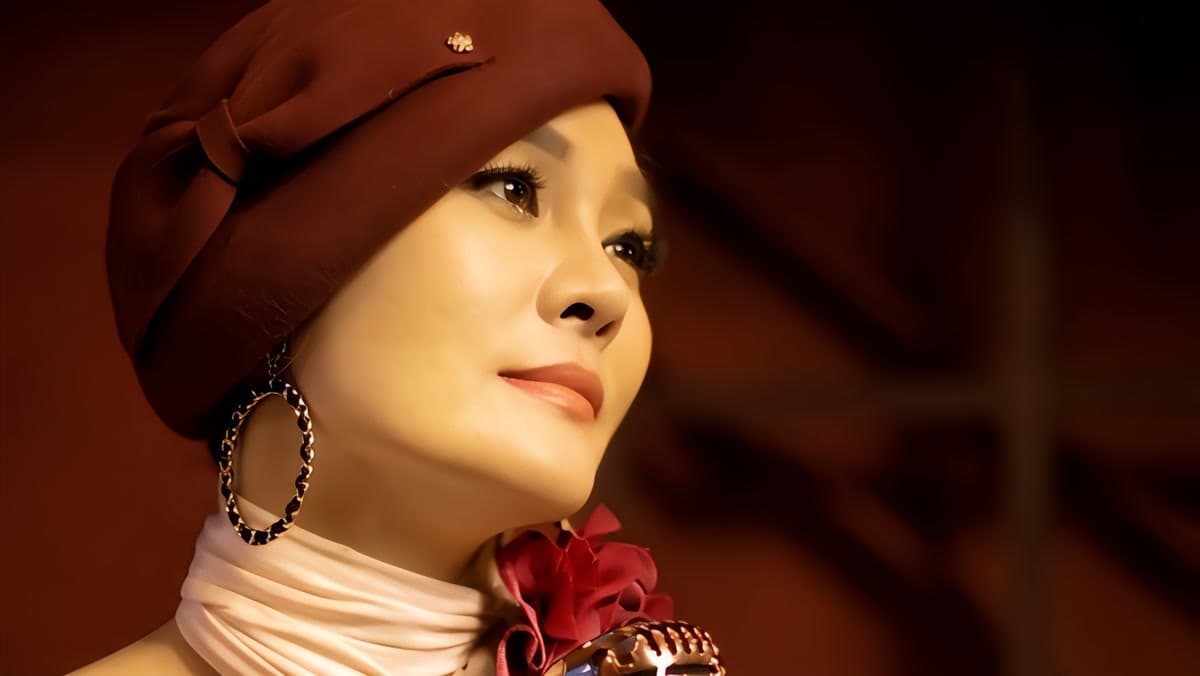
At the height of her popularity, Korean trot singer Park Joo-hee was turning down more than 20 bookings a day. Her hit song "Jagi-ya" (자기야) had made her one of the most sought-after performers in the country. On the surface, she was living the dream. Behind the scenes, she could barely make rent.
During a recent appearance on KBS variety program Achim Madang – Ssangsang Noraebang (아침마당-쌍쌍 노래방), Park opened up about the painful gap between her public image and private reality — a confession that has resonated deeply with fans who saw only the glamour and never the struggle.
Fame That Didn't Pay the Bills
Park Joo-hee released "Jagi-ya" in 2005, and the song became an instant hit in Korea's trot music scene. Trot — a genre with roots in early 20th-century Japanese-influenced Korean popular music — had been experiencing a revival in the mid-2000s, and "Jagi-ya" rode that wave to become one of the defining songs of that era. With its catchy, upbeat rhythm and relatable lyrics, the track cemented Park's status as a household name.
The success brought extraordinary demand. Park recalled that at her busiest, she was actively turning down over 20 scheduled bookings per day — not because she wanted to, but because it was physically impossible to accept them all. To any outside observer, this was the picture of a thriving career.
But Park's honest recollection paints a very different picture. "On stage, everything was dazzling. In real life, it was a struggle just to pay rent," she said on the show. She went further, suggesting that the performance fees she earned rarely made it into her own pocket: "The event fees must have gone somewhere — to a lot of different places," she said carefully, hinting at a system in which artists often saw little of the money they generated for others.
It's a reality that many entertainment insiders have acknowledged over the years: a performer at the top of the booking circuit can appear enormously successful while the financial infrastructure around them — management fees, agency cuts, production costs — absorbs the bulk of the earnings. Park did not name individuals or companies, but her words painted a vivid portrait of an industry where a glamorous stage persona and financial precarity can coexist.
A Crisis of Identity — And the Year She Stopped Singing
The disconnect between her public and private lives eventually became too much to bear. Park described a period of deep inner turmoil, asking herself: "Is the singer who shines on stage really me? Or is the person who can barely scrape together enough for rent the real me?" That kind of identity fracture — between who the world sees and who you actually are — is something few public figures discuss openly, which made Park's candor all the more striking.
The psychological weight of that contradiction led her to make a drastic decision: she stepped away from music entirely. For roughly one year, Park Joo-hee did not perform. She stopped taking calls, withdrew from the industry, and began to disappear from the scene that had made her famous. At the time, many fans simply assumed she was taking a break or was busy with personal matters. Few knew how close she had come to walking away for good.
It is a quiet kind of courage to admit, years later, that success nearly broke you. And it is even more meaningful that Park credits another woman — a fellow singer who had nothing to gain professionally — with pulling her back from the edge.
The Friendship That Changed Everything
That woman was Hyunsook (현숙), one of Korea's most beloved veteran trot and folk singers, now in her mid-60s. Their relationship stretches back to before Park Joo-hee was even a professional artist. Hyunsook had spotted something in the younger singer long before fame arrived, and she made it her business to nurture it.
Before Park officially debuted, Hyunsook would take her along to live performances, giving her a front-row education in what it meant to be a working singer in Korea. She bought her meals, helped her navigate the complex logistics of the broadcasting world, and introduced her to industry contacts — not as a business transaction, but out of genuine affection. "I don't have a manager — let me take you," Hyunsook would say, escorting Park through broadcaster offices and event venues, always introducing her warmly as "내 동생" — "my little sister."
Park recalled looking up at Hyunsook and thinking, "If I could become even a fraction of what she is, I would consider myself incredibly lucky." That admiration deepened into a bond that proved unbreakable even at Park's lowest point. When she was ready to vanish from the industry entirely, it was Hyunsook who refused to let her go — who reminded her why she had started singing in the first place, and who stayed close enough to be there when she needed someone most.
"Thanks to Hyunsook, who always had me in mind during that time, I was able to gather the courage to sing again," Park said on the program.
A Bond That Has Only Grown Stronger
Decades later, their friendship remains one of the most genuinely warm relationships in the Korean entertainment world. On the day of their Achim Madang appearance, the two showed up wearing matching yellow outfits — a small detail that spoke volumes about their closeness. For Hyunsook, the feeling is mutual.
"Whenever Park Joo-hee shows up, I feel so reassured," the veteran singer said. "She's a friend who is with me in hard times and happy times." The two make decisions together about song choices, visit the hair salon as a pair, and continue to support each other's careers in quiet, practical ways that never make headlines.
In February, they had appeared together on TV Chosun's Perfect Life (퍼펙트 라이프), where cameras captured them walking through a park and visiting a jjimjilbang — a Korean sauna — together. The image of two women who have weathered the full arc of entertainment industry life, side by side, drew a warm response from viewers.
What This Story Says About the Industry
Park Joo-hee's revelation matters beyond the personal. It draws attention to a structural problem that has long existed within the Korean entertainment industry — and in entertainment industries globally — where the financial rewards of fame are not always distributed to the people who earn them. While she stopped short of direct accusations, her suggestion that her earnings "went somewhere" echoes the experiences of many artists who have since spoken out more explicitly about exploitative contracts and opaque financial arrangements.
At the same time, her story is ultimately not one of victimhood, but of resilience and sisterhood. She survived the gap between who she appeared to be and who she actually was. She found her way back to music. And she has spent the years since building a friendship that is, by all appearances, more sustaining than any chart position or booking fee ever could be.
In an industry that often rewards youth, novelty, and relentless visibility, there is something quietly radical about two women who have simply chosen to look after each other — and to keep showing up, together, in matching yellow outfits on a Friday morning television program.
How do you feel about this article?
저작권자 © KEnterHub 무단전재 및 재배포 금지
Entertainment Journalist · KEnterHub
Entertainment journalist specializing in K-Pop, K-Drama, and Korean celebrity news. Covers artist comebacks, drama premieres, award shows, and fan culture with in-depth reporting and analysis.
Comments
Please log in to comment