The Reason COOL's Kim Sung Su Broke Down on TV
The K-pop veteran opened up about raising his daughter alone for over 13 years — and the phone call that finally made him cry
 By Park Chulwon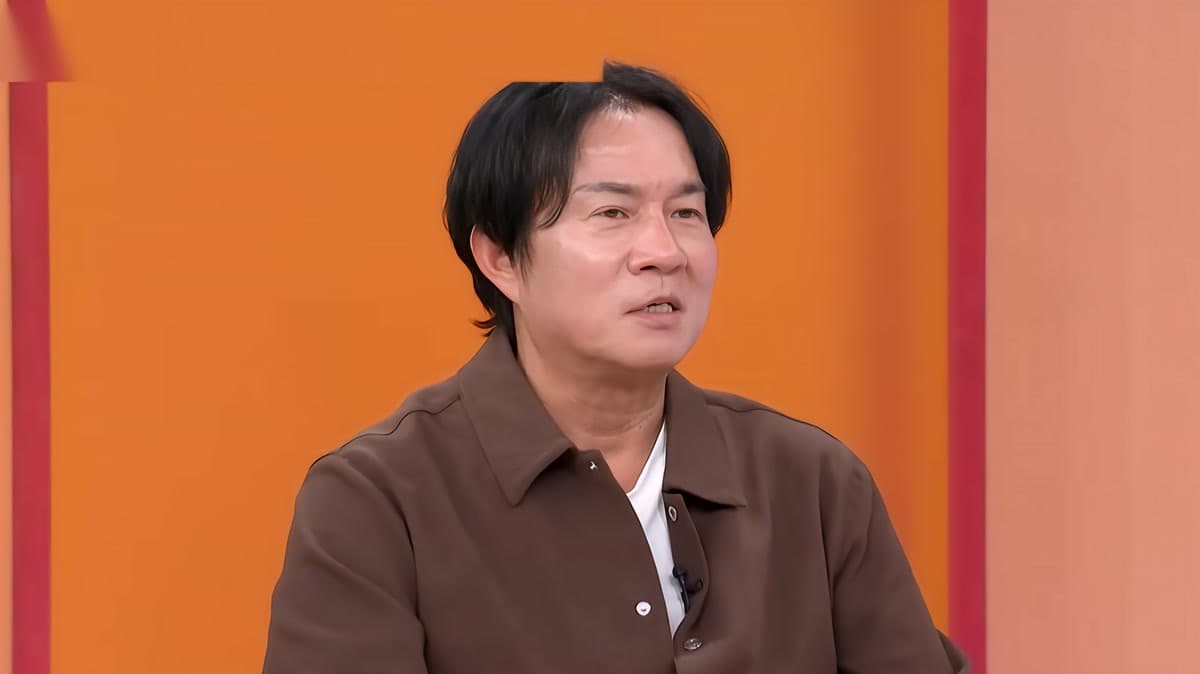
There are moments on Korean variety television that cut straight through the entertainment surface and land somewhere unexpected. Kim Sung Su's appearance on MBN's Dongchimi on April 25, 2026, was one of them.
The episode was built around a concept familiar to Korean audiences — the idea that a well-raised daughter is worth more than ten sons — but what Kim Sung Su brought to it was something the producers likely could not have fully scripted: more than a decade's worth of quiet sacrifice, accumulated pride, and the kind of love that becomes visible only when it has been tested at its limits.
Who Is Kim Sung Su?
For many K-pop fans under a certain age, the name Kim Sung Su may require a small introduction. He is a member of COOL (쿨), one of the most beloved dance groups of Korea's first-generation idol era. Active from the mid-1990s through the 2000s, COOL occupied a rare space in the Korean pop landscape: their music was immediate and danceable, but it was also built around vocal harmonies and lyrics that acknowledged adult emotions with a directness that stood out during an era when many acts played exclusively to teenage audiences.
Songs like "Arona" (아로하) and "Woman by the Beach" (해변의 여인) became genuine cultural touchstones. The group performed to packed venues, topped charts, and helped define what Korean pop music could sound like before the term "K-pop" became a global phenomenon. Kim Sung Su was one of the voices at the center of all of it.
In the years since COOL's peak activity, Kim Sung Su's personal life has been marked by experiences that most people never face, and none that he asked for.
Thirteen Years, One Daughter
Kim Sung Su married in 2004 and became a father in 2006 when his daughter Hye-bin was born. The marriage ended in divorce, and his ex-wife retained custody initially. But in 2012, tragedy intervened: his ex-wife died unexpectedly, and Hye-bin came to live with her father. Kim Sung Su has been raising her on his own ever since — a stretch of time that now spans more than thirteen years.
He described on Dongchimi what that journey has looked and felt like from the inside. The pride was immediate. Hye-bin never gave him reason to worry about discipline or school attendance. She never missed a day of class from middle through high school. She prepared for the university entrance process without being prompted, and when the results came in, she had been accepted by two different universities simultaneously — an accomplishment that produced what Kim Sung Su called a feeling of breathlessness. "My chest was so full I couldn't breathe," he said.
The morning of Hye-bin's college entrance exam, he drove her to the examination center and spent the entire day in a state of physical anxiety he compared, with dry humor, to his first performance as a musician. "I was more nervous than I was before my first stage as a singer," he admitted. And now, he added, she is working a part-time job of her own choosing, setting aside money to help contribute to her tuition. "Is there really a daughter like this anywhere?" he asked the studio, and the room went quiet in the way rooms do when no one wants to break the moment.
The Phone Call That Changed Everything
The most emotionally significant moment of the broadcast was not a staged segment. It came through the playback of an ordinary phone call between Kim Sung Su and his daughter — the kind of conversation that happens in millions of Korean households, except that this one carried the invisible weight of everything these two people had already survived together.
Hye-bin's voice in the recording was gentle. She told her father to lean on her if he ever felt overwhelmed. She told him to take care of his health. She told him she loved him. It was the language of a parent speaking to a child, except that the roles were reversed — the daughter had somewhere along the way absorbed the emotional vocabulary her father had been quietly teaching her, and was now returning it to him.
Hearing it, Kim Sung Su cried. He described another moment from years earlier when, exhausted from household responsibilities, he had said aloud that he felt like he was "going to die from tiredness" — the kind of offhand expression anyone might use. Hye-bin, a teenager at the time, heard it and burst into tears. "What will I do if I lose you too?" she asked him. She had already lost one parent. The word itself, spoken carelessly, landed on her like a physical weight.
Kim Sung Su said he had not fully understood until that moment how much his daughter had been carrying — not just her own grief, but the silent, constant effort of protecting her father from seeing how heavy it was. "She was trying to keep me from worrying," he said. "Even when she was in pain, she wouldn't show it."
What This Kind of Story Means in Korean Pop Culture
Korean entertainment has a particular relationship with stories like this one. The variety show format exists in part to create spaces where celebrities can speak honestly about dimensions of their lives that remain invisible in a music video or a drama credit. Dongchimi, which has been running for years on MBN, is specifically designed to facilitate that kind of disclosure — the show's name is the word for a traditional Korean water kimchi, invoking the idea of something that is at once ordinary and essential.
What Kim Sung Su offered that night was not a performance of emotion. It was the real thing, and the other panelists responded accordingly. Hyun Young told him that his daughter's warmth was a direct reflection of the love he had provided. It was not something Hye-bin had manufactured — it was love that had been given freely and was now being returned. Another guest, singer Sung Dae-hyun, said he had ridden in Kim Sung Su's car before and had to look away during phone calls with Hye-bin because he could not control his own tears. Her voice was that of a child, he explained, but her words were those of someone who understood the weight of being the last person her father could rely on.
These are not things that appear on a discography. They are not what gets mentioned in anniversary retrospectives about COOL's career. But for anyone who watched that episode, Kim Sung Su's greatest achievement is not a chart position. It is a daughter who says "lean on me" and means it.
Looking Forward
Hye-bin is now a university student. She is paying her own way, at least in part, by choice — a detail that seemed to move her father more than almost anything else. Kim Sung Su is continuing to work in entertainment, and COOL remains a group that occupies a warm corner of Korean pop music history. But the conversation that emerged on Dongchimi was a reminder that the most durable things a person can create are not always the ones that get played on the radio.
For international fans encountering this story through translations and clips, the emotional core of it is uncomplicated: a man who could have been defined by loss chose instead to be defined by devotion. Thirteen years of school drop-offs and late nights and career detours and quiet phone calls, and now a young woman who tells her father to take care of himself and says it in the tone of someone who knows what it costs to lose someone too early.
Kim Sung Su did not break down on television because of anything that went wrong. He broke down because something went exactly right.
How do you feel about this article?
저작권자 © KEnterHub 무단전재 및 재배포 금지
Entertainment Journalist · KEnterHub
Entertainment journalist focused on Korean music, film, and the global K-Wave. Reports on industry trends, celebrity profiles, and the intersection of Korean pop culture and international audiences.
Comments
Please log in to comment