Why Fans Still Cry Over Leslie Cheung 23 Years Later
'Farewell My Concubine: The Original' returns to Korean theaters on the very date its star left the world
 By Jang Hojin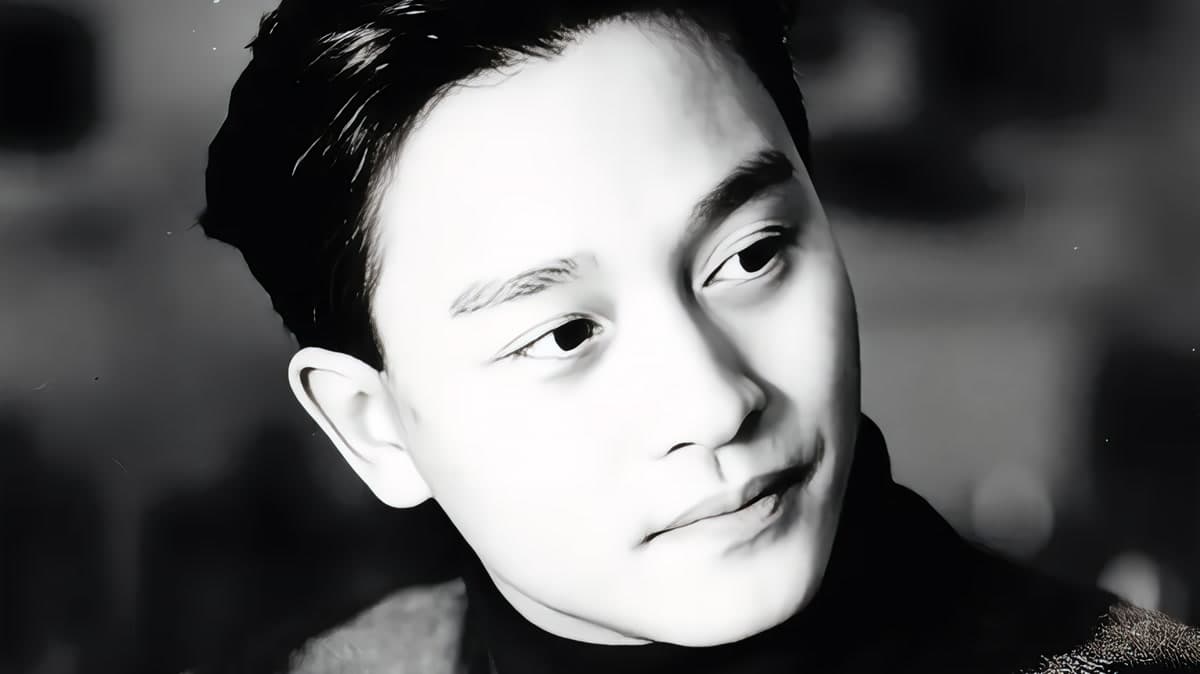
On April 1, 2003, the world refused to believe what it was hearing. A joke, surely — the kind of cruel prank that belongs to April Fool's Day and nowhere else. But the news was real: Leslie Cheung, one of the most luminous figures in Asian entertainment history, was gone. Twenty-three years later, cinemas across South Korea darkened their lobbies, lit candles, and invited audiences to say goodbye again — this time through the film he made immortal.
Farewell My Concubine: The Original, a restored and expanded cut of the 1993 masterpiece that won the Cannes Palme d'Or, returned to Korean theaters on April 1, 2026, landing precisely on the 23rd anniversary of Cheung's passing. The timing was not accidental. It was a love letter written in celluloid, addressed to every fan who never truly got to say farewell.
The Film That Stopped Cannes
When Chen Kaige's Farewell My Concubine premiered at the 1993 Cannes Film Festival, it arrived as a provocation wrapped in silk. The film sweeps across five turbulent decades of Chinese history — from the 1920s through the Cultural Revolution — tracing the lives of two Peking opera performers whose art and emotions become inseparable from the political catastrophes surrounding them. At its center is Cheng Dieyi, a performer of female roles who has spent his entire life perfecting femininity, played by Leslie Cheung with a precision that made the line between actor and character invisible.
The jury at Cannes that year was so disoriented by Cheung's performance that, according to reports, one member reportedly voted him Best Actress — not Best Actor — having genuinely mistaken his portrayal as that of a woman. He came within a single vote of winning an award in the wrong category. The film itself, however, was beyond dispute: it walked away with the Palme d'Or, becoming the first and only Chinese-language film in history to win the festival's highest honor. It shared the prize with Jane Campion's The Piano — a double victory for cinema that year that still feels impossibly lucky.
The awards kept coming. The Golden Globe for Best Foreign Language Film in 1994. A BAFTA nomination. Two Oscar nominations including Best Foreign Language Film. But the most enduring prize was simpler: it became a film people return to for the rest of their lives.
Leslie Cheung: The Star Who Refused to Fit
Born on September 12, 1956, in Kowloon, Hong Kong, Leslie Cheung grew up in a family with an unexpected Hollywood connection — his father was a renowned tailor whose clients included Marlon Brando and Cary Grant. He studied in England, attended the University of Leeds, and returned to Hong Kong carrying a worldliness that would define his entire career.
His music career took off first. The 1984 single "Monica" transformed him into a Cantopop superstar, and he spent the next two decades recording over 40 albums. His voice was unmistakable — warm, slightly melancholic, capable of tenderness that could make a sold-out stadium feel intimate. When he announced his retirement from music in 1989, fans wept in the streets of Hong Kong. When he returned in 1995, the work had evolved: more experimental, more deliberately gender-fluid, more nakedly himself.
In film, he was equally untameable. His collaboration with director John Woo produced the gangster classic A Better Tomorrow (1986). With director Stanley Kwan he made Rouge (1987), a ghost story about longing. With Wong Kar-wai he gave two of the most achingly lonely performances in Hong Kong cinema history — Days of Being Wild (1990), which won him the Hong Kong Film Award for Best Actor, and Happy Together (1997), filmed in Buenos Aires with a rawness that felt almost unbearable to watch.
Through all of it, Cheung refused the roles that were expected of a man of his stature. In 1997, at his concert, he dedicated the song "The Moon Represents My Heart" to his long-term partner Daffy Tong — one of the first public declarations of same-sex love by a major Chinese entertainment figure. His Passion Tour (2000-2001), designed in collaboration with Jean Paul Gaultier, featured costumes that dissolved the boundaries between masculine and feminine. He did not explain himself. He simply was who he was, and let the audience catch up.
'The Original' Cut: What Was Missing for 33 Years
The version of Farewell My Concubine that most audiences have seen over the past three decades is not the complete film. When Harvey Weinstein's Miramax acquired the distribution rights for the United States, approximately 20 minutes of footage was cut for theatrical release — scenes deemed too slow, too complex, or simply too demanding for Western audiences. The result was a shorter film that remained extraordinary, but was not quite whole.
Farewell My Concubine: The Original restores that footage, bringing the runtime back to the intended 171 minutes and presenting the story as Chen Kaige conceived it. In Korea, the film opened in a 4K digitally restored version across all three major multiplex chains simultaneously — a rare occurrence that speaks to the film's unique standing in cinema culture. CGV Arthouse, Lotte Cinema, and Megabox each mounted special programming around the re-release, with CGV hosting memorial screenings paired with newly unveiled tribute videos from Cheung's colleagues and friends.
The April 1 release date was chosen deliberately. In Korea and across Asia, that date has been marked by fans for two decades as a day not of pranks but of remembrance. Cinemas that evening were filled not with the casual weekend crowd but with people who had been waiting years for a reason to see this film on a proper screen again.
Twenty-Three Years of Gathering
Every April 1 since 2003, fans have gathered outside the Mandarin Oriental hotel in Central Hong Kong, where Cheung died. They come with flowers, handwritten letters, photographs, and albums. They stand for hours. Some have been coming for two decades. Some, like Louis — 19 years old at this year's tribute — were not yet born when Cheung died, but found his work through a streaming platform or a parent's recommendation and felt immediately, completely understood by it.
"His work still feels fresh, even after 20 or 30 years," Louis said at this year's gathering, holding flowers. The sentiment is not nostalgia. It is recognition. Cheung's performances were so present, so fully inhabited, that they do not recede with time. Watching Days of Being Wild or Farewell My Concubine today does not feel like watching something historical. It feels like watching someone who is impossibly alive.
In Beijing, "Miss You Much Leslie 2026" events drew new crowds. In Hong Kong, a special 4K restoration of The Kid was programmed for late April — deliberately timed to what would have been Cheung's 70th birthday on September 12, and framed as a belated birthday celebration, tickets priced at HK$70 in tribute. Actress Joey Wong, his co-star in A Chinese Ghost Story, shared a video revisiting the iconic roles they had played together.
Why This Film Still Matters
Farewell My Concubine is a film about performance and identity — about what it means to spend your entire life becoming someone else, and what happens when history makes even that escape impossible. The Cultural Revolution sequences, in which characters are forced to denounce their art and each other under political pressure, are among the most devastating passages in any film of the 1990s. They arrive quietly and leave marks that don't fade.
For international audiences, the film was also one of the first windows into a culture of performance — Peking opera — that demanded total physical and psychological surrender from its practitioners. Cheung's portrayal of Dieyi, trained from childhood to play female roles with absolute conviction, carries within it an implicit meditation on queerness, devotion, and the violence of being required to be someone you are not.
In retrospect, the role was an extraordinary act of self-expression for Cheung, who had not yet publicly named his sexuality when the film was made. Watching it now, knowing what came after — the concerts, the Gaultier costumes, the 1997 dedication to Daffy Tong — gives the performance an additional layer of meaning that was always there, waiting to be seen.
CNN named Cheung one of the 25 greatest Asian actors of all time in 2010. The list was uncontroversial. There was no one who could seriously argue the point.
Twenty-three years after April 1, 2003, his greatest film is back in theaters. The timing, as always with Cheung, feels less like coincidence and more like inevitability. Some farewells, it turns out, are not final. They are ongoing. And some stars refuse to dim simply because they are no longer here.
How do you feel about this article?
저작권자 © KEnterHub 무단전재 및 재배포 금지
Entertainment Journalist · KEnterHub
Entertainment journalist specializing in K-Pop, K-Drama, and Korean celebrity news. Covers artist comebacks, drama premieres, award shows, and fan culture with in-depth reporting and analysis.
Comments
Please log in to comment