Why Netflix's Parasyte: TAMIYA Is Bigger Than a Spin-Off
Yeon Sang-ho's new Netflix project shows how Korean genre storytelling can expand Japanese manga IP for a global audience.
 By Im Garam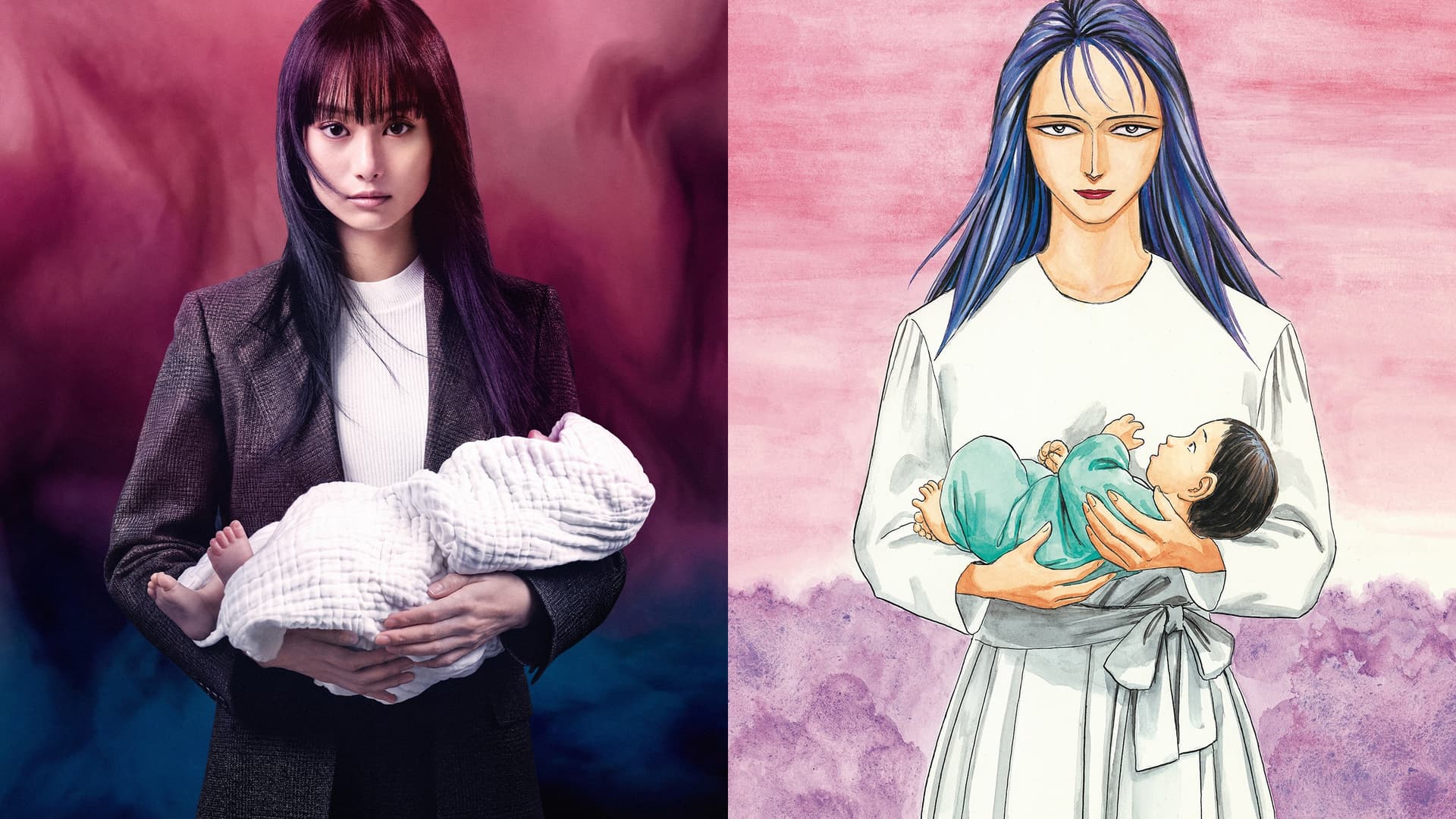
Netflix's Parasyte: TAMIYA is not just another franchise extension. Announced on July 22, 2026 for a 2027 global release, the new live-action series puts Shioli Kutsuna at the center of Ryoko Tamiya's story and brings Yeon Sang-ho back to the universe after the success of Parasyte: The Grey.
This article analyzes how Yeon Sang-ho's return to Parasyte through TAMIYA turns a proven manga property into a cross-border K-content strategy for Netflix, viewed through the lens of IP expansion rather than simple sequel-making. The key point is not only that a recognizable title is coming back. It is that Netflix is using Korean genre storytelling, Japanese manga heritage, and global viewing data to test how far an Asian sci-fi horror universe can travel.
The project arrives with unusual clarity about its purpose. Netflix says the series will follow Ryoko Tamiya, a parasite who begins questioning whether humans and parasites can coexist. That shift matters because it moves the franchise from survival horror toward a character study about identity, instinct, and adaptation. For a platform competing on global genre brands, that is a more durable proposition than a one-season monster hit.
It also gives Netflix a way to broaden the definition of K-content without forcing every project to be culturally Korean on the surface. TAMIYA is based on Japanese manga, led by a Japanese-Australian actor, and directed by Japanese filmmakers, yet Yeon's development role and the connection to The Grey keep Korean genre authorship at the center of the business story. That hybrid identity is exactly why the announcement deserves analysis.
Why This Return Matters
But the announcement only makes sense when placed against the franchise's longer history. Hitoshi Iwaaki's original Parasyte manga ran from 1988 to 1995 and has circulated for more than three decades, with Netflix and Kodansha materials citing roughly 25 million copies sold across more than 20 countries and regions.
That history gives TAMIYA a different starting position from many streaming originals. It is not introducing a new mythology from zero. It is re-entering a story world that has already survived manga, anime, Japanese live-action films, and a Korean live-action reinterpretation. The question is whether Netflix can turn that durability into a repeatable regional franchise model.
Yeon is central to that experiment. His career has repeatedly used genre pressure to expose social behavior, from the speed and panic of Train to Busan to the moral dread of Hellbound. With Parasyte: The Grey, he did not simply transplant the manga into Korea. He built a parallel story that preserved the original's body-horror premise while giving Korean institutions, neighborhoods, and trauma their own narrative weight.
That is why TAMIYA feels strategically important. It suggests Netflix is no longer treating Korean genre creators only as local adapters of global IP. Instead, it is positioning them as architects who can expand Japanese source material for a worldwide audience while preserving enough cultural specificity to avoid flattening the story.
The precedent also changes how viewers should read the 2027 series before footage arrives. A conventional sequel would probably chase bigger monsters, more battles, and a direct continuation of Su-in's story. TAMIYA points in another direction. By centering a character associated with maternal instinct, intelligence, and philosophical doubt, the series appears designed to deepen the premise rather than merely raise the body count.
That choice gives the franchise room to mature. Horror properties often weaken when each installment repeats the same shock. Parasyte has always had a stronger engine: it asks whether humanity is a biological category, a moral practice, or a story people tell to protect themselves. Returning to Ryoko Tamiya lets Netflix bring that question to the foreground.
The Data Behind The Bet
The best evidence is the performance of Parasyte: The Grey. ContentAsia reported that the Korean series opened at No. 1 on Netflix's non-English TV rankings for the April 1-7, 2024 window, drawing 31.5 million hours watched and 6.3 million views after its April 5 premiere. A week later, Yonhap and Allkpop reported that it held No. 1 again with 9.8 million views for April 8-14 and 49 million accumulated hours watched.
Grouped bar chart comparing week one and week two Netflix performance: 6.3 million views and 31.5 million hours in week one, then 9.8 million views and 49 million hours in week two. Netflix Global Top 10 Performance Week 1: Apr. 1-7, 2024 | Week 2: Apr. 8-14, 2024 0 10 20 30 40 50 6.3M 31.5M 9.8M 49M Week 1 Week 2 Views Hours watched
The chart shows why the 2027 follow-up is more than a brand-management decision. A series that gained from 6.3 million to 9.8 million views in its second reporting week was not simply front-loaded by curiosity. It showed enough retention and international spread to justify a deeper investment in the universe.
The geographic data strengthens that case. Netflix's 2026 announcement says The Grey remained on the Global Top 10 Non-English Shows list for four weeks and reached No. 1 in 34 countries. Korean reports from 2024 placed it in the Top 10 across 84 countries during its second week. Those figures are not just trophies. They indicate a title that can move outside the normal K-drama romance pipeline and compete as global sci-fi horror.
The data also shows a useful asymmetry. The Grey did not need a long episode count, a star romance, or a weekly broadcast rhythm to travel. It launched as a compact six-episode genre series and still produced multi-week global engagement. For Netflix, that is an efficient format: enough story to create urgency, but not so much volume that casual viewers feel locked out.
That efficiency matters in a market where streaming platforms have become more selective about renewal and franchise spending. A title with a known manga base, a completed Korean proof of concept, and measurable non-English performance gives executives a clearer risk profile. TAMIYA is therefore not only a creative follow-up. It is a data-backed attempt to convert a successful limited event into a wider universe.
A Cross-Border IP Model
Still, chart performance alone does not explain the creative risk. The more interesting move is that TAMIYA shifts the point of view from the Korean original characters of The Grey to Ryoko Tamiya, one of the manga's most philosophically loaded figures. That is a bridge back to the source material, but not a retreat from the Korean version.
Yeon developed and co-wrote the new series with Ryu Yong-jae, while Japanese directors Kensaku Kakimoto and Kazuhiro Nakagawa are attached to direct. WOWPOINT returns in development and production, with EPISCOPE also listed as a production company. The structure reads like a deliberate Korea-Japan collaboration, not a routine localization package.
That matters for Netflix because manga and webtoon adaptation pipelines are increasingly crowded. A platform can buy famous IP, but audiences quickly recognize when a story is only being stretched. TAMIYA has a clearer editorial argument: take a supporting character whose original arc already questioned the border between predator and parent, then build a series around that tension for a global streaming audience.
Shioli Kutsuna's casting supports that argument. Netflix's announcement frames the role as three versions of the same figure: the original human, the parasite after possession, and the parasite who begins wrestling with coexistence. That gives the series an actor-driven hook inside a genre spectacle. In practical terms, it creates a reason for viewers who are not franchise completists to care.
The Korea-Japan structure also reflects a broader industrial reality. K-content has global momentum, but Japanese manga remains one of Asia's most exportable story libraries. Pairing those strengths can create a larger addressable audience than either side might reach alone. The challenge is authorship: audiences want collaboration to feel organic, not like a spreadsheet decision.
TAMIYA has a better chance than most because the themes already invite cultural translation. Parasites hiding inside human bodies can stand in for fear of outsiders, social breakdown, ecological imbalance, or the loss of self. Korean storytelling has often been effective at turning high-concept genre premises into social pressure cookers. Japanese manga has long excelled at philosophical genre design. This project sits exactly between those strengths.
That does not guarantee quality. Cross-border productions can become too polished, too cautious, or too eager to explain themselves for every region. The opportunity here is to stay specific: Ryoko Tamiya's emotional and moral contradictions should lead the drama, while the franchise machinery stays in the background.
Impact And Reactions
The likely fan reaction will split into two useful groups. Existing Parasyte fans will watch for fidelity to Ryoko Tamiya's moral complexity. K-drama and Netflix genre viewers will watch to see whether Yeon can extend the unnerving humanity of The Grey without repeating its police-versus-monster framework.
That tension is healthy. Adaptations often fail when they try to satisfy every memory of the original text. The Grey worked because it accepted the manga as a philosophical engine rather than a scene-by-scene template. TAMIYA now has to do something harder: return to a beloved manga character while still behaving like a fresh streaming drama.
For the wider K-content market, the announcement reinforces a trend that has been building since Korean thrillers and survival dramas became global streaming staples. K-content is no longer limited to exporting Korean stories. It is increasingly being used as a creative method for reinterpreting Asian IP across borders, especially when the genre premise can survive language and cultural translation.
The reaction from industry observers is likely to focus on that shift. After Squid Game, Hellbound, All of Us Are Dead, and The Grey, Korean genre production has become a recognizable streaming signal. It tells viewers to expect pace, moral stress, and visual clarity. Netflix can now attach that signal to a Japanese IP without selling the result as a conventional Korean drama.
Fans may be more demanding. Manga readers will want Tamiya's complexity protected, especially because she is not a simple villain in the source material. Viewers who entered through The Grey may want links back to Su-in, Team Grey, or the final crossover tease. The series will need to satisfy curiosity without turning into homework.
That balancing act is the real reception test. If TAMIYA only flatters existing fans, it will remain niche. If it ignores them, it will lose the credibility that makes the IP valuable. The best outcome is a drama that uses the original character as a doorway into a new emotional problem: what happens when a being designed to consume starts learning attachment?
What Comes Next
The next test will be whether Netflix markets TAMIYA as a continuation of The Grey, a return to the manga, or a new entry point for viewers who missed both. The smartest campaign may need all three signals. The property has legacy, but its streaming future depends on accessibility.
Release timing will matter as well. A 2027 launch gives Netflix time to reintroduce The Grey, surface the anime and manga legacy, and build a clear path for viewers who do not know Ryoko Tamiya. The platform's advantage is that it can package the universe inside its own recommendation system. The risk is that too much franchise framing could make the new series feel less surprising.
Creatively, the most important signal will be tone. Yeon's strongest work understands that spectacle lands harder when the human dilemma is simple and painful. For TAMIYA, the dilemma is already there: a parasite who possesses a human body begins to learn through experience that survival may require empathy. That is not just monster mythology. It is a drama about whether identity can be rewritten.
If TAMIYA delivers, it could become a template for how Korean creators, Japanese manga owners, and global platforms build shared genre universes without erasing local texture. That is the real importance of the announcement. Netflix is not only reviving Parasyte; it is testing whether Asian genre IP can become a flexible global system, one carefully chosen perspective at a time.
How do you feel about this article?
저작권자 © KEnterHub 무단전재 및 재배포 금지
Music Charts & Data Analyst · KEnterHub
Music data analyst turned journalist. Im Garam covers K-pop through the numbers — chart performance, album sales, streaming milestones and touring economics — and writes the deep-dive reviews and industry analyses that put those numbers in context.
Comments
Please log in to comment