WOODZ Reveals Why He Built ‘Drowning’ to Dominate Karaoke
The singer-songwriter deliberately targeted the karaoke market and the royalties feel warm like an electric blanket
 By Jang Hojin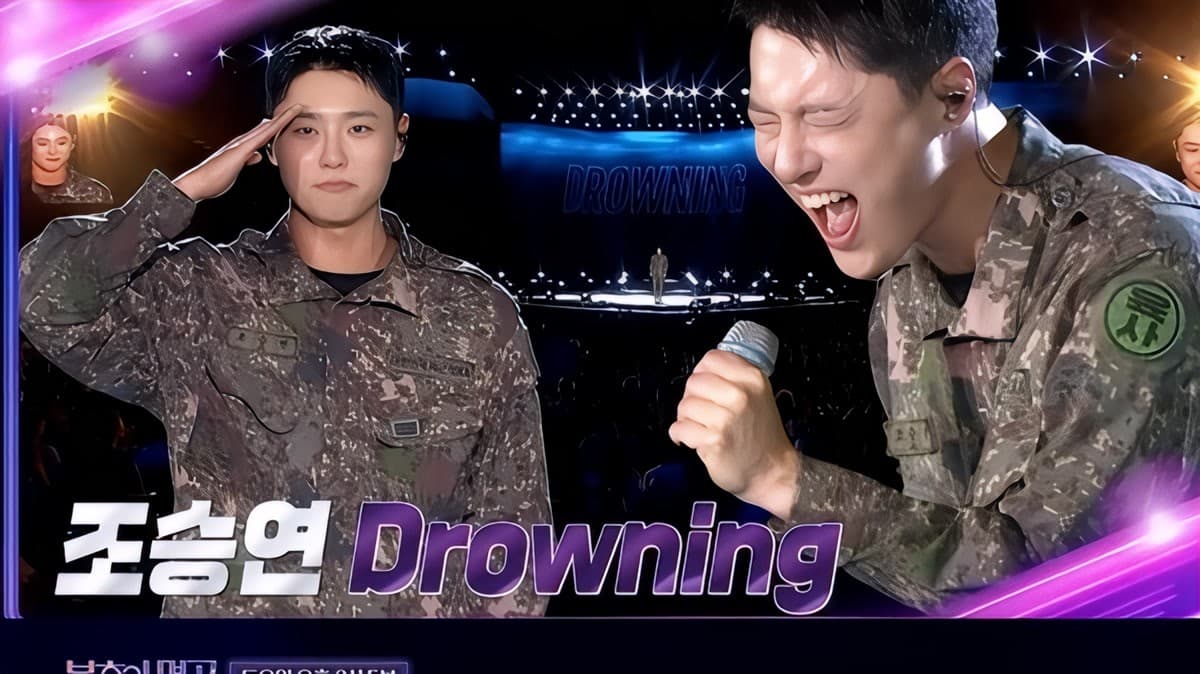
When WOODZ’s ‘Drowning’ started climbing the charts in a dramatic reverse-run that nobody saw coming, fans celebrated what they thought was a happy accident. But in a candid revelation on JTBC’s ‘Tokpawon 25si’ (Talk Source 25 Hours), the singer-songwriter admitted something surprising: every note of that viral hit was carefully engineered to become the ultimate karaoke anthem.
Appearing as a special guest on the March 16 broadcast of the popular variety show hosted by trot star Lee Chanwon, WOODZ — born Cho Seungyoun — peeled back the curtain on the creative process behind what has become the MZ generation’s go-to confession song. The episode marked one of the most revealing behind-the-scenes moments in recent K-pop history.
A Deliberate Strategy for Karaoke Domination
During the show, WOODZ openly admitted that he approached ‘Drowning’ with a very specific goal in mind. Rather than simply writing a song that would perform well on streaming platforms, he deliberately set out to create something that would thrive in South Korea’s noraebang (karaoke room) culture. The strategy was anything but accidental.
The singer revealed that when composing and writing the lyrics — both of which he handled entirely on his own — he kept thinking about what would make people want to sing this song at the top of their lungs in a small room with friends. The result was a track built around an explosive three-octave vocal climb that transforms any amateur singer into a dramatic performer for three and a half minutes.
That calculated approach paid off spectacularly. ‘Drowning’ didn’t just become a hit — it ascended to the number-one most-sung song at karaoke establishments across South Korea, a metric that speaks to genuine public connection rather than mere streaming numbers. In a music industry increasingly driven by algorithm-friendly production, WOODZ bet on the physical, communal experience of singing — and won.
The ‘Electric Blanket’ Royalties
Perhaps the most endearing moment of the broadcast came when WOODZ addressed the financial reality of his reverse-run success. When asked about the royalties generated by ‘Drowning,’ the singer offered a characteristically warm and humble analogy. He described the income as feeling like turning on an electric blanket — a steady, comforting warmth rather than a sudden burst of heat.
The metaphor resonated deeply with viewers and quickly went viral on Korean social media. For an artist who wrote and composed the song entirely by himself, the royalties represent full creative ownership — every stream, every karaoke play, and every broadcast use flows directly back to him as both songwriter and composer. In an industry where many idols see minimal returns from their music, WOODZ’s position as a self-sufficient creator stands out.
During his live performance on the show, WOODZ demonstrated exactly why ‘Drowning’ has captivated audiences. He delivered the song’s signature three-octave high notes with explosive power, commanding the studio with a vocal performance that left host Lee Chanwon visibly impressed. The live rendition showcased the raw emotional intensity that makes the song so irresistible in karaoke settings — it demands everything from the singer, and that vulnerability is what makes it so compelling.
From Military Service to Chart-Topping Phenomenon
The story of ‘Drowning’ is inseparable from WOODZ’s broader career arc. The track’s reverse-run — a phenomenon where a song re-enters or climbs charts long after its initial release — happened during a period when the artist was fulfilling his mandatory military service. The fact that the song found new life and reached unprecedented heights while WOODZ himself was largely absent from the public eye makes the achievement all the more remarkable.
Korean media have dubbed ‘Drowning’ a reverse-run legend, placing it alongside other iconic late bloomers in K-pop history. The song’s journey from relative obscurity to becoming the most-sung karaoke track in the country speaks to a particular quality that only certain songs possess: the ability to embed themselves in the cultural fabric through repeated personal performance rather than passive listening.
WOODZ debuted twelve years ago and has built a reputation as one of K-pop’s most versatile creator-performers. Known previously as a member of the Chinese-Korean group UNIQ and as a standout contestant on the survival show ‘Produce X 101’ which led to his time with the project group X1, his solo career has been defined by artistic independence. He writes, composes, and produces his own music — a rarity in an industry still heavily reliant on external production teams.
Why Karaoke Strategy Matters in K-Pop
WOODZ’s admission about targeting the karaoke market reveals a sophisticated understanding of how music consumption works in South Korea. While global streaming numbers dominate international conversations about K-pop success, domestic karaoke popularity remains one of the most meaningful indicators of a song’s cultural penetration in Korea.
Songs that become karaoke staples enjoy longevity that streaming hits often lack. They become part of social rituals — workplace gatherings, friend reunions, late-night celebrations — and generate consistent royalty income over years rather than weeks. By designing ‘Drowning’ specifically for this context, WOODZ demonstrated the kind of strategic thinking that separates long-term artists from trend-dependent ones.
The MZ generation — Korea’s term for Millennials and Gen Z — has particularly embraced ‘Drowning’ as what many call their generation’s confession song. The term references the Korean tradition of emotionally cathartic tracks that people turn to when they need to release pent-up feelings, typically in the safe confines of a karaoke room.
As WOODZ continues to build on this success with his first full-length studio album, the story of ‘Drowning’ serves as a masterclass in intentional artistry. In an era where many artists chase viral moments on short-form platforms, WOODZ looked to one of Korea’s oldest entertainment traditions and found gold. The electric blanket, it seems, is only getting warmer.
Fan Reactions and What Comes Next
The broadcast sparked an immediate wave of fan appreciation across social media platforms. K-pop communities on X (formerly Twitter) and fan cafes flooded with clips from the episode, with many fans expressing pride in WOODZ's self-made success story. The revelation that every element of 'Drowning' was intentionally designed for karaoke only deepened admiration for his craft. As WOODZ prepares his first full-length studio album, listeners are eager to see what other carefully constructed anthems he has in store — and whether lightning can strike twice for an artist who has already proven that strategic creativity and genuine artistry are not mutually exclusive.
How do you feel about this article?
저작권자 © KEnterHub 무단전재 및 재배포 금지
Entertainment Journalist · KEnterHub
Entertainment journalist specializing in K-Pop, K-Drama, and Korean celebrity news. Covers artist comebacks, drama premieres, award shows, and fan culture with in-depth reporting and analysis.
Comments
Please log in to comment